
Spending has changed, and the wallet has changed with it
Not long ago, the phrase digital wallet sounded like a useful extra. It suggested a fast checkout button, a way to store card details online, or a backup payment method for people who wanted one more option at checkout. That version of the market now feels outdated. Today, the digital wallet sits much closer to the center of personal finance, online shopping, international payments, creator payouts, business spending, and cross-border money movement. Worldpay’s 2025 Global Payments Report shows just how dramatic that shift has become: digital payment methods such as digital wallets, account-to-account payments, buy now pay later tools, and cryptocurrencies rose from 34% of global e-commerce value in 2014 to 66% in 2024, while in-person digital payment share climbed from 3% to 38% over the same period. Its corporate release adds that digital wallets alone represented 53% of e-commerce and 32% of point-of-sale spend in 2024.
That broader payments shift helps explain why expectations around an e wallet or online wallet are so much higher than they used to be. Users do not just want a place to hold money. They want a secure digital wallet that can receive funds, send money online, support online shopping, handle international money transfer needs, bridge crypto and fiat, issue virtual cards, and keep working when the user moves between countries, currencies, and business models. The World Bank’s Global Findex 2025 reinforces this direction by tying financial service usage more closely to digital connectivity, mobile phone ownership, internet use, and digital safety. The result is a new baseline: a wallet is expected to function less like a feature and more like a money operating system.
This is exactly where Volet enters the conversation. Volet is not trying to look like a single-purpose app built for only one type of spending. Its official product and business pages present it as a payment hub that combines fiat balances, crypto support, virtual and plastic cards, person-to-person transfers, international payment rails, checkout tools, and business payout infrastructure. In other words, it reflects the new shape of spending rather than the old one. It is not built around one payment event. It is built around the full money journey from receiving to exchanging to spending.
For anyone searching for a digital wallet, international e wallet, multi currency wallet, online wallet with debit card, payment app, crypto friendly wallet, or borderless payment wallet, that broader model matters. What people often call convenience is no longer about shaving a few seconds off checkout. Real convenience now means fewer dead ends, fewer handoffs, fewer separate accounts, and fewer moments where money has to stop moving because the tool in front of you only does one job. Volet’s value proposition is easiest to understand through that lens. It is trying to make digital spending feel less fragmented and more continuous.
The modern wallet is not a storage box but a movement tool
The biggest difference between old wallet thinking and new wallet thinking is simple: money is expected to move. A classic wallet concept focused on storing value. A modern online payment platform has to manage flows. Users may get paid by a client, convert part of the balance, send some to a bank, keep some for subscriptions, issue a virtual card for recurring payments, and use the rest for travel spending or supplier payments. That is why the idea of a digital payment wallet now feels much closer to a money hub than a digital pocket.
Volet’s own structure reflects this movement-first approach. Its personal account fees page shows support for loading funds by personal account transfer, local bank transfer, Visa or Mastercard, crypto, and stablecoins. It also supports withdrawals to personal accounts, local banks, SWIFT, cards, crypto, and stablecoins. That matters because a wallet becomes dramatically more useful when users are not trapped inside one entry point or one exit point. The service stops feeling like a container and starts feeling like infrastructure.
This is where many people’s real-life payment needs begin to line up with terms like global digital wallet, wallet to send and spend, money movement app, app for international transfers, or online wallet for worldwide transactions. A freelancer in one country may need to receive in one currency and spend in another. A creator may want to cash out from online revenue, send contractor payments, and keep a card ready for business software. A traveler may need a balance for mobile payments, a backup card, and a quick withdrawal route. These are not niche edge cases anymore. They are normal parts of how international money works in 2026.
Volet’s core pitch makes more sense in this context than it would have a few years ago. It is not merely offering a balance plus a card. It is offering multiple ways for value to come in, shift form, and leave again. That matters whether someone is looking for a secure app for overseas payments, a wallet for foreign transactions, a wallet for cross border business, or an alternative finance wallet that can sit between traditional banking and digital asset use. In a market where flexibility increasingly defines quality, movement is convenience.
Volet is built around both fiat and crypto, which is where many users already are
One of the strongest parts of Volet’s positioning is that it does not force users into a one-world view of money. It is not only a fiat wallet, and it is not only a crypto wallet app. Its official materials repeatedly present the account as a place where both fiat and crypto assets can sit together, be managed together, and feed into payment actions together. The business payments page explicitly says businesses can keep USD, EUR, USDT, USDC, BTC, ETH, and more in one account, while the digital card page describes the card experience as “fiat and crypto assets in one account.”
That matters because one of the biggest friction points in modern digital finance is conversion distance. Many users do not just want exposure to crypto; they want usable pathways between crypto balances and everyday spending. They want a wallet for moving crypto to fiat, a crypto off ramp wallet, a stablecoin spending wallet, or a bitcoin spending card experience that does not require a maze of separate tools. Volet’s card pages directly speak to that use case, explaining that users can deposit via BTC or other crypto, top up their fiat e-wallet, and then instantly load USD or EUR to the card. It is not promising abstract future utility. It is describing a current bridge from digital assets to day-to-day payments.
This is one reason Volet feels aligned with today’s spending culture. The line between crypto use and regular spending is getting less rigid. Some users are paid in fiat and spend partly through crypto. Others are paid in crypto and spend mainly in fiat. Still others simply want the option to switch between both worlds without rebuilding their payment setup every time. A crypto payment wallet or fiat and crypto wallet becomes far more practical when it supports ordinary financial behavior instead of isolating digital assets in their own corner.
For search terms like crypto friendly wallet, stablecoin wallet, fiat and crypto wallet, crypto to fiat wallet app, spend crypto worldwide, or receive crypto and spend with card, that hybrid design is exactly the point. The best modern wallet is not the one that forces a philosophical choice between old money and new money. It is the one that lets users move between them without unnecessary friction. That is one of Volet’s clearest strengths.
Cards are what turn digital balances into real spending power
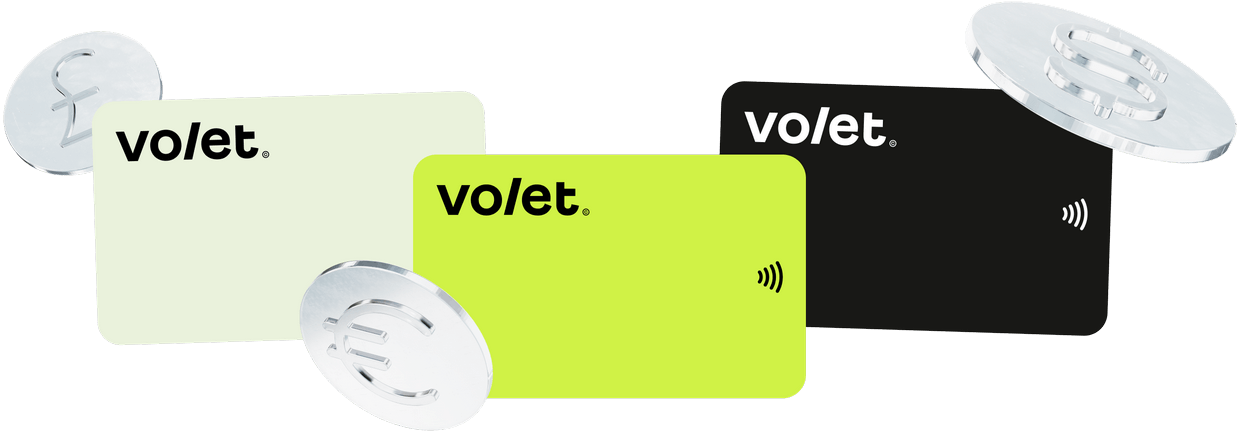
A wallet becomes much more relevant the moment it can reach beyond transfers and into actual spending. That is where Volet’s card layer becomes central to its convenience story. The official cards overview says Volet offers both virtual and plastic cards, with instant loads from its fiat e-wallet, regional card options, and support across different geographies. The site lists a global digital Mastercard available in 150+ countries, APAC plastic cards for the Asia-Pacific region, and Europe cards available across Europe, Turkey, and Israel. Virtual cards are issued instantly, while plastic cards can arrive by standard or express delivery depending on the region.
Those details matter because a digital wallet without a spending layer can still feel incomplete. Users may receive money, hold balances, or transfer funds, but then still need another service for actual purchases. A wallet with physical card access or instant virtual card issuance closes that gap. It lets the user turn an account balance into something that works for online shopping, subscriptions, travel bookings, app purchases, and in-store spending. That is the difference between a payment account and a wallet for everyday spending.
Volet’s product framing is especially effective here because it treats cards as part of the wallet experience rather than separate products bolted on later. The card is topped up from the wallet. The wallet can be funded through fiat or crypto routes. The card then becomes the final layer that makes the money usable online and offline. For people looking for an online wallet with debit card functionality, a wallet with physical card support, a worldwide spending card, or an international debit card alternative, this kind of integration is what creates real convenience.
That card layer also fits the way consumer behavior has changed. Worldpay notes that cards remain relevant partly because of features such as one-click checkout and digital wallet compatibility, even as digital payment methods continue to grow. In practice, the most useful payment products are often the ones that combine rails rather than replacing one with another. Volet’s card strategy reflects that. It does not treat cards as old-fashioned. It treats them as a bridge between digital balances and universal usability.
The virtual card experience is now one of the most important wallet features
Virtual cards have gone from specialty tool to core feature in modern payments. They are ideal for online subscriptions, digital services, recurring purchases, marketplace spending, remote business expenses, and fast-start consumer use. Volet’s global digital card shows how seriously it treats this format. Its digital card page presents a Virtual Mastercard USD with instant issue, global use, monthly volume up to $400,000, and 0% FX markup. It also says the card is Apple Pay and Google Pay ready.
That combination makes the card relevant across a wide range of search and user needs. Someone looking for an instant virtual card, virtual Mastercard, virtual payment card app, virtual card for online purchases, virtual card for subscriptions, or money transfer app with virtual card is usually not just looking for a nice add-on. They are looking for speed, flexibility, and control. A virtual card that can be created quickly often becomes the fastest way to activate the value sitting inside a wallet.
Volet’s digital card also pushes beyond basic online-only framing. The official page says users can pay in stores through Apple Pay or Google Pay at any POS terminal, and that ATM withdrawal via Google Pay is available. That means the virtual card is not limited to browser-based commerce. It extends into offline spending through mobile wallet support. In practical terms, this makes the product feel less like a temporary online shopping tool and more like a true digital card for travel, mobile tap payments app companion, and wallet for NFC payments.
This is part of what gives Volet broader appeal as a wallet for modern spending. The virtual card is instant. It is globally oriented. It can be fueled by wallet balances connected to crypto and fiat flows. And it can move from online checkout to contactless in-store use without asking the user to adopt a separate stack. For anyone evaluating the best wallet with virtual card features, that kind of fluidity is a major advantage.
Speed matters, and instant issue changes the whole user experience
A lot of wallet convenience comes down to timing. One of the quiet frustrations in payments is waiting. Waiting for approval. Waiting for shipment. Waiting for a withdrawal to land. Waiting for a tool to become usable after the need has already passed. Instant issue changes that psychology. When a wallet can generate a usable virtual card right away, it stops behaving like a slow financial product and starts behaving like software.
Volet leans into that software-like experience. Its official card pages say virtual cards are issued instantly, and the digital card page presents a clear path from account setup to immediate spending. For users who need to pay for flights, ads, SaaS tools, streaming services, business expenses, or recurring subscriptions without delay, this matters more than glossy branding ever will. An instantly issued virtual card is a practical answer to real urgency.
This speed also changes how users think about the wallet itself. Instead of seeing it as a place to park funds and come back later, they begin to see it as a live payment environment. That is particularly valuable for freelancers, digital creators, agencies, merchants, and remote teams, because the line between “money received” and “money needed” is often very short. A virtual card wallet that activates instantly is more likely to become a daily tool rather than an occasional one.
In the language of search intent, that is why phrases such as get virtual card in minutes, create virtual card instantly, instant online card issuance, or one app for cards and transfers have become so compelling. Speed is not just a perk. In digital finance, speed often determines whether a user sticks with a wallet or leaves it sitting unused. Volet’s card-first execution gives it a strong answer to that problem.
Physical cards still matter because global spending is still uneven
Even in a digital-first market, physical cards remain important. Mobile wallets are growing, but the real world is still mixed. Some merchants favor tap-to-pay environments. Some users want a backup in their pocket. Some travel situations still call for a plastic card for hotels, local terminals, or cash access. A wallet that understands this does not force people into an all-digital ideal. It gives them flexibility across the spectrum.
Volet’s physical card options reflect that practical view. The official cards page lists plastic cards for Europe and APAC, explains that delivery can be standard or express depending on the region, and frames the card range as a way to spend balances online and offline. That combination makes the service more appealing as a travel payment card, prepaid card wallet, ATM withdrawal card, and online and offline payment wallet rather than merely a web-native tool.
This matters especially for globally mobile users. A digital wallet for expats, a payment account for travelers, or a wallet for international students needs to work in more than one style of environment. The same user may pay for a streaming subscription online, then tap a phone in a city shop, then use a plastic card somewhere else, then withdraw cash in a place where cards are less universal. Convenience is not about assuming one perfect transaction type. It is about surviving imperfect payment contexts without breaking the flow.
That is why plastic still belongs in the story of modern digital finance. It is not the opposite of a digital wallet. It is part of the wallet’s usefulness. Volet’s ability to offer both virtual and physical card layers strengthens its claim to be a wallet for everyday purchases, travel, subscriptions, cross-border living, and routine money access, not just a clever app with one good feature.
Low-friction funding and withdrawals are a huge part of real convenience
One of the easiest ways for a wallet to lose users is to make entering or exiting the system feel difficult. You can build a sleek app, add attractive cards, and market a global lifestyle, but if funding the wallet or withdrawing from it feels painful, the experience will not feel convenient. Volet’s published personal fee structure is important precisely because it reveals how much attention the product gives to these entry and exit points.
According to Volet’s personal fees page, users can load accounts through personal account transfers in USD and EUR with no fee, local bank transfers in a wide list of currencies with no fee, Visa or Mastercard at 3.5%, crypto with no fee, and supported stablecoins at a fixed $1 load fee. On the withdrawal side, users can transfer to personal accounts in USD or EUR with no fee, withdraw locally to banks from 1%, use SWIFT in USD at 1% + $25, withdraw to cards from 4.5% plus a fixed amount depending on currency, and withdraw crypto or stablecoins with network-based fees.
The deeper story here is choice. Different users will optimize for different paths. Some will want no-fee crypto loads. Others will prioritize local bank funding. Others may mainly use the wallet for internal transfers and card spending. The wallet feels more capable because it gives the user multiple practical routes rather than one forced payment behavior. That is exactly what people want when they search for wallet for USD transfers, wallet for EUR transfers, send money to bank account, withdraw to bank account, send money to card, or low fee money transfer.
Fee transparency helps as well. When a wallet publishes fees clearly, users can plan around them. That may sound basic, but in cross-border finance, transparency often feels like part of the product. Hidden costs create emotional friction even when the transaction eventually works. Volet’s posted fee structure helps the platform feel more legible, which in turn supports the wider sense of convenience it is trying to sell.
Free wallet-to-wallet transfers strengthen the internal ecosystem
Convenience is not only about external payments. Internal transfers matter too, especially when users operate inside the same ecosystem. Volet’s personal fees page states that transfers from personal accounts in USD and EUR can be made with no fee, and the broader product messaging emphasizes instant P2P movement inside the system. That feature can easily be overlooked, but it is one of the things that can make a wallet feel genuinely alive.
Why does that matter? Because a good wallet is often social or networked in practice. Friends split costs. Family members support one another across borders. Freelancers send funds between personal and work contexts. Small teams reimburse expenses. A wallet with instant P2P transfers and a low-friction internal economy can become much stickier than one built only around outside cash-in and cash-out. The service starts to feel like a place where money can circulate, not just arrive and depart.
This internal flow is especially relevant to users searching for p2p payment app, instant p2p transfers, app for spending and transfers, or easy international money app. Many of those searches are not really asking for novelty. They are asking for continuity. People want to move money in the same environment where they can also spend it, rather than bouncing from transfer service to card product to banking app. Volet’s wallet-to-wallet structure supports that kind of continuity.
It also complements the larger card and balance story. When internal transfers are smooth, the wallet becomes a more practical coordination tool. You are not just loading funds in and paying merchants out. You are using the wallet as an actual payment layer. That is a meaningful distinction, and it helps explain why products like Volet appeal to users whose financial lives are more distributed than traditional personal banking was designed for.
Cross-border use is where a wallet really proves itself
Many payment products feel fine until the user’s life becomes international. Cross-border payments are where weaknesses show up quickly: poor currency support, clumsy transfers, limited card acceptance, hard cash-out rules, region-locked tools, or slow settlement. Volet’s product stack seems intentionally designed to perform better under those conditions. On the business side, it supports stablecoins, crypto, SEPA, SWIFT, CIPS, FPS, and local fiat methods. On the personal side, it combines multicurrency account behavior with card access and several funding and withdrawal routes.
That is significant because international users tend to think in workflows, not categories. Someone living abroad may need a digital wallet for living abroad, a foreign currency spending app, a travel wallet with virtual card support, and an app for sending money abroad all at once. A remote worker might receive in stablecoins, hold funds in EUR, pay for software in USD, and withdraw locally in another region. A wallet that cannot support these mixed realities will not feel modern, no matter how sleek the interface looks.
Volet’s combination of rails and spending tools is what makes its cross-border pitch credible. It is not just the existence of multiple currencies. It is the ability to receive, hold, exchange, route, and spend in ways that match online-first and international-first behavior. That is why it fits searches like best international wallet, best e wallet for international use, multi currency payment app, borderless e wallet, international payment account, or global wallet for modern payments.
More broadly, the payments market is moving in this direction anyway. Worldpay projects that digital payments will continue consolidating their footprint by 2030, reaching 79% of online spend and 53% of in-store spend, while over $28 trillion is expected to be spent via digital wallets globally across online and in-store environments. In that future, cross-border usability will not be optional. It will be one of the basic tests of whether a wallet deserves to be called global.
Volet speaks especially well to freelancers, creators, and remote workers
Volet’s feature mix makes particular sense for people whose income and spending patterns are digital by default. Its official pages reference getting paid by employers, affiliate programs, and CPA networks, while its business offerings lean into payouts, team payments, and international contractor workflows. That gives the product a natural fit with freelancers, publishers, creators, affiliate marketers, agencies, consultants, and remote teams who need a payment setup that can both receive and spend.
These users often face the highest level of payment fragmentation. They may receive client payments, affiliate revenue, creator payouts, and ad network earnings through different channels. They may then spend on ads, subscriptions, cloud software, domain renewals, contractors, travel, and personal living costs. A wallet for digital creators or payment solution for remote workers becomes attractive when it reduces the number of tools needed to manage that cycle. Volet’s combination of account balances, payout rails, internal transfers, and cards lines up closely with that kind of demand.
This is also where its hybrid fiat-and-crypto model becomes especially useful. Some creators and freelancers increasingly receive funds in stablecoins or crypto-linked environments, but still spend in fiat-heavy ecosystems. Others use crypto more as a treasury or transfer rail than as a direct spending format. Volet’s wallet structure recognizes that those categories overlap. A wallet for crypto earners is more useful when it can also behave like a wallet for subscriptions, contractor payouts, and everyday spending.
For that audience, convenience is ultimately about continuity between earning and using money. They do not want a payout destination that cannot spend. They do not want a spending card that cannot receive. They do not want a crypto tool that cannot settle daily life. Volet’s design speaks directly to those frustrations, which is why it feels especially relevant to users living inside online revenue ecosystems.
Business payments are no longer separate from wallet convenience
One of the most important shifts in fintech is that business payment needs now look more like wallet problems than traditional banking problems. Companies do not just want bank accounts. They want ways to accept payments, automate payouts, hold multiple balances, fund operations, and issue spending tools without relying on five different providers. Volet’s business pages are built around exactly that idea. The business payments page says companies can send salaries, bonuses, or one-off payments in stablecoins or to Volet wallets, receive or send payments in stablecoins as global rails, and use local bank transfers for easy funding and withdrawals across regions.
It also frames Volet as a strong fit for agencies and remote teams, marketplace sellers, and small and medium-sized businesses. The business page emphasizes crypto and fiat in one place, global and local rails, strong compliance standards, and 24/7 live support. Those are not abstract enterprise claims. They are the core ingredients of a business wallet for international payments, business transfer app, global payroll wallet, or payout solution for remote employees.
This matters because the old distinction between “consumer wallet” and “business payments” is breaking down. Many companies, especially online-native ones, want a unified environment. They want to collect payments globally, keep multicurrency balances, pay suppliers or contractors abroad, and manage operations through one interface. Volet’s business model tries to meet that demand by acting less like a narrow processor and more like a payment infrastructure wallet.
That gives the platform relevance for users searching for business payment platform, b2b payment platform, wallet for online businesses, wallet for global entrepreneurs, digital wallet for SMEs, online wallet for startups, or borderless business account. The convenience story here is not just about personal spending. It is about whether the same platform can power business movement and business spending with similar ease.
API access turns the wallet into infrastructure
Some payment tools are meant only for direct user interaction. Others also become building blocks for developers and platforms. Volet clearly wants to be the latter as well. Its API page says users can accept crypto payments, send payouts, manage balances, and trigger custom payment flows through a single API for both personal and business accounts. It also says developers can use the API to check balances, move funds, convert currencies, and automate payouts to users or partners.
This is a significant part of its long-term value. Once a wallet can be integrated programmatically, it stops being only a user app and becomes infrastructure. A platform can embed crypto checkout, automate distributions, and build workflows around balance management or conversions. That opens the door for use cases such as marketplace payouts, creator disbursements, affiliate settlements, small SaaS payments, and custom operational systems that need a flexible payment backbone.
Volet also says there are no setup, subscription, or API call fees for this integration layer, with users paying only for transactions. Whether someone is a solo developer, a startup founder, or a larger platform operator, that kind of pricing can make experimentation easier. In a market where many services make access expensive before usage even begins, flat-entry integration matters.
For search patterns like payment API integration, free payment processor API, payout app for marketplaces, global wallet for SaaS founders, partner payout solution, or wallet for operational expenses, this developer layer makes Volet more than a simple wallet app. It turns the platform into something closer to modular payment infrastructure, which is exactly where modern fintech is heading.
Hosted checkout makes acceptance simpler for merchants
Not every business wants to build payments from scratch. In fact, many do not. They want to start accepting payments quickly, keep the user flow clean, and avoid taking on more technical and compliance burden than necessary. Volet’s hosted checkout offering is designed for that audience. The hosted checkout page describes it as a ready-to-use payment page that handles the entire process, from redirecting users to payment details generation to transaction confirmation and funding the merchant’s wallet.
The page also says businesses can start accepting both fiat and crypto in minutes, without complex coding. It supports website integration through a payment button or link, can open via web-view in mobile or Telegram apps, and offers plugin-based setup for CMS users. The onboarding flow is simple: create an account, verify your profile, set up hosted checkout in the payment tools area, and start accepting payments immediately.
That is a strong convenience proposition for merchants and creators who do not want to become payments engineers. A hosted solution that supports both crypto and fiat broadens the range of users who can pay while keeping integration relatively light. For people searching for payment gateway alternative wallet, wallet for online entrepreneurs, merchant payout wallet, payment solution for freelancers, collect payments globally, or online account for global payments, this kind of checkout layer can be more valuable than a pure transfer feature.
It also reinforces the core theme of this article: the wallet is no longer just for holding value after the payment is done. Increasingly, it sits at the beginning, middle, and end of the transaction journey. With hosted checkout, Volet is not only a place where funds land. It is part of how the payment gets made in the first place.
Security matters more when the wallet becomes central
As wallets take on a larger role in daily financial life, security becomes inseparable from convenience. A product cannot credibly ask users to receive money, hold balances, exchange funds, and spend internationally if the account feels weakly protected. At the same time, security cannot be so clumsy that it makes the wallet exhausting to use. The best services make security feel layered, practical, and manageable. Volet’s support materials suggest exactly that kind of layered model.
Its help center lists multiple security settings, including two-factor authentication, IP address binding, payment password, code card, SMS authorization, device management, and intelligent identification. The 2FA documentation says one-time passwords refresh every 60 seconds and can be delivered through a hardware token, mobile app, or chat-bot routes such as Telegram, Viber, and Facebook Messenger. IP address binding can restrict access to specific addresses or ranges, while intelligent identification flags unfamiliar login signals such as location or IP changes and prompts email confirmation.
Volet also adds transaction-level protections. Payment password can be required for transfers and withdrawals, code cards can authorize withdrawal transactions through reusable codes, and SMS authorization can add another step for login. None of these features are especially glamorous, but that is precisely why they matter. They are the kind of control settings users actually look for when choosing a secure online payments environment or a wallet with 2FA.
In a market where more value is flowing through digital wallets, that layered approach becomes part of convenience itself. Security that users can configure and understand supports trust. Trust supports higher usage. And higher usage is what turns a wallet from an occasional utility into a real financial home base.
The trust layer includes compliance and data handling too
Security is not only about login settings. It is also about how a platform describes its data practices, privacy protections, and compliance posture. Volet’s privacy notice says sensitive information is transmitted via SSL technology and that card payment information encryption is compliant with PCI DSS. It also states that personal data of GDPR-subject users is processed only on servers physically located within the European Union, and that AML-law information is retained for five years after account closure when legally required.
Those details matter because people increasingly look for more than a fast wallet. They want a compliant digital wallet, a secure international card app, or a verified payment wallet that appears serious about data protection and anti-fraud efforts. Volet’s privacy materials also describe automated risk assessment for transactions and user profiles to prevent illegal or fraudulent activity, with significant decisions still subject to manual employee review. That kind of combined automation-and-review approach is increasingly common in payment services that need both speed and oversight.
For users, the practical takeaway is simple. A global payment app becomes easier to trust when the provider explains how authentication, data storage, encryption, and compliance work together. In a platform that combines transfers, crypto, cards, and business features, that trust layer matters even more because the wallet is handling more than a single payment moment. It is handling a broader financial relationship.
This is especially relevant for people searching terms like wallet with account verification, regulated payment platform, wallet with anti fraud protection, protected global transfer app, or secure prepaid wallet. Security in those searches is not just a feature checklist. It is a prerequisite for using the product as a serious part of daily financial life.
Transparent pricing supports smarter use, not just cheaper use
One of the most useful things a wallet can do is help the user understand when and how to use it. Transparent pricing supports that. Volet’s personal and business fee pages do a fair amount of that work by publishing fee structures rather than hiding them deep in the experience. For personal users, Volet states that there are no fees for opening or closing an account, verification, monthly or annual maintenance, with the caveat that a $1 inactivity fee applies after six months without transactions.
On the business side, the fee page says there are no fees for opening or closing an account, verification, or monthly or annual maintenance. It lists card loads at 3.5%, crypto loads with no fee, stablecoin loads at $1, SEPA withdrawals from 0.5%, local bank transfer withdrawals from 1%, and crypto or stablecoin withdrawals with network-based pricing. That structure makes it easier for companies to think operationally about which rails they want to use for which flows.
This is one reason transparent fees matter beyond simple cost comparison. They shape workflow. A business may choose local bank transfer for some payouts, stablecoins for others, and internal wallet usage for a third category. A personal user may prefer no-fee crypto loads plus card spending, or no-fee local funding plus local bank withdrawal. The wallet becomes more useful when pricing guides decision-making instead of surprising users after the fact.
That clarity is a form of convenience because it reduces uncertainty. In modern payments, the emotional cost of “I’m not sure what this will charge me” can be as damaging as the fee itself. Volet’s fee transparency helps counter that, which strengthens its broader pitch as a practical wallet for global payments.
Volet reflects a larger shift toward the wallet as a money hub
What makes Volet interesting is not only its list of features. It is the way those features map onto a much larger shift in how people interact with money. The wallet is no longer just a digital version of what sits in a pocket. It is becoming the place where users receive payouts, hold balances, convert currencies, manage cards, authorize spending, and route funds to other people or businesses. That is a much bigger role than traditional wallet language ever implied.
Volet’s stack reflects that shift unusually well. It combines personal account flexibility, hybrid fiat-and-crypto support, virtual and plastic cards, internal transfers, business payment rails, hosted checkout, and API-based payment tools. Each piece matters on its own, but the real value appears when they are seen together. The platform makes more sense as an ecosystem than as a set of unrelated tools.
This is why terms like all in one payment app, payment super app, one app for cards and transfers, online wallet with payment cards, or digital finance app keep gaining traction in the market. Users increasingly want fewer disconnected systems. They want one place to manage the money they earn, move, and spend. Volet’s relevance comes from how directly it speaks to that desire.
The strongest wallets of this era will be the ones that reduce fragmentation without forcing users into rigid behavior. They will support multiple rails, multiple balance types, multiple spending formats, and multiple user profiles ranging from travelers to creators to businesses. Volet is clearly building in that direction, which is why it fits so naturally into the current conversation around digital wallet convenience.
Why this matters for people looking for a smarter wallet now
A lot of people searching for a better wallet are not looking for something flashy. They are looking for something that removes friction they already feel. They may be tired of clumsy cross-border transfers, limited spending options, disconnected crypto tools, weak card access, or business payout workflows that depend on too many separate services. The wallet they want is one that makes digital life feel simpler, not more technical.
Volet’s appeal lies in how many of those frustrations it tries to address at once. It offers a multi currency wallet style experience, supports fiat and crypto in one account, issues virtual cards instantly, provides plastic cards in supported regions, supports Apple Pay and Google Pay on eligible cards, publishes funding and withdrawal fees, allows internal transfers, and extends into business payments and developer tools. That is a substantial answer to the question of what a modern online wallet should do.
For users comparing a PayPal alternative wallet, Wise alternative for payments, Revolut alternative wallet, or broader fintech alternative to banks, the exact feature-by-feature comparison will always depend on priorities. But the broader truth is clear: the market is rewarding platforms that combine spend, transfer, exchange, and payout capabilities in one place. Volet’s model fits that direction closely.
And that is why the service feels timely. It is not pushing an outdated idea of a wallet as just another place to park funds. It is presenting the wallet as an active layer of daily money life. In a world where money moves across screens, countries, currencies, apps, and asset types, that is exactly what many users now need.
Conclusion: the new shape of spending is flexible, global, and always on
The future of spending is not really about one payment method defeating another. It is about whether the user can move from earning to holding to converting to spending without getting stuck. That is the deeper meaning behind the rise of the digital wallet. The best wallets now act as bridges between formats, regions, and use cases. They help users spend online and offline, move funds across borders, connect cards to balances, and manage both personal and business payment needs without excessive friction. Worldpay’s latest research shows that digital wallets and related digital methods now dominate a growing share of online commerce and an increasingly meaningful share of in-store commerce as well. The market has already shifted.
Volet’s take on digital wallet convenience fits that shift unusually well. It brings together fiat and crypto in one account, supports global and local payment rails, offers instant virtual cards and regional plastic cards, enables mobile wallet usage through Apple Pay and Google Pay on supported cards, publishes fees clearly, layers in configurable security, and expands into business payments, hosted checkout, and API-driven flows. That combination gives the product relevance well beyond simple checkout use. It makes Volet feel like a platform built for how money behaves now.
For people looking for the best e wallet alternative, a secure digital wallet, a wallet with virtual Mastercard access, a borderless e wallet, a crypto friendly payment app, a travel payment wallet, an online wallet with debit card functionality, or a business wallet for international payments, the central question is no longer “Can this wallet store money?” The better question is “How much of my financial life can this wallet actually handle well?” That is where Volet makes its strongest case. It is built for receiving, moving, spending, and scaling money across the kinds of boundaries that matter most in modern finance.
The new shape of spending is faster, more mobile, more international, more card-connected, more software-like, and more comfortable moving between fiat and digital assets. It is not confined to one checkout button or one transfer rail. It lives across the full payment journey. And in that new environment, Volet is not just participating in the shift. It is built around it.