The shape of money has changed, and the old tools are struggling to keep up
There was a time when most people could think about money in a simple way. You earned it in one country, held it in one currency, spent it with one bank card, and maybe sent it abroad only occasionally. That picture no longer matches how a large share of modern life actually works. Today, money is mobile by default. It moves through remote work, digital commerce, creator platforms, cross-border services, subscriptions, travel bookings, app stores, contractors, crypto wallets, and global marketplaces. A person can get paid in one country, spend in another, hold part of their funds in fiat, move another part in stablecoins, and still need access to a virtual card for everyday online purchases by the end of the same day. That is not a rare edge case anymore. It is increasingly normal, and it is one reason products positioned as multi currency wallets, online wallets, and global digital wallets keep attracting attention. Volet’s platform is built around that exact shift, combining e-wallet functionality, cards, crypto support, payment flows, and business tools in one broader system aimed at users whose financial lives no longer fit neatly inside national borders.
That broader trend also helps explain why users keep searching for alternatives to older, narrower payment tools. The problem is not simply that people want faster transfers. It is that they want fewer financial handoffs. They want to receive money online, exchange it when needed, spend it globally, pay people in other countries, manage balances in more than one format, and do all that without stitching together a stack of disconnected apps. The continuing cost of cross-border transfers reinforces that demand. The World Bank’s remittance data shows that the global average cost of sending remittances remains high at 6.49 percent, which is a reminder that international money movement still comes with friction and expense even in a digital world. Against that backdrop, a service like Volet is appealing because it does not present itself as a single-purpose tool. It presents itself as a digital wallet, a card platform, a crypto-friendly wallet, and a business payment environment that tries to make global money use feel more connected and more practical.
Why a global digital life demands a different kind of wallet
The phrase digital wallet used to sound narrow. In practice, it is now much broader. A serious digital payment wallet has to do much more than hold a balance and process a few payments. It has to function as a place to receive, store, exchange, move, and spend value across several channels. It has to fit a world where a freelancer might be paid by a client in euros, invoice another client in dollars, pay a contractor in stablecoins, and cover software tools with a virtual Mastercard, all while traveling. It has to support the lived reality of remote workers, creators, online sellers, affiliate marketers, digital nomads, expats, and globally distributed businesses. That is why the most relevant wallet products today are not the ones that do only one task well. They are the ones that help the user move through an entire financial journey with fewer detours. Volet’s public product pages consistently point in that direction, emphasizing free personal P2P transfers, cards, crypto, mass payouts, and business payments under one umbrella.
This matters because modern users do not think in product categories while living their lives. They do not wake up needing “a card product,” then at lunch needing “a crypto tool,” then at dinner needing “a payout system.” They simply need their money to work. They want one app for cards and transfers, one place to send and receive international funds, one account that can handle both fiat and crypto, and one environment that makes online and offline spending easier. That is where Volet’s positioning becomes especially clear. Rather than being framed only as a card service or only as a transfer service, it is described as a platform where money can move through several stages: receive, hold, convert, pay, withdraw, distribute, and automate. That kind of structure is what gives an international e wallet or borderless payment wallet real usefulness in a global digital life.
The real problem is fragmentation, not just speed
A lot of marketing in finance is built around speed. Faster transfers. Faster sign-up. Faster settlement. Those things matter, but they are not the whole problem. For many users, the deeper issue is fragmentation. One service is used to receive money. Another is used to convert it. Another is used to send it to someone else. Another is needed for a virtual card. Another for business payouts. Another for crypto. That arrangement may work on paper, but in real life it creates cost, complexity, and friction. It also creates uncertainty. Users end up guessing which rail is cheapest, which provider is most reliable, which card works where, and which balance is actually usable without another round of conversion or withdrawal. The more global the user’s life becomes, the more exhausting that fragmentation feels. A smart payment wallet needs to reduce those handoffs, not merely process one type of transaction slightly faster than the competition. Volet’s design philosophy seems built around that exact pain point.
That fragmentation is even more painful on the business side. A company might need one vendor for accepting payments, one for crypto, one for payroll, one for affiliate commissions, one for virtual cards, and one for API-based payouts. Every extra tool adds cost, reconciliation work, and operational risk. Volet’s business pages explicitly pitch the platform as a way to avoid fragmented providers and rails by combining crypto and fiat tools in one account. That messaging matters because it shows the platform is not just targeting consumer convenience. It is also targeting operational simplicity for businesses that live online and pay globally. When a service says it can accept payments, manage multi-currency balances, automate payouts, and support local and global rails from one environment, it is trying to solve fragmentation at the structural level, not just the interface level.
What Volet is really built to be
The easiest mistake to make with a product like Volet is to think of it as only an e-wallet. In reality, its public materials show something broader. The homepage talks about secure e-wallets, cards, crypto, and B2B payments. The business overview talks about a unified payment platform combining crypto and fiat tools in one account. The API page talks about accepting crypto payments, automating payouts, managing balances, and building custom financial flows. The cards pages show how digital and plastic cards connect wallet balances to real-world spending. Put together, those pages describe a platform designed to function less like a single feature and more like a money movement system. That is why Volet can plausibly speak to such a wide set of search intents, from digital wallet for freelancers to online wallet with payment cards, crypto-friendly wallet, international payout solution, and business payment platform.
That wider identity becomes even clearer when you look at the examples Volet uses to describe its users. Its homepage references employers, affiliate programs, CPA network payouts, teams, and mass distributions. Its business pages reference remote teams, agencies, digital goods, marketplaces, creators, affiliates, and global companies. Its payment tools are described not just for buying or transferring, but for holding balances, paying contractors, settling in fiat, and moving between crypto and everyday spending. In other words, Volet is not built only for people who want a prettier online wallet. It is built for people and companies whose money has to keep moving between roles, regions, and formats. That is exactly what makes it relevant to a global digital life instead of just adjacent to one.
One account, several kinds of value
One of the strongest parts of Volet’s positioning is that it does not force users to think in only one financial format. The business overview says its multi-currency business account can hold USD, EUR, USDT, USDC, BTC, ETH, and other assets. The digital card page says supported wallet assets include USDT, USDC, BTC, ETH, SOL, XRP, TON, and others. The business platform pages also highlight crypto on-ramp and off-ramp operations, along with the ability to accept crypto and settle in fiat if needed. That combination matters because modern global finance is increasingly mixed. Some users earn in fiat and spend in crypto. Some earn in crypto and spend in fiat. Some hold both. A multi asset wallet becomes valuable when it lets users move between those formats without forcing them into a maze of separate services.
This flexibility changes how the wallet can be used in practice. A creator paid in stablecoins does not have to treat that money as trapped in a crypto-only environment. A business collecting customer payments in USDT or USDC can still settle into familiar fiat operations. A freelancer paid in dollars can keep part of that balance intact while covering expenses in another format. A traveler can hold funds in a way that fits the destination and the spending method. When a platform supports fiat and crypto in one account, it stops being just a place to store value. It becomes a tool for choosing how and when value should move. That is one of the reasons terms like fiat and crypto wallet, stablecoin wallet, currency exchange wallet, and digital wallet with currency conversion feel so relevant to what Volet is offering.
Receiving money is where convenience really begins
It is easy to focus on spending tools because they are concrete and visible. But for many users, the bigger challenge starts at the point of receiving money. If incoming funds are awkward to collect, delayed, or hard to route, the rest of the financial experience never feels smooth. Volet’s homepage addresses this directly by talking about getting paid by employers or affiliate programs and receiving CPA network payouts. That language matters because it reveals the platform’s real audience. It is not aimed only at someone loading a wallet for shopping. It is aimed at people whose money arrives through remote, digital, and international channels. For freelancers, publishers, affiliate marketers, and creators, that is a major difference. A wallet becomes much more valuable when it is useful at the moment of earning, not just at the moment of spending.
The business side follows the same logic on a larger scale. Volet’s business pages say companies can accept payments, manage liquidity, and work with customers, clients, and partners across borders using crypto, stablecoins, and traditional rails. The business payments page says clients and customers can pay a business in stablecoins or crypto, and the company can settle funds in USD, EUR, or digital assets. That means the platform is not just helpful after revenue arrives. It is designed to participate in the revenue flow itself. For businesses, that makes Volet more than a payment account. It makes it part of the collection and settlement infrastructure, which is exactly what globally active digital businesses tend to need.
Free instant P2P transfers make the wallet feel alive
A digital wallet feels very different when internal transfers are fast and cheap enough to use casually. Volet’s homepage says personal accounts can instantly move money and crypto between Volet wallets or crypto wallets with no fees for personal accounts. That is the kind of feature that can sound small in a product summary but become central in everyday life. It means sending money to a friend, family member, or teammate does not automatically feel like a separate financial event requiring careful calculation. It means users can shift value between related accounts, distribute funds more comfortably, or support others inside the same ecosystem without adding cost at every step. That changes the emotional feel of a wallet. It becomes more flexible and more immediate.
This kind of internal movement is especially useful in a global digital life because people often share money across households, teams, and collaborative workflows. A creator may want to split funds with an editor. A small agency may distribute project earnings to contributors. A family may move money between relatives in different countries. A remote worker may separate personal and operational balances. Instant P2P transfers do not replace every international rail, but they remove one layer of friction where it matters most: inside the platform itself. For users who search for a p2p payment app, instant money transfer wallet, or fast money transfer app, that can matter as much as more dramatic features like mass payouts or crypto settlement, because it touches the small daily movements that add up over time.
Virtual cards bring the wallet into daily digital spending
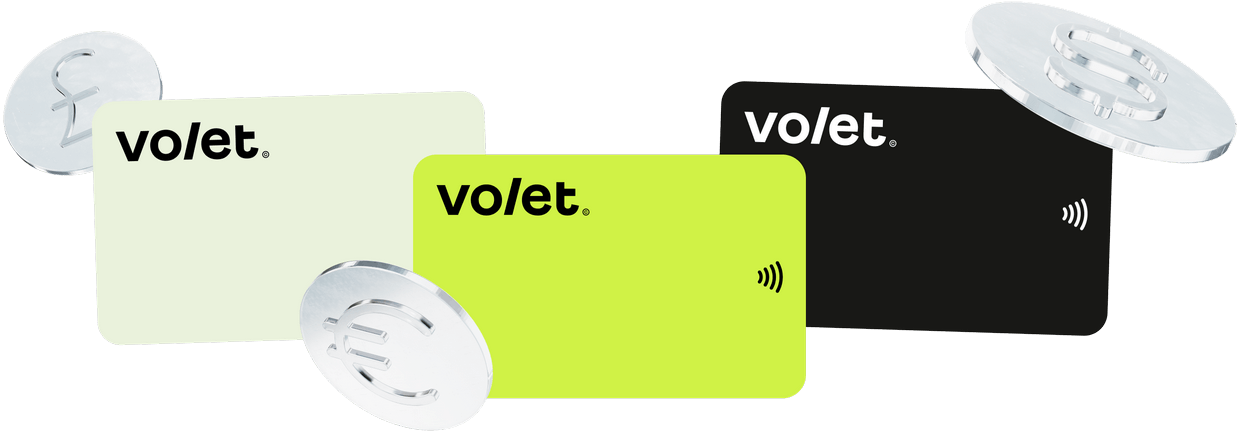
A wallet becomes much more useful when it can power real purchases directly. Volet’s card pages make that transition central to the product. The digital card page describes a Virtual Mastercard USD with instant issue, no FX markup, Apple and Google Pay readiness, and availability in 150+ countries. It explains that the path from account to spending is short: sign up, verify ID, top up with crypto, order the card, transfer USD to the card balance, and start using it. That matters because it turns the wallet from a passive balance into an active spending tool. In practical terms, it means a user can move from receiving or holding funds to using them for online and offline purchases without depending on an outside bank card.
This is especially important for the kinds of digital spending that define modern life. Virtual cards are used for software subscriptions, ecommerce checkouts, ad spend, domain renewals, cloud services, streaming services, app purchases, travel bookings, and recurring bills. In many of those cases, speed matters more than anything else. Waiting for physical delivery defeats the purpose. An instantly issued virtual card solves a modern problem precisely because the need for it is often immediate. That is why search phrases like instant virtual card, virtual card wallet, create virtual card instantly, and digital card for subscriptions continue to attract strong attention. Volet’s digital card product is clearly designed to meet those exact use cases in a wallet-first way.
Physical cards still matter in a global digital life
Even in an increasingly app-based world, physical cards have not become irrelevant. Travel, in-store purchases, and cash access still matter, especially for users whose lives span countries and currencies. Volet’s cards pages show that the platform understands this. Alongside the digital card, it offers Europe and Asia-Pacific card programs, including plastic options. Its broader card materials say some cards are loaded instantly from the Volet e-wallet and can be used for worldwide ATM and POS payments, with shipping options depending on the region and program. That is important because it means the platform is not treating spending as an online-only activity. It is trying to support the full range of payment contexts users encounter in real life.
For travelers, expats, and globally mobile workers, a wallet with physical card access changes the meaning of the whole account. It becomes a prepaid travel wallet, a worldwide spending card, or a safer alternative to carrying more cash abroad. It also lets the user keep more of their financial routine inside one ecosystem. Instead of receiving funds in one service and then pushing them out to a separate spending product, the wallet and the card stay linked. That is a stronger model for a global digital life because it reduces handoffs and helps the user keep a clearer view of their balances, spending, and transfers across contexts.
Crypto-to-card spending is one of Volet’s most practical strengths
A lot of platforms can claim some connection to crypto. What matters is whether that connection is usable in ordinary life. Volet’s card materials are especially clear on this point. The digital card page says the card itself is topped up from the Volet fiat wallet, not directly from crypto, but it also explains that users can add crypto to the wallet and then transfer funds to the card instantly. The card works with supported assets like USDT, USDC, BTC, ETH, SOL, XRP, and TON inside the wallet. That structure is important because it creates a practical bridge between digital assets and everyday card spending instead of pretending merchants have suddenly become crypto-native everywhere.
That bridge is exactly what many users are actually looking for when they search for a crypto debit card, bitcoin wallet with card, spend crypto with virtual card, or stablecoin spending wallet. Most people do not want a theoretical crypto experience. They want a usable financial one. They want to move value from crypto into something they can use for travel, shopping, subscriptions, dining, and routine purchases. Volet’s wallet-plus-card pathway answers that need directly. It does not erase the distinction between crypto and fiat, but it makes the transition between them straightforward enough to feel practical. That is one of the reasons the platform stands out in a crowded field of digital wallets and payment apps.
Mobile wallet support makes the product feel current
Any wallet meant for a global digital life needs to work not just on checkout pages, but in the flow of everyday movement. Volet’s digital card page says the card is Apple Pay and Google Pay ready, and it explicitly states that offline payments are possible through those mobile wallets at POS terminals. It also notes that ATM withdrawal via Google Pay is available. Those details matter because they shift the product from being merely an online wallet with a card attached to being something closer to a mobile spending tool that can travel with the user throughout the day. The card is not limited to browser payments or static app screens. It can move into real stores, tap-to-pay environments, and mobile payment routines.
That is a meaningful difference for modern users. A digital card for travel is more useful when it also supports mobile-wallet payments in person. A wallet for daily spending becomes more compelling when it works naturally for groceries, transport, quick purchases, and physical checkout experiences, not just online subscriptions. These kinds of details may seem secondary in a feature list, but they are exactly what turns an online payment platform into part of someone’s daily rhythm. For users searching for a wallet with contactless payments, a wallet for NFC payments, or a mobile tap payments app, Volet’s mobile-wallet support makes the overall platform feel much more complete.
Funding and withdrawal options determine whether a wallet is truly useful
A global wallet is only as practical as the ways money can move in and out. Volet’s personal fee page gives a good picture of that flexibility. It says users can load funds by transfer from a personal account at no fee, by local bank transfer at no fee in supported cases, by Visa or Mastercard with a 3.5 percent fee, by crypto with no fee, and by stablecoins for 1 USD. On the withdrawal side, it lists local bank transfer from 1 percent, SWIFT at 1 percent plus 25 USD, card withdrawals at 4.5 percent plus a fixed amount, crypto at network fee, and stablecoin withdrawals at 0.5 percent plus network fee. This matters because it shows the wallet is not built around only one funding or exit path. Users can choose based on the balance they hold, the destination they need, and the cost profile that makes sense for the transaction.
That route flexibility is a big part of what makes a wallet useful for borderless living. A remote worker might load funds by local transfer, use a virtual card for tools, and later withdraw by local bank route in another region. A crypto earner might fund through digital assets and cash out through fiat when needed. A traveler might rely on cards for spending but still want a bank-based exit route for larger movements. The more a wallet supports these different pathways, the more it becomes a real financial tool rather than a niche stored-value product. Volet’s fee structure suggests it expects users to mix methods intelligently rather than treat every transaction the same way, and that is a realistic design choice for international money use.
Transparent pricing is part of what makes the platform credible
In cross-border finance, trust is built partly through clarity. Users do not want a vague promise of “low fees” that dissolves the moment they compare real routes. Volet’s public fee pages help because they break out the costs by type of activity instead of hiding everything behind a single headline claim. The personal page shows how funding and withdrawal costs differ by transfer route, card, crypto, and stablecoin usage. The business fee page does the same for payouts, showing payouts to Volet wallets from 0.5 percent, payouts to Visa and Mastercard cards from 2.5 percent, and payouts to crypto and stablecoins from 0.25 percent. That level of transparency matters because it gives users and businesses a better way to choose the right rail instead of guessing.
This route-based model also makes sense for a platform serving several kinds of users. A small business paying contractors across multiple countries needs to know whether crypto, card, or bank routes make more sense for a given region. A creator platform sending rewards or affiliate payouts needs to know whether tiny distributions are still viable. A user deciding between a digital wallet, a travel card, and a crypto-friendly payment app needs to understand where the costs actually sit. Volet’s pricing does not flatten every action into a misleading “cheap” label. Instead, it treats global money movement as a set of different pathways with different economics. For serious users, that is often more valuable than a simpler but less honest pricing story.
Security matters more when money moves across borders and formats
A platform handling cards, crypto, balances, payouts, and international transfers cannot treat security as a decorative feature. Volet’s security page makes that clear. It describes intelligent environment monitoring, physical and software OTP tokens, payment passwords, IP restrictions, HSM-encrypted servers, strong customer authentication, OATH-compliant 2FA, dynamic linking, secure development practices, and PCI DSS certification. It also says that both merchant and personal accounts can use multi-tier account and payment protection. That level of emphasis matters because a wallet built for borderless finance has to anticipate more complex user behavior: travel, remote logins, cross-device use, and higher-value movements across several rails.
For users, this is not just technical comfort. It affects how confidently they can actually use the platform. A wallet for global payments becomes more useful when the user feels they can meaningfully control access and authorization. Features like payment passwords, OTP tools, and IP restrictions are not there only for large enterprises. They matter to freelancers, founders, contractors, and travelers too, especially when the same account may hold fiat, crypto, card-linked balances, or payout funds. A secure digital wallet is not simply one that looks modern. It is one that gives the user credible ways to make their money harder to misuse while still keeping it accessible enough for fast movement.
Verification and jurisdiction still shape real-world access
Any serious global payment platform has to balance convenience with compliance. Volet’s public support materials make clear that access depends on country, product, and verification status. The digital card page says the card is available in over 150 countries but not in certain restricted jurisdictions, including the United States. Support content also shows that some channels and programs are available only in specific countries, and that verification steps are required for certain services. This is important because it keeps the product grounded in reality. Borderless finance does not mean rule-free finance. It means a better system for operating within the rules that real payment infrastructure still requires.
That may sound less exciting than pure convenience language, but it is actually part of what makes the product credible. A platform that supports cards, crypto, settlement, payouts, and business flows has to know who its users are and where it can serve them. Verification is not a random obstacle. It is part of unlocking functionality responsibly. That matters even more when the platform offers both personal and merchant tools, because it is serving users whose activity may range from individual spending to high-volume payouts or business settlement. In practice, the best international wallet is not the one that promises universal access. It is the one that is clear about where it works, what it supports, and what a user needs to do to activate the right features.
Volet fits naturally with freelancers, creators, and remote earners
One of the clearest patterns across Volet’s pages is that the platform is built for users whose financial lives already happen online. Its homepage references employers, affiliate programs, CPA network payouts, teams, and mass distributions. Its business pages reference creators, freelancers, agencies, remote teams, digital goods, and marketplaces. Those are not accidental examples. They point to the categories of people and companies most likely to value a platform that can receive money, hold it in different forms, move it internally, pay it out, and convert it into card-ready spending without leaving the same ecosystem.
For these users, the appeal of Volet is not just that it has many features. It is that the features line up with how they actually work. A freelancer may need a wallet for international freelancers, a virtual card for software subscriptions, and an easy way to receive client payments online. A creator may need an ad revenue payout wallet, a way to hold stablecoins, and a card to spend them later. An affiliate marketer may want a payout wallet, a faster transfer app, and a card for online purchases. Because Volet combines wallet balances, crypto, cards, and transfers, it can serve these hybrid workflows more naturally than products designed around only one part of the money chain.
It also makes sense for travel, expat life, and cross-border households
Although Volet speaks often in the language of online work and business, many of the same features map well to travel and cross-border living. A person studying abroad, working overseas, or moving between countries needs a wallet that can hold value flexibly, provide card access, and support multiple ways to move money in and out. A travel payment card, a prepaid travel wallet, and a multi currency wallet are not separate needs in practice. They are parts of one financial routine. Volet’s cards, wallet balances, and withdrawal routes are clearly designed to support that kind of routine, especially when combined with contactless payments, digital card issuance, and multiple funding methods.
The remittance context also matters here. When cross-border transfers still carry significant average cost globally, users naturally want more flexibility in how they move household funds, support relatives, or transfer money between countries. Volet is not marketed only as a remittance service, but its mix of instant internal transfers, multiple withdrawal rails, and fiat-plus-crypto flexibility gives users more ways to solve cross-border household needs inside one environment. For families, migrants, travelers, and expats, that can be more useful than a service built around only one corridor or only one format of transfer. It widens the user’s options without forcing them to rebuild their financial routine from scratch each time their life crosses another border.
The business case becomes even stronger
On the business side, Volet starts to look less like a wallet and more like financial infrastructure. The business overview describes a unified business payment platform combining crypto and fiat tools in one account. It says businesses can accept payments, manage multi-currency balances, automate payouts, and run global operations without fragmented rails or multiple providers. It also highlights crypto acquiring, mass payouts to creators and freelancers, API automation, and treasury management across crypto and fiat. That is a much broader value proposition than a conventional business wallet or transfer account. It is aimed at companies whose payments stack has become complicated enough that simplification itself becomes a growth advantage.
This matters because many globally active businesses do not really have a “payments problem” in the abstract. They have several narrower problems at once: acquiring, treasury, contractor payments, creator payouts, multi-currency balances, regional cash-out paths, and platform integration. Volet’s business product tries to connect all those pieces. The business pages say it supports crypto and fiat in one place, uses local and global rails like SEPA, SWIFT, CIPS, and FPS, and lets recipients choose withdrawal options including local banks, cards, or crypto wallets. That makes the platform especially relevant for marketplaces, creator platforms, remote-team businesses, digital services, and online merchants whose users and workers are spread across borders.
Paying international contractors is one of the most compelling use cases
The business payments page is particularly revealing because it shows one of the clearest real-world use cases for the platform: contractor and team payments. It says Volet is built for paying international contractors quickly and reliably, allowing salaries, project payments, bonuses, and one-off transfers in stablecoins or to Volet wallets. It also says recipients can choose the withdrawal option that works best for their region, whether card, bank transfer, or crypto. That is a powerful model because it simplifies one of the hardest parts of running a distributed business. Instead of making every payout fit one rail, the company can fund one environment and let regional flexibility happen downstream.
For agencies, remote teams, global startups, and online businesses, this matters enormously. Paying contributors across several countries often becomes a constant administrative burden. Delays, local account setups, regional banking differences, and high transfer costs can turn even simple payroll or contractor settlement into a monthly headache. Volet’s business page explicitly frames its service as a way to avoid those regional banking issues and delayed transfers while letting all payments run from one account with predictable fees. That is exactly why a business wallet for international payments has become so attractive. It is not just about sending money. It is about reducing the operational drag that comes with sending money repeatedly at scale.
Mass payouts turn the wallet into platform infrastructure
Volet’s mass payouts product is where its business ambitions become especially clear. The mass payouts page says businesses can send thousands of payouts worldwide in minutes through API or dashboard using USDT, USDC, crypto, and fiat wallets inside Volet. It also says the platform can parallelize blockchain transactions so that thousands of payouts complete in minutes, and that recipients in 180+ countries can cash out locally via card, bank transfer, or P2P exchange. This moves the platform beyond the category of “business-friendly wallet” into something closer to payout infrastructure for digital platforms.
That distinction matters because payout scale changes everything. A creator app, affiliate network, exchange, or marketplace does not just need a way to send one payment abroad. It needs a repeatable system for distributing value to many recipients, often in mixed formats and at mixed amounts. The mass payouts page describes platform-initiated bulk payouts, user-initiated withdrawals, and manual payouts as separate models, which suggests Volet has thought about the operational differences between platform rewards, user cash-outs, and direct contractor payments. This is exactly the kind of flexibility businesses look for when they search for an online payout platform, global payroll wallet, payout card platform, or disbursement wallet app. It makes the platform more than useful. It makes it structurally relevant.
API access makes the platform extensible
The moment a payment product offers solid API access, it stops being just a destination and starts becoming something other products can build on top of. Volet’s API page says developers can accept crypto payments, automate payouts, manage balances, and create custom financial flows through a free payment gateway API with no setup fees, no monthly fees, and no charges for API calls themselves. It also says the API can be used for personal projects, SaaS products, large-scale platforms, and custom online payment flows. That expands the platform’s usefulness dramatically, because it means businesses are not limited to a manual dashboard experience. They can embed the payment logic directly into their own systems.
That kind of programmability is increasingly important in a global digital economy. Marketplaces need integrated withdrawals. SaaS platforms need checkout and settlement tools. Creator apps need custom reward or payout systems. Ecommerce merchants may want hosted checkout in some places and deeper backend integration in others. Volet’s API page says the platform can work as both a payment processor API and a hosted checkout tool, which means businesses can adopt it according to their own technical maturity. That flexibility fits the broader pattern of the product: not one rigid way to move money, but several connected ways depending on the user’s needs.
Crypto acquiring rounds out the borderless model
Volet’s crypto payment gateway strengthens the idea that the platform is built for real borderless commerce rather than just balance storage. The gateway page says businesses can accept USDT, USDC, Bitcoin, Ethereum, and other cryptocurrencies through VoletPay, with pricing from 0.25 percent and the ability to settle through bank, card, or crypto routes. It emphasizes that merchants do not need to manage seed phrases, nodes, or smart-contract complexity themselves, and that the system can integrate through API, hosted flows, and plugins. That framing is important because it shows Volet is not treating crypto as a novelty layer. It is treating it as one more payment rail that should fit into familiar business operations.
This is especially relevant for online businesses that want access to global customers without wanting to become crypto infrastructure specialists. Stablecoins and major cryptocurrencies are increasingly attractive for cross-border payments, but operational complexity still scares off many merchants. Volet’s gateway is clearly designed to reduce that barrier by making crypto acceptance feel closer to conventional acquiring, while still allowing settlement into familiar fiat balances. That matters for SaaS, digital goods, marketplaces, creator platforms, and other online businesses that want more flexible payment acceptance without rebuilding their financial systems from scratch. In the larger context of a global digital life, it also reinforces Volet’s core idea: multiple rails, one coherent environment.
The strongest case for Volet is coherence
What makes Volet especially compelling is not any one headline feature. It is the fact that the pieces fit together. A user can receive funds through digital channels, hold several forms of value in one account, move money or crypto internally, load a card, spend online or offline, withdraw through different routes, and, if operating a business, automate payouts or integrate payment flows through API. A merchant can accept crypto while settling in fiat. A creator platform can pay contributors across regions. A freelancer can move from incoming payment to daily spending without leaving the same ecosystem. That coherence is what gives the platform its real weight. In a world full of payment tools that each solve one narrow problem, Volet’s broader connected model is its clearest differentiator.
That is also why the platform feels aligned with modern search behavior. When people look for a secure digital wallet, a travel payment card, a wallet with virtual card, a crypto-friendly payment app, a wallet for international freelancers, or a business payout solution, they are often circling the same deeper need. They want fewer financial detours. They want money that can move more cleanly between earning, holding, sending, and spending. Volet’s product stack is built around that exact need, which is what makes it feel less like a collection of fintech features and more like a genuine financial system for borderless digital life.
Final thoughts: a global digital life needs money that can keep moving
The biggest shift in modern finance is not only that money has become digital. It is that digital money now has to live in motion. It moves through remote work, creator economies, global commerce, travel, subscriptions, crypto, contractor networks, and platform-based income. That means the tools people rely on have to change too. A wallet today cannot just be a place where value sits. It has to help that value become usable. It has to help users receive funds from different places, hold them in flexible formats, exchange them when necessary, spend them in stores and online, move them across borders, and scale those flows into business operations when life or work gets more complex. That is the larger context in which Volet makes sense. It is trying to support not just a payment action, but a payment lifestyle.
For personal users, that means a digital wallet with balance flexibility, instant internal transfers, virtual and physical card options, mobile-wallet support, crypto-to-card pathways, and several ways to fund or withdraw. For businesses, it means one platform that can accept payments, manage crypto and fiat, automate contractor and creator payouts, support mass disbursements, and plug into broader systems through API. That range is what gives Volet its real relevance. It is not promising a world without rules, borders, or payment realities. It is offering a more coherent way to live with them. In an era where global digital life has become ordinary, that may be the most useful promise a modern wallet can make.