
Money no longer follows one straight line
There was a time when moving money felt simple. A salary came in once or twice a month, bills went out, a bank card covered the rest, and that was more or less the whole story. That world still exists for some people, but it no longer describes how millions actually earn, spend, transfer, and manage money. Today income can arrive from a client in another country, an affiliate network, an online marketplace, a remote employer, a crypto sale, a partner payout, or a business platform that operates across several currencies at once. The question is not just how to receive funds. The real question is what happens next.
That second part matters more than ever. Getting paid is one step. Holding the balance is another. Converting between currencies is another. Sending funds to a contractor, paying for software, topping up a card, withdrawing to a bank, or spending online or in stores are all separate moments in the same chain. Most of the friction people feel in modern finance appears between those moments. The money exists, but it is stuck in the wrong format, inside the wrong platform, or too far away from the next action. A useful digital wallet is not the one that merely stores value. It is the one that keeps money moving.
That is where Volet has built its position. On its official pages, the company presents itself as a payment hub for both personal and business users, combining e-wallet balances, instant peer-to-peer transfers, crypto tools, cards, payment acceptance, and mass payouts in one system. It says it has operated since 2014, serves more than 7 million users, supports activity in 150+ countries on the consumer side, and offers global payout infrastructure across 180+ countries for business flows. Read together, those features point to a platform built not around a single transaction, but around the whole life cycle of money.
The appeal of that model is easy to understand. People do not want one app for receiving funds, another for crypto, another for cards, another for supplier payments, and another for payout automation. They want one environment where money can be received, stored, exchanged, sent, withdrawn, and spent with less delay and less fragmentation. That is the larger story behind Volet. It is not simply trying to be a wallet. It is trying to be the point where payouts become purchases, balances become action, and payment flows feel connected instead of scattered.
Why modern users need more than a basic online wallet
The phrase digital wallet gets used so often that it can start to feel vague. Sometimes it describes a mobile tap-to-pay tool. Sometimes it means an account that stores a balance for online purchases. Sometimes it refers to a crypto product. Sometimes it is shorthand for an online payment platform. In practice, most users are not searching for a label. They are looking for an answer to a practical problem. They need a way to receive international payments, move value across borders, pay online without depending entirely on a traditional bank, manage several currencies, or spend money through a virtual or physical card.
That is why the best modern e-wallet products have become less specialized and more connected. A freelancer might need an international e-wallet that can receive money online, hold USD and EUR, and pay for tools and subscriptions. A media buyer may want virtual card access for ad spend. A traveler may care about a travel payment card, currency conversion, and worldwide spending. A creator or affiliate might need a payout wallet that turns commissions into usable funds quickly. A business operator may need one system for collecting payments from customers and sending money out to partners, suppliers, and contractors. The common thread is not the user’s job title. It is the need to keep money flexible.
Volet’s structure fits that reality unusually well because it is not built around one narrow use case. Its personal offering covers wallet balances, funding methods, crypto, transfers, withdrawals, and cards. Its business offering extends into payment acceptance, multi-currency balances, crypto on-ramp and off-ramp, API automation, and global mass payouts. That combination makes it relevant to personal users looking for a secure digital wallet and to companies looking for a business payment platform that can handle cross-border money movement without stitching together several providers.
In other words, Volet belongs to a class of payment products that are less about storage and more about motion. It is built for people and businesses that live in the gap between earning and spending, between receiving and sending, between crypto and fiat, and between local money habits and global commerce. That gap is where a lot of financial friction lives. It is also where an all-in-one wallet can become genuinely valuable.
Volet starts with a simple idea: make getting paid useful immediately
A lot of wallets talk about convenience, but the real test starts the moment funds arrive. Does the money feel accessible, or does it feel trapped? Does the user have to rebuild the whole flow just to use the balance? Volet’s homepage leans into this exact problem by emphasizing that users can get paid by employers and affiliate programs, receive CPA network payouts, distribute funds in teams, and use the same environment for business-to-business and business-to-consumer payments. That says a lot about what the company sees as its core audience: people and platforms that do not fit neatly into a single-country, single-rail banking routine.
This is especially relevant for online earners. The internet economy does not pay everyone in a monthly salary. Many people now receive income through commissions, campaign payments, contractor fees, referral rewards, ecommerce revenues, freelance invoices, or platform-driven withdrawals. In those cases, the biggest frustration often comes after payment is sent. The funds may be real, but they are not yet practical. They may still need to be withdrawn, exchanged, divided, or moved to a usable card. Volet’s broader product design makes sense because it shortens the distance between being paid and doing something with the money.
That is the first reason Volet stands out. It treats inbound money not as the end of the process but as the beginning of a new one. Once value arrives inside the account, it can potentially be moved internally, converted, withdrawn, loaded onto a card, or routed into another business or personal payment flow. That is a much stronger proposition than a wallet that works well for deposits but leaves the user to figure out everything else alone.
Multiple ways to fund the wallet give users more control
A wallet becomes more useful when it can be funded from different directions. Volet’s personal fee pages show several ways to load an account. Transfers from another personal account in USD or EUR carry no fee. Local bank transfers across a wide list of currencies are also listed with no fee. Card funding in USD or EUR is shown at 3.5%. Crypto deposits for supported assets are listed with no fee, while stablecoin deposits are shown with a flat 1 USD fee for supported USDT and USDC networks. The same page also states there are no fees for opening or closing an account, verification, or monthly or annual maintenance on personal accounts.
That mix matters more than it may seem at first glance. A global wallet should not assume everyone enters the system in the same way. Some users already have money in another wallet. Some are topping up from a local bank. Some want to move in from crypto. Some are loading from a payment card because it is the fastest available route. When a wallet only supports one easy funding path, it becomes less flexible than it appears. Volet’s funding options give the user a choice based on speed, cost, location, and circumstance.
This helps explain why the platform can appeal to so many different types of users. Someone searching for a multi currency wallet may care about local bank funding. Someone looking for a crypto-friendly wallet may care about direct crypto deposits. Someone who wants a fast money transfer app may use internal transfers. Someone who wants an online wallet with a debit-card-style spending path may fund the wallet and then move value to a card. The same account can support several rhythms of money movement, which is exactly what modern users need.
Free instant P2P transfers make the wallet feel alive
There is one feature on Volet’s main page that deserves more attention than it usually gets: free instant peer-to-peer transfers for personal accounts. The company says users can instantly move money and crypto between Volet wallets or crypto wallets, whether the recipient is family, friends, or team members, and that these internal transfers carry no fees for personal accounts.
That may sound ordinary, but it is actually one of the most practical parts of the whole system. Internal transfers reduce the number of times money has to leave the ecosystem and then re-enter somewhere else. For friends splitting costs, couples sharing funds, families supporting relatives, or colleagues moving balances around a project, the difference is significant. Internal movement is faster, cleaner, and often easier to track. It makes the wallet feel less like a holding area and more like a functioning money network.
The same logic applies to small business or creator workflows. A campaign manager can distribute funds. A team lead can move money between collaborators. A family member abroad can receive support more quickly. A user with both fiat and crypto activity can shift value through the system without turning every transfer into a separate banking event. This is one reason digital wallets increasingly compete on internal flexibility rather than just on external cash-in and cash-out methods. Volet seems to understand that well.
And because the platform is built around both fiat and digital assets, those P2P transfers are not limited to a narrow definition of “money.” They fit into a broader system where users may need to move value across account types, between people, and between use cases. For a wallet that wants to serve global users, that is not a minor convenience. It is foundational.
Fiat and crypto meet in the same account
One of Volet’s clearest differentiators is that it does not force users to choose a single financial identity. On its crypto pages, the company says users can buy popular assets quickly, send and receive crypto, and move between crypto and fiat inside the platform. The supported assets listed on official pages include BTC, ETH, LTC, XRP, BCH, BNB, TON, TRX, USDT, USDC, EURC, SOL, POL, AVAX, and more. On the business side, Volet also describes multi-currency balances that can hold USD, EUR, USDT, USDC, BTC, ETH, and other assets in one account.
That matters because most users do not live purely in fiat or purely in crypto. They move between them. A contractor might get paid in stablecoins but need fiat for rent and daily purchases. A remote worker may receive in one currency and spend in another. A business may accept crypto from customers but settle in fiat for accounting convenience. A trader may want a simple off-ramp into spendable funds. A traveler may care less about the ideology of payment rails and more about whether the money is available when needed. A wallet that allows value to cross those boundaries smoothly becomes far more practical than one that treats them as separate worlds.
Volet’s business pages go further by saying companies can accept crypto and fiat payment flows in one system and settle instantly in fiat if needed. That is an important detail because it shifts crypto from being a technical side path into being another working payment option. Businesses do not necessarily want a crypto philosophy. They want a process. They want to accept funds, manage balances, and move them where they need to go without adding operational chaos. Volet’s combination of crypto tools and familiar financial workflows speaks directly to that need.
For personal users, the benefit is similar. Crypto becomes less abstract when it can connect to real spending, withdrawals, and transfers. Fiat becomes more flexible when it can interact with digital assets instead of sitting in a sealed-off banking corner. The platform’s value lies in that bridge. It is not just a crypto wallet and not just an online wallet. It is the connection point between the two.
A multi-currency balance changes how people use money abroad
If you have ever tried to manage money across countries, you know the hidden problem is not only fees. It is mental friction. You are always translating. What currency is the balance in? What rate will apply? Is the money held here or there? Can it be spent directly, or does it need another conversion step? Multi-currency capability removes a lot of that uncertainty by letting users hold and manage value in more than one form from the same dashboard.
Volet’s business overview explicitly describes a multi currency business account that can hold USD, EUR, USDT, USDC, BTC, ETH, and other assets, while also enabling conversion, treasury movement, and payouts through bank rails or blockchain. Even though the wording on that page is business-focused, the larger principle applies to the entire brand: one account, several currencies, fewer barriers between holding and using value.
That is why this kind of wallet resonates with digital nomads, freelancers, expats, and globally active entrepreneurs. Their lives do not fit neatly into one currency zone. They might get paid in dollars, spend in euros, settle contractor invoices in stablecoins, and still need card access for daily purchases. A multi-currency wallet or international payment account is attractive because it reduces the number of forced exits and re-entries between systems. Instead of bouncing constantly between apps, users can keep more of their financial activity inside one environment and decide when conversion or withdrawal actually makes sense.
There is also a psychological benefit here. When people talk about a borderless payment wallet, they usually mean more than just “works internationally.” They mean a tool that feels less provincial, less tied to one banking culture, and more able to match the way their money actually moves. Volet’s structure fits that expectation. It is built for users who do not want their finances divided into rigid categories that no longer reflect reality.
Cards turn stored value into everyday spending power
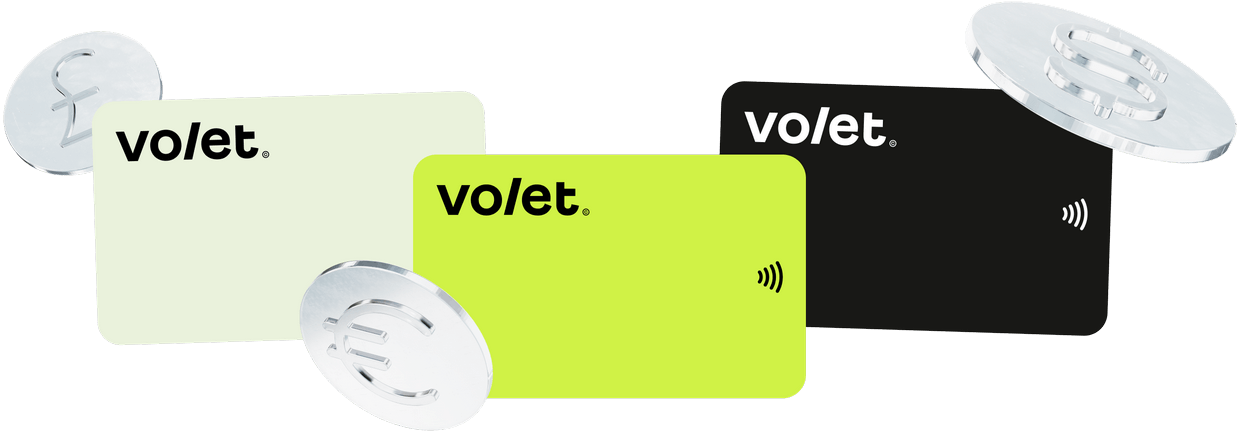
A wallet is useful. A wallet plus card access is different. That combination turns a balance into a spending tool. On its cards pages, Volet says users can get plastic or virtual cards for worldwide ATM and POS payments, with availability depending on region. The company also says virtual cards are issued instantly, plastic cards are delivered by region with standard or express options, and cards are typically loaded from the Volet e-wallet rather than from outside sources directly.
This is the point where the phrase from payouts to purchases becomes concrete. A balance inside a digital wallet is helpful, but a balance that can be transferred onto a card and then used online or in person feels immediately more real. That is especially valuable for people whose money often arrives from nontraditional sources. Freelancers, affiliates, creators, and crypto earners do not just need an account that can receive funds. They need a path to groceries, software subscriptions, travel expenses, ad spend, hotel bookings, and ordinary daily purchases. Cards make that possible.
Volet’s card offering is also broad enough to speak to different lifestyles. The global digital Mastercard is positioned as available in more than 150 countries. Europe-focused virtual and plastic products are available across Europe, Turkey, and Israel, while APAC plastic cards cover parts of the Asia-Pacific region. That kind of regional spread is important because cards are only useful when they are actually available where users live and work.
For many users, the card layer is what turns a wallet from “interesting” into “essential.” It provides the last bridge between digital balance management and everyday life. Once the funds can be spent, the account stops feeling theoretical. It becomes part of routine money behavior.
The digital card is where crypto becomes spendable in ordinary life
Volet’s digital card is especially revealing because it shows how the platform thinks about crypto in practical terms. On the official card page, the company says the digital card cannot be topped up directly with crypto. Instead, users add crypto to the wallet and then transfer fiat from the wallet to the card instantly. The same page says the card costs $5 one time, includes $10 instantly credited to the card balance, carries a $2 monthly maintenance fee, works in 150+ countries, uses the Mastercard rate with no extra markup, and supports Apple Pay and Google Pay for POS spending, with ATM withdrawal via Google Pay available as well.
That sequence is important because it is sensible. The card is not pretending to be a direct blockchain payment rail at the point of sale. It is a spending product that uses the wallet as the bridge. Crypto can be the source of value, but the actual card behavior remains familiar. For users, that makes the experience easier to understand. You do not need to think about smart contracts or wallet compatibility while standing at a checkout counter. You fund the wallet, move fiat to the card, and spend.
This makes Volet attractive to people searching for a crypto debit card, bitcoin spending card, virtual crypto card, or stablecoin spending wallet, but it also appeals to users who are not ideologically committed to crypto at all. They simply want optionality. If some of their money begins in digital assets, they want a smooth route into real-world spending. Volet provides that route without demanding that every purchase behave like an on-chain event.
The practical details strengthen that case. Apple Pay and Google Pay support mean the digital card is not limited to desktop ecommerce. It extends into mobile tap-to-pay behavior, which is how many people now prefer to spend. In other words, the wallet is not only about moving money online. It is also about translating balances into ordinary retail life.
Online shopping, subscriptions, and international purchases are part of the same story
A surprising amount of modern spending is neither dramatic nor glamorous. It is monthly software. Streaming services. domain renewals. Cloud tools. travel bookings. marketplace checkouts. ad accounts. apps. hotel holds. ecommerce orders. Yet these small, repeated transactions shape how people judge a wallet more than big one-off transfers do. If a product makes those everyday payments easier, users keep it close.
Volet’s card-and-wallet combination is well suited to this type of spending because it connects balance storage with immediate card access. That makes it useful for virtual card purchases, recurring payments, international online shopping, and day-to-day spending from a wallet balance that may have been funded from bank transfer, other wallet funds, or crypto. The digital card’s compatibility with Apple Pay and Google Pay also broadens its usefulness into in-store payments, not just online checkouts.
This matters for remote workers and online businesses in particular. Many of them live on software subscriptions and digital services. They need an online wallet with prepaid card functionality not because it sounds futuristic, but because ordinary operating costs never stop. A wallet that can hold funds, issue a virtual card instantly, and let the user move money where it is needed reduces the friction of running an online-first life.
It also helps travelers and expats. International spending is not only about flights and hotels. It is also about paying in different countries without feeling disconnected from your own money. A digital wallet for travel needs to bridge currencies, cards, and fast top-ups. That is exactly the territory where Volet is trying to compete.
Withdrawing funds matters just as much as receiving them
No matter how polished a wallet feels, users eventually ask a simple question: how easily can I get the money out? Volet’s personal fees page gives a fairly broad answer. Transfers to another personal account in USD or EUR are listed with no fee. Local bank transfer withdrawals across many currencies start from 1%. SWIFT withdrawals in USD are shown at 1% plus 25 USD. Withdrawals to Visa or Mastercard cards are listed at 4.5% plus a fixed 3 USD or 3 EUR, depending on currency. For crypto withdrawals, the page lists network fees for supported coins, while supported stablecoin withdrawals are shown at 0.5% plus network fee.
This kind of flexibility is easy to overlook, but it is one of the defining traits of a serious international wallet. Different users want different exits. Some want a local bank transfer because that fits rent, savings, or domestic obligations. Some want a card withdrawal because speed or convenience matters more. Some want to move value back into crypto. Some want to keep money internal and simply send it to another Volet user. A wallet that supports multiple off-ramps is telling the user, in effect, that the money is theirs to direct.
That freedom is part of what makes a borderless e-wallet feel modern. Traditional financial tools often assume the same ending for every payment flow: local bank account, same system, same country logic. Volet is built differently. It accepts that money might need to exit toward a bank, a card, a wallet, or a blockchain address, depending on the moment. In cross-border finance, that range of choices is not a luxury. It is part of the product’s usefulness.
For businesses, collecting payments is only half the battle
On the business side, Volet becomes something larger than an online wallet. Its accept-payments pages say companies can accept e-wallet and crypto payments from around the world, with no setup fees and a stated go-live timeline of 24 hours or less. The business overview describes the platform as a unified system that combines crypto and fiat tools in one account, while the fee pages list website payments from Volet wallets from 0.5% and payments from crypto and stablecoins from 0.25%, depending on the rail.
That positioning matters because many global businesses now need more than a classic checkout provider. They may want to accept crypto from one segment of customers, e-wallet payments from another, and still settle in fiat for internal operations. They may need a payment gateway alternative that feels simpler, faster, or more international than traditional setups. They may also want better alignment between incoming payments and outgoing disbursements so that revenue and payouts live inside the same operating environment. Volet’s business stack appears built for exactly that.
What makes the model especially compelling is the way Volet connects payment acceptance to treasury and payout behavior. The business pages do not present payment collection as an isolated function. They frame it alongside multi-currency balances, banking rails such as SEPA, SWIFT, CIPS, and FPS, payout automation, and crypto on-ramp and off-ramp functionality. In other words, the platform is designed not merely to help businesses collect money, but to manage what happens after the payment arrives.
That is a subtle but important difference. Plenty of providers can help a company get paid. Fewer help the business use those funds intelligently across suppliers, affiliates, contractors, global teams, and different currencies from the same account. Volet’s business proposition rests on that broader promise.
Mass payouts are where a platform proves its operational value
If accepting payments is the front door, payouts are the real stress test. This is where many platforms become messy. Paying a few people is easy. Paying hundreds or thousands across different countries, asset types, and user expectations is not. Volet’s mass-payout pages say businesses can send thousands of payouts at once through API or dashboard, using USDT, USDC, crypto, or deposits directly into Volet fiat wallets. The company also says payout automation can run through API or CSV/XLS uploads and that blockchain transactions are parallelized so thousands of payouts can complete in minutes.
Those details matter because payout pain usually comes from scale. A creator platform, CPA network, marketplace, fintech app, or online service may need to distribute rewards, withdrawals, bonuses, commissions, or contractor payments constantly. At that point, banking delays and manual reconciliation start eating into growth. Volet is clearly pitching itself as a payout infrastructure layer for exactly these kinds of businesses. Its business fee pages also list payout fees from 0.5% to Volet wallets, from 2.5% to Visa or Mastercard cards, and from 0.25% to crypto and stablecoins.
The most interesting part may be how Volet frames the recipient experience. Its payout pages say recipients can receive funds into Volet fiat wallets and then withdraw locally to card, bank, or exchange. That means the payout system does not stop at sending. It includes a usable cash-out path. This is crucial for creator economies, affiliate networks, and global contractor platforms, where the recipient often cares less about the technical payout rail than about how quickly and easily the money becomes useful.
In that sense, Volet’s payout model mirrors its personal-wallet philosophy. The transfer itself is not the whole story. The real value is in what comes after: withdrawal, exchange, spending, or redistribution. That continuity is what makes a payout platform feel modern.
Paying contractors, suppliers, and remote teams becomes easier when everything lives in one place
Modern business rarely unfolds in one city, one currency, or one payroll format. A company might have developers in one region, designers in another, affiliate partners elsewhere, and suppliers who prefer a different rail entirely. The old answer was to bolt together banks, payout providers, crypto tools, and manual spreadsheets. It worked, but poorly. Every extra vendor added delay, reconciliation work, and risk of confusion.
Volet’s business overview and payment pages suggest a different approach. The platform says companies can manage multi-currency balances, automate payouts, use local and global banking rails, top up via bank or crypto, and pay contractors, suppliers, creators, affiliates, and remote teams in 180+ countries. It also says recipients can withdraw to local banks, cards, or crypto wallets. The emphasis is not only on sending money globally, but on doing so from one balance and one system.
That idea is valuable for small businesses as much as for larger platforms. A startup paying freelancers does not necessarily need a giant treasury system. It needs something practical. A wallet or business account that can hold different assets, move funds across borders, and adapt to different recipient preferences can remove a lot of operational friction. The same is true for agencies, digital publishers, SaaS founders, and ecommerce operators who have become quietly international over time. They may not think of themselves as global finance teams, but their payment problems increasingly look like global finance problems.
This is where Volet’s all-in-one positioning becomes more than marketing. When incoming payments, treasury, card spending, business balances, and payouts live together, the account stops being a passive container. It becomes part of how the business runs day to day.
Security matters more when one platform does more
A payment product that combines transfers, cards, crypto, and payouts has to take security seriously. Volet’s security pages say both personal and merchant accounts come with a wide set of security tools, including intelligent environment monitoring, physical and software OTP tokens, payment passwords, and IP restrictions. Its company overview also describes the brand as safe, regulated, and strongly focused on privacy and security. Support pages further point users toward 2FA, device management, and account-protection settings.
Those details matter because convenience without control is not enough. The more ways a platform lets users move money, the more important it becomes to protect access and authorize payments carefully. A good secure digital wallet is not simply one that uses encryption behind the scenes. It is one that gives users visible controls, sensible account defenses, and enough structure to make a multi-function payment environment feel trustworthy.
For business users, the stakes are even higher. Once a platform handles customer payments, contractor payouts, treasury balances, and cross-border transactions, security becomes part of operational reliability. It is not an extra feature. It is built into the platform’s reason for existing. Volet’s emphasis on monitoring, multi-layer protection, and structured account security aligns with that reality.
Why Volet makes sense for freelancers, creators, travelers, and online businesses
When people search for a wallet like Volet, they often describe their need indirectly. They may search for a wallet for international freelancers, a global payment app, a borderless business account, a crypto-friendly wallet, a travel card with app support, or an alternative to legacy online payment systems. Underneath all of those phrases is the same wish: they want money to feel easier to move.
Volet works best as an answer to that wish because it does not reduce finance to one step. A freelancer can receive money, hold a balance, convert when necessary, and spend through a card. A creator can treat it as a payout wallet and then use the funds for daily purchases. A digital nomad can use it as part travel payment card, part online wallet, part transfer tool. A business can accept payments, manage liquidity, and distribute funds globally from the same platform. A crypto user can move from digital assets into card spending without needing a maze of separate services.
That breadth is the real point. Volet is not trying to win by being the most minimal wallet on the market. It is trying to be the wallet that remains useful after the first transaction. After the payout. After the deposit. After the conversion. After the transfer. After the card top-up. After the business receives customer funds. The platform’s value lies in how those moments connect.
In a fragmented financial world, that kind of continuity is hard to overstate. The products people keep are rarely the ones with the most dramatic slogans. They are the ones that quietly solve several problems at once. That is what gives Volet its edge. It moves beyond the narrow idea of a wallet and into something closer to a money operating system for modern life.
The real strength of Volet is that it matches how money moves now
The most compelling thing about Volet is not any single headline feature. It is the way the platform mirrors the actual shape of modern money. People and businesses now live in a world where payouts can be international, balances can be multi-currency, crypto and fiat can coexist, and spending can happen through virtual cards, mobile wallets, physical cards, bank withdrawals, or platform transfers. The line between receiving, managing, and spending money has blurred. Financial tools that still treat those as separate universes feel older every year.
Volet feels more relevant because it starts from a different assumption. It assumes the same user may need to receive employer or affiliate payouts, move funds internally, hold fiat and digital assets, convert between them, send money abroad, withdraw to a bank, and pay online or in stores. It assumes a business may want to accept payments from customers, keep multi-currency balances, automate mass payouts, and handle cross-border treasury from one dashboard. Those assumptions are not futuristic. They are ordinary now.
That is why the platform’s story hangs together so well. From the outside, cards, crypto, transfers, and payouts can look like separate features. In reality, they are all chapters of the same financial journey. Money comes in. Money changes form. Money goes out. Money gets spent. Money gets redistributed. Money moves again. Volet’s entire proposition is about making those transitions smoother, faster, and more practical.
Conclusion: from incoming funds to real-world spending, the flow matters
The promise behind Volet is simple to describe and surprisingly powerful in practice. Money should not lose momentum the moment it enters your account. It should keep moving. It should be possible to receive a payout, hold it in a useful balance, exchange it when needed, send part of it elsewhere, withdraw some of it, and spend the rest through a card without feeling like you are changing financial worlds every time. That is the common thread running through Volet’s personal wallet, crypto tools, cards, and business infrastructure.
For personal users, that means an online wallet that can do more than simply sit there. It can receive money, support internal transfers, connect fiat and crypto, and turn balances into spending power through virtual or physical cards. For businesses, it means a payment platform that can accept funds, manage multi-currency operations, and send payouts at scale without forcing teams to juggle disconnected providers. In both cases, the attraction is the same: less fragmentation, more control, and a clearer path from income to action.
That is why the title fits so well. From payouts to purchases, Volet is built around movement. Not passive balance storage. Not one-off transfers. Not isolated card products. Movement. The platform is at its strongest when money needs to keep changing form without losing usefulness along the way. In a world where personal finance, digital commerce, remote work, crypto, and cross-border business are increasingly blended together, that is not just a convenience. It is the feature that matters most.