
A New Era for the Digital Wallet
Not long ago, the idea of a digital wallet felt simple. It was a convenient online tool, a faster way to check out, a place to hold a balance, or a useful bridge between a bank card and an online store. For many users, that was enough. An e wallet helped with payments, saved time, and removed some friction from online shopping. But the category has changed. What used to be a lightweight payment utility is now becoming a much more important part of how people and businesses manage money across borders, currencies, devices, and digital ecosystems.
That change is not theoretical. The payments industry itself now treats digital wallets as a dominant method rather than a side option. Worldpay’s Global Payments Report says digital wallets accounted for 56% of global e-commerce transaction value in 2025 and 34% of point-of-sale transaction value, while Capgemini’s 2026 payments research describes a market where consumers are shifting toward digital wallets and account-to-account payment experiences as non-cash transactions keep accelerating.
Those numbers explain why the conversation around wallets has grown so much. People are no longer asking only whether a wallet can store money or support a card payment. They want to know whether it can act as a complete money tool. Can it hold multiple currencies? Can it connect to virtual and plastic cards? Can it support international transfers, online shopping, business payouts, crypto balances, currency exchange, and daily spending in the same place? Can it help freelancers, remote workers, creators, merchants, and small businesses move faster without forcing them to juggle separate services for every step of the payment chain?
This is where the modern wallet begins to look very different from the old one. The reinvention of the digital wallet is not just a story about convenience. It is a story about convergence. Cards, transfers, crypto, stablecoins, merchant tools, and mobile-first account control are being pulled into one interface. A digital wallet is becoming less like a digital pocket and more like a command center for money in motion.
Volet belongs to that newer generation of platforms. Its current official pages present it as a payment hub for people and businesses that combines fiat and crypto, free instant P2P transfers for personal accounts, virtual and plastic cards, business payment tools, developer-facing infrastructure, and international payout capabilities. In other words, it reflects the wallet category as it exists now, not as it existed years ago.
That matters because the demands on money have changed. A user today may need a secure digital wallet for everyday spending, a multi currency wallet for cross border living, a virtual card wallet for subscriptions, a crypto friendly wallet for holding digital assets, and a fast money transfer app for moving funds to another person or another system. In the past, that might have meant four or five separate products. Increasingly, people expect one. The wallet is being reinvented because modern money itself is fragmented, global, fast, and digital. The tools that survive will be the ones that bring that complexity together without making the experience harder to use.
Why the Old Wallet Model No Longer Feels Enough
The original appeal of the online wallet was clear. It made digital payments easier. It reduced the need to type in card details. It sometimes offered a safer or faster alternative to direct card use on unfamiliar sites. For a long time, that functionality was enough to make the e-wallet feel modern. But consumer behavior, business needs, and the shape of digital commerce have all moved beyond that narrower model.
The average user now operates across far more payment contexts than before. They may earn money from a foreign platform, pay for streaming services in another currency, shop from international merchants, use a digital card for ads or software tools, move funds to friends instantly, or hold part of their value in crypto or stablecoins. A wallet designed only for one narrow payment lane quickly starts to feel limited.
The business side has changed just as much. Companies paying creators, affiliates, remote teams, or overseas contractors do not want to spend their time moving between fragmented providers for checkout, treasury, payouts, and card issuance. They want fewer operational layers, fewer delays, and fewer mismatches between how money comes in and how it goes out. Capgemini’s latest payments research makes that broader backdrop clear, noting the growth in non-cash transactions, the rise of digital wallets, and the parallel digitization of B2B payment flows.
That is why the older wallet model feels incomplete now. It solved for convenience, but the market now demands versatility. A wallet today is expected to be an online wallet with debit card access, a payment app, a global digital wallet, a secure app for overseas payments, and in many cases a bridge between fiat and crypto. It needs to work at checkout, in the app economy, in peer transfers, in business payouts, and sometimes in global commerce. The wallet is no longer evaluated only by whether it stores value. It is judged by whether it helps value move usefully.
Volet’s structure reflects that newer expectation. Its homepage centers on paying and getting paid, moving money and crypto instantly between wallets, supporting both personal and business activity, and enabling mass payouts, B2B and B2C flows, and crypto payments. That kind of positioning would have been unusual for a wallet brand a decade ago. Today it feels increasingly aligned with how the market works.
The Digital Wallet Has Become a Financial Interface
One of the most important changes in this category is conceptual. The wallet is no longer just a container. It is an interface. It is the place where a user sees balances, decides how to route funds, chooses whether to exchange or withdraw, funds a card, sends a transfer, or sets the rules that protect the account. That is a much broader role than simple storage.
In practice, the modern digital wallet is becoming a user’s preferred financial dashboard for specific types of money activity. Instead of asking a person to think in terms of disconnected services, it presents a flexible layer where balances, transfer options, cards, and account controls live together. This is one reason the phrase all in one payment app keeps appearing across the market. The demand behind it is real. People want one app for spending and transfers, one app for cards and balances, one app for global payments, and one app that can reduce friction rather than multiply it.
Volet’s official positioning strongly supports that view of the wallet. The platform describes itself as a place where people and businesses can pay, get paid, store and swap money and digital assets, use cards, manage crypto, and run payment flows from a single environment. Its company page describes a mission built around making financial services simple, safe, and reliable while bridging traditional money and digital assets.
That is the heart of the reinvention. The wallet used to sit next to the financial system. Now it increasingly sits in front of it. For many users, especially those with cross border lifestyles or digital-first income, the wallet becomes the first place they open when they need to do something with money. That shift changes what matters. Design, account control, speed, exchange options, card management, payout logic, and security layers all become part of the core experience rather than optional extras.
A strong modern wallet therefore has to do more than “work.” It has to feel coherent. It has to connect the act of receiving money to the act of spending it. It has to make sending money abroad feel manageable. It has to give a user practical tools for online shopping, foreign transactions, recurring payments, subscriptions, and business spending. The more of those flows it can connect without confusion, the more useful it becomes.
From Simple Balances to Multi-Rail Money Movement
A defining feature of the reinvented wallet is that it can operate across multiple rails. That means the wallet is not trapped inside a single network or one narrow payment method. Instead, it connects different kinds of balances and different movement paths in a way that feels unified to the user.
This matters because money rarely arrives in the same form in which it will ultimately be used. Someone may receive a payment into a wallet, exchange it, move part of it to a virtual card, spend a portion through a physical card, send another portion to a friend, and withdraw the rest to a bank account. In other cases, someone may receive crypto, convert it into fiat, then use those funds for daily purchases or a supplier payment. The more fragmented a person’s financial life becomes, the more valuable a wallet becomes when it can coordinate these paths inside one interface.
Volet’s current product material is built around exactly this kind of multi-rail logic. For personal accounts, it highlights instant wallet-to-wallet transfers, crypto wallet functionality, fiat balances, cards, and a range of deposit and withdrawal options. Its personal fees page lists routes such as local bank transfer withdrawals, SWIFT withdrawals, card withdrawals, and transfers to personal accounts, which shows that the wallet is designed with multiple entry and exit points rather than as a closed loop.
On the business side, the pattern is even clearer. Volet’s business pages describe multi-currency balances, banking rails including SEPA, SWIFT, CIPS, and FPS, crypto payment flows, API-based payout automation, and the ability to settle in fiat when needed. That combination is important because it reduces the number of handoffs required to run cross border money movement at scale.
This is one reason the multi currency wallet has become such an important concept. It is not only about holding more than one balance. It is about reducing the friction of switching contexts. A true global digital wallet or borderless e wallet gives the user more than storage. It gives them routing power. That is what the old wallet model often lacked, and that is exactly what the new generation is trying to provide.
Cards Are Now Central to the Wallet Experience
Perhaps the clearest sign that the digital wallet has been reinvented is how deeply cards have been pulled back into the experience. There was a time when wallets and cards felt like separate financial objects. The wallet was for online balance management. The card was for spending in the world. The modern wallet is trying to erase that separation.
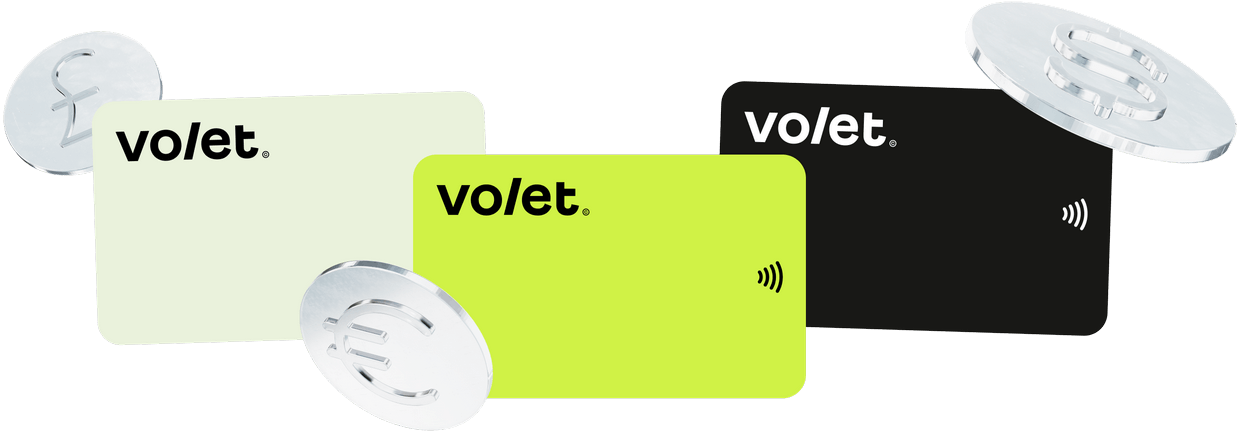
Volet’s card pages show how central that connection has become. The platform offers both virtual and plastic cards, supports instant loads from the Volet e-wallet, and positions these cards for online and offline spending. Its current card information says the global digital Mastercard is available in 150+ countries, Europe cards are available across Europe, Turkey, and Israel, and APAC plastic cards are offered in the Asia-Pacific region. The same materials also state that virtual cards are issued instantly and that some cards support Apple Pay and Google Pay.
That has major practical consequences. A wallet with instant virtual card issuance becomes useful immediately for subscriptions, domain renewals, ad platforms, app purchases, online tools, and virtual checkout flows. A wallet with a physical card becomes relevant in daily life: travel spending, ATM access, dining, transport, retail, and contactless purchases. When those cards are tightly connected to the wallet balance, the account becomes much more than a place to park funds.
This is why so many search phrases around the category revolve around card utility: wallet with virtual Mastercard, wallet with physical card, global debit card app, prepaid travel wallet, digital card for subscriptions, secure virtual card for shopping, and online wallet with debit card. These are not random variations. They reflect a structural shift in how users define value in the wallet category. The wallet is no longer complete unless it can support spending in ways that feel immediate, flexible, and global.
Volet’s official card flow reinforces that point. Users create an account, order a virtual or plastic card, transfer USD or EUR from the Volet account to the card, and then spend online or offline. That sequence matters because it shows the wallet as the account core and the card as the spending arm. In older products, those layers were often disconnected. In the newer wallet model, they are designed to work together.
Why Instant Virtual Cards Matter So Much
Virtual cards deserve their own focus because they are one of the features that most clearly transform a wallet from passive storage into active utility. When a wallet can issue a virtual card instantly, the user does not have to wait for spending power. They can receive funds and put them to use right away.
Volet’s current card pages say virtual cards are issued instantly, and its support materials confirm that the digital card can be linked to Apple Pay or Google Pay where supported. Those two capabilities together are significant. They mean the wallet can move from account creation to practical spending far faster than older financial tools that rely entirely on physical card delivery or slower account activation processes.
This is especially important for specific user groups. Freelancers need to pay for software. Media buyers need cards for ad spend management. Online businesses need virtual cards for recurring tools and services. Remote teams may need digital cards for subscriptions or project-specific expenses. Travelers may want a digital card before they even leave home. In all of these cases, instant issuance turns the wallet into a working financial tool from day one.
The value goes beyond speed. Virtual cards also fit the way modern commerce actually happens. So much spending now takes place in browser windows, app stores, SaaS dashboards, and global e-commerce checkouts that a wallet with a strong virtual card layer often feels more relevant than one that focuses only on physical spending. A virtual card wallet speaks the native language of the internet economy.
That does not mean physical cards have become unimportant. It means the balance has changed. Many users now want both. They want an instantly issued virtual card for online control and a physical or digital mobile-wallet-compatible card for broader everyday spending. The wallet platforms that understand that dual demand are the ones better positioned for the modern payment landscape.
The Multi-Currency Wallet Is No Longer Optional
There was a time when a user could treat foreign transactions as occasional exceptions. Today, for many people, they are part of normal life. That is why the multi currency wallet has gone from a specialist feature to a mainstream expectation.
A user may be paid in one currency, spend in another, shop in a third, and save in a fourth. They may also hold stablecoins or digital assets alongside fiat. Even when they live in one country, their financial life may be international by default because work, commerce, subscriptions, or family obligations cross borders. The single-currency, single-rail model simply does not fit that reality very well anymore.
Volet’s current business materials explicitly frame the product as a multi-currency environment. The company states that business accounts can hold USD, EUR, USDT, USDC, BTC, ETH, and other assets, while using both traditional banking rails and blockchain networks for payments and payouts. It also says businesses can accept crypto and fiat in one system and settle in fiat if needed.
That same broader flexibility shows up in Volet’s personal-side messaging as well. The platform supports both fiat and crypto balances, card funding from the e-wallet, local and global withdrawal methods, and conversions between asset types. Its crypto pages describe switching between crypto and fiat, buying and selling crypto and stablecoins, and sending and receiving digital assets through the account.
For the user, the advantage is not just variety. It is simplification. A wallet for multicurrency spending helps reduce the need to constantly export value from one system to another. It can make foreign transactions feel more manageable. It can help with app-based currency exchange, online foreign exchange flows, and travel payment needs. It can also serve as a better day-to-day tool for people who live globally even if they do not think of themselves as “international users.”
This is one reason the modern international payment account is increasingly defined less by nationality and more by behavior. If your money life spans platforms, currencies, or countries, a borderless payment wallet makes more sense than a tool built only for domestic routine.
The Crypto-Friendly Wallet Has Become More Practical
For years, crypto products often lived in a separate world from everyday payments. They were useful for buying, holding, and trading digital assets, but less useful for common financial tasks. The new generation of wallets is changing that by connecting crypto to a wider payment framework.
Volet’s product ecosystem is built heavily around that bridge. Its crypto pages describe buying and selling crypto and stablecoins, switching between crypto and fiat, storing and sending coins, and using the account with major exchanges. Its card pages add an everyday-spending dimension by explaining that many users fund their fiat e-wallet via crypto or stablecoins and then load the card for practical use. Its business materials go further by describing crypto and fiat payment flows in one system, with on-ramp and off-ramp support and the ability to settle in fiat when needed.
That shift matters because it makes the crypto friendly wallet less abstract. It becomes a tool not just for enthusiasts, but for anyone who wants optionality. A creator can receive crypto and spend with a card. A freelancer can hold stablecoins and convert when needed. A business can accept digital assets without forcing its internal team to operate entirely in crypto terms. A user can treat digital assets as part of a broader money environment rather than a sealed-off speculative bucket.
This is where phrases like crypto to fiat wallet app, stablecoin wallet, spend crypto worldwide, crypto wallet with spending features, and digital asset spending app begin to reflect real product evolution. The point is not that every user needs crypto. The point is that a wallet category built for modern payments increasingly needs to be able to accommodate it.
Volet’s own company story leans into that bridging role. Its company page says it has been building around the connection between traditional money and crypto since 2014 and describes the product as making digital assets feel more like a familiar financial app. Whether one comes from the fiat side or the crypto side, the direction is the same: less fragmentation, more usability.
Speed Has Become Part of the Value Proposition
Convenience used to be the primary wallet promise. Now speed has joined it as a major differentiator. Users do not simply want digital payments. They want a wallet that feels responsive to the pace of digital life.
Volet’s official homepage puts speed front and center with free instant P2P transfers for personal accounts, allowing users to move money and crypto between Volet wallets or crypto wallets without fees on the personal side. On the business side, the platform describes mass payouts through API or dashboard, including the ability to send thousands of payouts in minutes and deliver funds directly into fiat wallets inside the system.
That kind of speed changes the meaning of the product. A wallet stops feeling like a waiting room and starts feeling like a live money tool. For individuals, it means getting paid and then being able to spend, send, or withdraw without unnecessary lag. For businesses, it means reducing operational drag when paying affiliates, creators, freelancers, or remote teams.
The word “instant” has been overused in fintech marketing for years, but in the wallet category it still matters because delays are cumulative. If a user receives money slowly, converts slowly, moves slowly, and spends slowly, the friction adds up. A strong wallet cuts those delays down across the entire sequence. That is a meaningful product improvement, not just a cosmetic one.
This is why a fast money transfer app, instant money transfer wallet, or wallet for quick transfers is more than a feature tag. It speaks to the lived experience of digital work and global payments. The faster money becomes usable, the more helpful the wallet becomes.
Security Is No Longer a Background Feature
As wallets become more capable, the stakes around security rise. A modern secure digital wallet is not just a payment shortcut anymore. It may hold multiple balances, connect to cards, enable withdrawals, support crypto, and route significant transaction volume. That means users need more than passive reassurance. They need visible controls.
Volet’s support materials show that security is built into the product as a system of layers rather than a single switch. The company documents two-factor authentication with one-time passwords refreshed every 60 seconds, a payment password required for transfers and withdrawals, and “Intelligent Identification,” which sends email confirmation requests when login behavior such as IP address or location appears unfamiliar. Its broader security settings section also lists additional tools such as IP address binding, code card support, and SMS authorization.
That approach matters because the wallet is increasingly acting as a serious financial interface. A wallet with 2FA, transaction-specific protections, and login anomaly checks feels different from a lightweight app that simply stores a balance and hopes for the best. Security becomes part of usability because a user can decide how tightly to protect account access and sensitive actions.
The most important point here is not that security is glamorous. It is that the reinvented wallet must be trusted. A user who relies on a wallet for international spending, card management, crypto conversion, or business payouts needs a safe multicurrency wallet, a protected global transfer app, and an account they can actively secure. Strong security is not the opposite of convenience anymore. It is part of what makes convenience sustainable.
Verification and Compliance Help Define a Serious Wallet
Another important part of the reinvention is that the wallet is not trying to avoid structure. The more useful the product becomes, the more it must support verification, compliance, and operational legitimacy.
Volet’s support documentation states that verification is not obligatory for simple access, but it is required to fully use the platform, unlock all types of transfers and deposits available in a user’s country, access full transaction limits, and order Volet cards. That is an important detail because it shows the wallet is designed to scale with user needs rather than pretending that complex financial activity can happen without identity or control processes.
This is one of the quiet but crucial ways the wallet category has matured. The modern online wallet is no longer just a workaround for traditional finance. In many cases, it is better understood as a more flexible front end to serious payment operations. That includes onboarding, verification, transfer permissions, and security rules.
For users looking for an alternative to traditional payment platforms, that balance matters. They may want a wallet that feels easier, faster, or more global than older systems, but they also want a product that can support real financial use. A wallet for international payments, a business payment platform, or a crypto-enabled e wallet has to function in a world where trust, documentation, and safeguards are part of the product.
The result is that compliance stops feeling like a side issue and starts feeling like one marker of seriousness. A wallet that can handle more advanced payment tasks while still guiding users through the controls needed to use them fully is simply better aligned with the demands of modern money.
Volet as an Everyday Wallet, Not Just a Niche Tool
One reason Volet fits so well into this broader story is that it is not framed as a niche product for only one kind of user. Its current messaging touches everyday personal finance, card-based spending, online payments, crypto use, international transfers, and business activity. That range helps it feel more like a modern wallet ecosystem than a narrow specialist tool.
On the personal side, Volet highlights getting paid by employers or affiliate programs, receiving payouts, transferring money and crypto instantly, and using cards for day-to-day spending. That covers a surprisingly wide portion of what many users actually need from a digital wallet: receiving, storing, moving, and spending value.
This matters because one of the biggest myths about the wallet market is that users want endless specialization. In reality, many users want simplification. They want an online wallet with payment cards. They want a payment app with currency exchange. They want a digital wallet for daily spending that can also support foreign transactions and quick online purchases. They want a money app with virtual and plastic cards that does not force them to rebuild their habits around separate tools.
Volet’s design speaks to that desire. It offers a path from getting paid to moving funds, from moving funds to card spending, and from wallet balances to external withdrawals. That is why it can fit use cases ranging from online shopping card needs to app-based money movement and international spending.
The strongest wallets today are not necessarily the ones that try to dominate one tiny use case. They are the ones that help users live more fluidly across several connected ones. Volet feels aligned with that idea.
Why Travelers, Expats, and Global Spenders Need More From a Wallet
Travel is one of the clearest examples of why the wallet has evolved. A traveler does not just need money. They need flexibility. They may need to hold funds digitally, spend in stores, pay online, load a virtual card, use a physical card for ATM withdrawals, handle different currencies, and manage everything from a mobile-first interface.
Volet’s current card offering makes that kind of use case more natural. The company positions its cards for worldwide use, offers a global digital Mastercard in 150+ countries, and says many users choose its cards specifically for crypto spending after topping up their fiat e-wallet with crypto or stablecoins. It also notes that some cards support Apple Pay and Google Pay, which adds another layer of convenience for mobile-first payment behavior.
That combination is highly relevant for people looking for a travel payment card, an international debit card app, a prepaid travel wallet, or a wallet for foreign transactions. The travel context magnifies every weakness in a financial product. If funding is slow, the user feels it. If card options are limited, the user notices immediately. If foreign currency handling is clumsy, the experience breaks down.
A global wallet therefore becomes especially attractive when it can simplify those moving parts. It can act as a travel wallet with virtual card features, a payment account for travelers, a digital wallet for expats, or a wallet for international students and overseas workers. The broader point is that the wallet is no longer just for online convenience at home. It is increasingly a companion for borderless living.
Why Freelancers, Creators, and Affiliates Gravitate Toward Wallets Like This
The reinvention of the wallet also maps closely to how internet-based work now operates. Many independent earners are not paid through one standard local payroll system. They receive commissions, affiliate payouts, creator earnings, client payments, contractor fees, or platform income that may come through mixed channels and mixed currencies.
Volet’s homepage explicitly mentions getting paid by employers or affiliate programs and receiving CPA network payouts. Its business and mass payout pages add creators, freelancers, affiliates, and teams to the picture, while describing payout automation, dashboard or API-based disbursement, and direct delivery into fiat wallets.
That matters because independent digital work is often operationally messy. The problem is not only earning money. It is making that money usable quickly. A wallet for affiliate marketers, a payout wallet for creators, or a wallet for international freelancers needs to connect income with spending, transfers, and withdrawals without adding several extra steps.
This is where the modern digital wallet can feel far more practical than a conventional account model. It can serve as a wallet to send and spend, a platform for receiving international payments, a balance for online purchases, and a bridge to cards and bank withdrawals. It can help remote workers, consultants, publishers, and online entrepreneurs operate with more continuity rather than patching together their financial life from separate tools.
Volet’s structure makes sense in that context because it combines earning-side relevance with spending-side relevance. It is not just about receiving payouts. It is about what comes next.
Business Wallets Are Becoming Payment Infrastructure
On the business side, the transformation of the wallet category is even more pronounced. The old view of a wallet as a consumer-only product no longer holds. Increasingly, business wallets function as payment infrastructure.
Volet’s business pages make that clear. The platform describes a suite of services that includes crypto acquiring, multi-currency balances, local and global banking rails, API automation, smart-contract tools, and mass payouts to creators, freelancers, affiliates, and teams. It also says businesses can accept USDT, USDC, BTC, and ETH, settle instantly in fiat if needed, and keep both crypto and fiat liquidity in one account.
That is more than a business account in the narrow sense. It is a cross border commerce wallet, a payout system, a settlement layer, and in some cases a treasury tool. For marketplaces, SaaS firms, affiliate networks, agencies, Web3 companies, and international merchants, this kind of product can replace several separate vendors and workflows.
The significance here is structural. When a wallet becomes capable of accepting payments, managing balances, converting value, and distributing payouts, it stops being a side tool and starts becoming part of the operating stack. That is a major reinvention of the category. It means the wallet is no longer only about the consumer checkout moment. It is also about how businesses move money internally and externally.
Volet even reinforces that position with developer tools and no-code options, which strengthens the idea that the wallet is becoming infrastructure, not just interface.
The Rise of APIs, Hosted Checkout, and Embedded Wallet Functionality
Another defining trait of the new wallet era is that wallet functionality increasingly extends beyond the user dashboard. The strongest payment platforms now let businesses embed their capabilities into their own sites, products, or workflows.
Volet’s developer materials show this shift directly. Its API page says the payment gateway API can be used to accept crypto payments, automate payouts, manage balances, and create custom payment flows for everything from personal projects to SaaS products and large-scale platforms. It also says Volet offers the API with no setup or monthly fees, charging only for processed transactions.
For businesses that do not want custom backend work, the hosted checkout and plugin options fill the gap. Volet’s hosted checkout page describes a ready-made payment flow where users are redirected to a secure payment page managed by Volet, removing the need for custom backend coding or direct PCI burden. Its plugin pages add CMS and e-commerce support, allowing crypto and fiat acceptance without coding and with automated payment handling inside the plugin flow.
This is one of the most important ways the wallet is being reinvented. It is no longer just something a user opens. It is increasingly something a business deploys. Wallet functions become embeddable payment logic. The product evolves from a standalone app into a toolkit for payment orchestration.
That change matters because it broadens the role of the wallet category enormously. A wallet is no longer only a consumer finance product. It can also be a no-code checkout engine, a payout automation layer, a multi-currency settlement environment, and an API-accessible money movement system.
What Makes a Wallet Feel Modern in 2026
When people talk about a modern wallet now, they are usually pointing to a certain combination of qualities rather than one single feature. A modern wallet should feel fast. It should make funding and spending intuitive. It should connect balances with virtual and physical cards. It should work across online and offline spending. It should support international payments more naturally than older systems. It should offer visible security controls. And increasingly, it should allow users to move between fiat and crypto without unnecessary complexity.
Volet checks many of those boxes in its current product lineup. It offers free instant P2P transfers for personal accounts, crypto and fiat functionality in one broader environment, instant virtual cards, regional physical card options, mobile wallet compatibility for supported digital cards, business payment tools, payout automation, and developer infrastructure. Its support materials also show multiple security layers and a verification model that expands access to fuller account use.
What makes this especially relevant is that the user no longer thinks only in terms of “payments.” They think in terms of financial continuity. They want the wallet to help them get paid, move funds, spend online, pay abroad, manage cards, and maintain control over security and balances. The products that feel modern are the ones that understand that continuity.
In that sense, the reinvented digital wallet is not defined by novelty. It is defined by coherence. It brings together functions that used to live in separate places and makes them feel like one system.
The Digital Wallet as a Practical Alternative for Global Payment Tasks
The phrase “alternative to banking” appears often in fintech discussions, but it needs to be handled carefully. A digital wallet is not necessarily identical to a traditional bank account, and users should understand that distinction. Still, for many global payment tasks, the wallet can function as a practical alternative to older, more rigid systems.
This is especially true when the need is not a full domestic banking relationship, but rather a flexible tool for cross border spending, digital commerce, payout reception, app-based transfers, and online card management. In those contexts, a wallet can feel more aligned with real behavior than a conventional account setup.
Volet’s product mix illustrates why. It connects receiving and sending, card issuance, crypto handling, payout logic, hosted checkout, and multi-currency business balances inside one environment. That kind of design can make it highly relevant for users who want a borderless payment wallet, a digital alternative to a bank account for online payment tasks, or an international wallet with virtual card features.
The important point is not that wallets replace every financial need. The point is that the category has grown capable enough to cover much more of modern financial life than before. It can often handle the parts of money movement that feel most fragmented: getting paid online, managing spending cards, moving funds abroad, handling digital assets, or distributing business payouts.
That is why the wallet has become more central. It is not just a payment shortcut anymore. It is often the most usable tool for specific modern payment realities.
What Users Should Look for in a Reinvented Wallet
As the wallet category grows more complex, the smartest question is not simply which wallet looks popular. It is which wallet actually matches how the user lives and earns.
A user who shops online heavily may prioritize instant virtual cards, card controls, and secure checkout functionality. A traveler may care more about international card support, foreign spending, and ATM-linked options. A freelancer may need easy payout receipt, multi-currency handling, and fast transfer options. A business may require APIs, fiat-and-crypto flows, hosted checkout, and mass payouts.
Volet’s current product range suggests it is strongest where those needs intersect. It is clearly built for people and businesses that operate in digital-first, often cross-border environments. Its blend of cards, transfers, crypto capability, and business tooling makes it particularly relevant where money needs to move between contexts rather than stay in one lane.
The broader lesson is that the reinvented wallet should be evaluated less like a single feature and more like a workflow system. Does it help turn incoming money into usable money quickly? Does it connect balances with spending options? Does it reduce fragmentation? Does it give the user visibility and control? Does it scale from simple payments to more advanced tasks?
Those are the questions that define the category now.
The Reinvention of the Digital Wallet Is Really About Control
In the end, the most important word in this whole transformation may be control. The old wallet offered convenience, but the new wallet offers something broader: control over where money sits, how it moves, how it is protected, and how quickly it becomes useful.
That is why the modern digital wallet matters so much. It gives people more direct command over their payment life. It helps them move between online and offline spending, between fiat and crypto, between person-to-person transfers and business payouts, and between local and global financial activity without feeling trapped in one channel.
Volet represents that shift well because it is built around connected control points: free instant P2P transfers for personal users, fiat and crypto in one broader environment, instant virtual cards, physical card options by region, developer tools for checkout and payment flows, business payout automation, and layered account security. Each of those functions matters on its own, but together they show what the wallet has become. It is no longer only a place to hold value. It is a place to direct value.
Conclusion: Why the Digital Wallet Keeps Expanding
The reinvention of the digital wallet is not a branding exercise. It is a response to how money actually works now. People earn from platforms, contractors, brands, affiliate networks, and global clients. They spend through apps, subscriptions, marketplaces, travel checkouts, and mobile devices. They hold more than one currency. They may use stablecoins or digital assets. They expect speed. They expect flexibility. They expect account control. And increasingly, they expect one product to handle more of that complexity than older financial tools ever could.
That is why the wallet category keeps expanding. The digital wallet has become one of the most important financial formats of the modern era because it sits exactly where modern life needs it to sit: between earning and spending, between digital and physical commerce, between local and international money movement, and between traditional finance and newer asset systems. The broader market data supports that trajectory, with digital wallets already accounting for a majority of global e-commerce transaction value and a large, growing share of in-store payments as well.
Volet is a strong example of what this expansion looks like in practice. Its official product ecosystem brings together personal payments, card-based spending, crypto handling, multi-currency business balances, international payout tools, hosted checkout, APIs, and layered security settings. For users who want a secure digital wallet, a global digital wallet, an online wallet with debit card options, a crypto friendly wallet, a multi currency wallet, or a business payment platform that can operate across borders, that combination is increasingly compelling.
The most important point is this: the wallet is not replacing one old function with one new one. It is absorbing many functions at once. It is becoming a wallet for everyday spending, a wallet for international payments, a transfer app, a virtual card wallet, a payout tool, a business payments layer, and for some users, a practical bridge between fiat and crypto. That is what reinvention means here. The category has grown wider because the needs around it have grown wider.
And that is exactly why the digital wallet now matters more than ever.