
Why Global Spending Still Feels Hard for So Many People
Money is supposed to move faster than ever. We live in a world where people earn from clients in one country, shop from merchants in another, travel across borders regularly, and increasingly hold both fiat and digital assets. Yet the practical experience of spending globally still feels fragmented. One service is good for receiving payments, another is good for converting currencies, another is built for crypto, and yet another is needed when it is finally time to pay in a store, shop online, or withdraw cash.
That fragmentation is exactly what makes so many users start looking for a better digital wallet. They are not only searching for an e wallet in the abstract. They are searching for a smoother financial workflow. They want one online wallet that can help them receive money online, send money online, handle international money transfer needs, manage cross border payments, and still behave like a practical wallet for everyday purchases. In other words, they do not just want storage. They want movement.
Volet presents itself as a payment hub built around that broader idea. On its official site, the company describes itself as a secure e-wallet and payment platform that has operated since 2014. It says it serves more than 7 million users, supports 150+ countries, processes more than 1 million monthly transactions, and works with more than 10,000 merchants. That combination of scale, longevity, and multi-feature positioning matters because it shows Volet is not trying to solve only one tiny part of the payments puzzle. It is aiming to connect multiple stages of the money journey inside one system.
What makes that interesting is not just the existence of another fintech brand. The market already has plenty of apps that promise faster payments. What matters is whether a platform can reduce friction between earning, holding, converting, sending, and spending. That is where Volet becomes worth a closer look. Rather than asking users to choose between a fiat wallet, a crypto wallet app, a prepaid card wallet, a business payout tool, and a travel payment card, it leans into the idea that modern users may need all of those functions at once.
Volet as More Than a Simple Online Wallet
At first glance, Volet can be described as a digital wallet or global digital wallet. But that phrasing almost undersells the platform. A basic online wallet stores funds and maybe lets users move them from point A to point B. Volet’s feature set is wider. The company says users can send and receive international payments in USD, EUR, stablecoins, and other cryptocurrencies. Those funds can move to another Volet user, to a bank account or card, or to an external crypto wallet. That means the service is not confined to a closed loop. It is designed to connect internal transfers with outside rails.
That broader functionality is one reason the platform can appeal to very different audiences. A freelancer may use it to receive a payout, keep part of the balance in fiat, move another part into crypto, and spend the rest using a card. A remote worker may need a wallet for USD transfers or EUR transfers while living in a different country from the company paying them. A creator may want an affiliate payout wallet that also works as a worldwide payment wallet. A digital nomad may need an international e wallet that doubles as a travel money tool. These use cases sound different, but they all depend on the same thing: fewer handoffs between systems.
Volet also frames itself around practical everyday movement. On its homepage, it highlights getting paid by employers or affiliate programs, receiving CPA network payouts, distributing funds within teams, and automating B2B and B2C payments. It also emphasizes free instant peer-to-peer transfers for personal accounts. This is important because many payment tools work well in one direction but badly in another. Some are easy for receiving funds but awkward for spending them. Some are good for storage but poor for outgoing payouts. Volet’s message is that its value lies in handling both inbound and outbound money flows.
Seen through that lens, Volet is not merely an ewallet in the old sense. It is closer to a borderless payment wallet that tries to bridge the worlds of personal finance, global payments, crypto utility, and business operations. That is a much more ambitious role than simply replacing a leather wallet with a digital interface.
The Real Convenience: One Flow Instead of Five
The strongest argument for a service like Volet is simplicity of flow. Most people do not think in product categories when they are trying to move money. They think in tasks. “I got paid.” “I need to convert this.” “I want to send some to a contractor.” “I need a card for online shopping.” “I want to spend abroad.” “I need to cash out some crypto.” If every one of those actions requires a separate account, separate verification process, separate login, and separate fee structure, the user experience becomes exhausting.
Volet’s current positioning speaks directly to that problem. It combines fiat and crypto tools in one account and presents the wallet as a place where balances can be received, converted, withdrawn, and spent. Its business materials describe a unified platform that can accept payments, manage multi-currency balances, automate payouts, and support global operations without forcing users to stitch together multiple providers. Even for personal users, the basic logic is similar: fewer moving parts often means less time lost, fewer transfer delays, and less mental overhead.
This is where Volet begins to stand out from the narrower idea of a payment app. A payment app may handle one transaction neatly. A multi currency wallet, by contrast, becomes more valuable when it can support an entire sequence. Volet’s official material shows that users can fund accounts through personal transfer, local bank transfer, Visa or Mastercard cards, crypto, and stablecoins, and can withdraw through local bank transfer, SWIFT, bank cards, crypto, and stablecoins. That breadth matters because simplicity is not only about the interface. It is also about having enough rails in one place that the user does not need to leave the ecosystem every time their circumstances change.
This is also why services like this often get searched as a PayPal alternative, online banking alternative, or fintech alternative to banks. The phrase users type into a search engine can vary, but the need underneath it is usually consistent: a single account that helps them earn, hold, move, exchange, and spend money more flexibly than older systems do. Volet fits neatly into that broader category, especially for people whose financial lives are no longer limited to one employer, one country, one currency, or one payment method.
From Receiving Money to Actually Using It
A surprising number of online payment platforms are better at collecting money than helping users live with it. They make it easy to receive funds, but once the money lands, the next steps become awkward. You may face delays, forced withdrawals, limited payout options, or extra friction when moving between fiat and crypto. That is where the phrase “from wallet to world” becomes meaningful. Global spending feels simple only when receiving is directly connected to usable spending.
Volet’s own educational and product pages consistently position the wallet around this idea of usable balance. The company explains that users can receive payments in fiat and crypto, then send them onward to other users, bank accounts, cards, or external wallets. It also emphasizes that a user can swap crypto, convert it to fiat, and withdraw to a bank account from a single screen. That combination matters because it turns the wallet from a static holding place into a working financial hub.
This is especially relevant for global freelancers, affiliates, publishers, remote contractors, and digital entrepreneurs. These users often receive money from international sources rather than local payroll systems. They may also need more than one destination. A portion of income might stay in the wallet for daily spending. Another portion may be sent to a local bank. Another part may be transferred in stablecoins. Another part may be used for subscriptions, software tools, or ad spend. An international payment app becomes much more attractive when it allows these decisions to happen fluidly instead of forcing a single path.
Volet’s homepage even calls out specific earning scenarios, including being paid by employers, affiliate programs, and CPA networks. That kind of positioning suggests the company understands a very modern audience: people whose money does not arrive through old-fashioned domestic banking alone. For that audience, the most useful online wallet is not the one with the fanciest branding. It is the one that lets them actually do something with their funds the moment they arrive.
The Card Layer Is What Makes the Wallet Feel Real
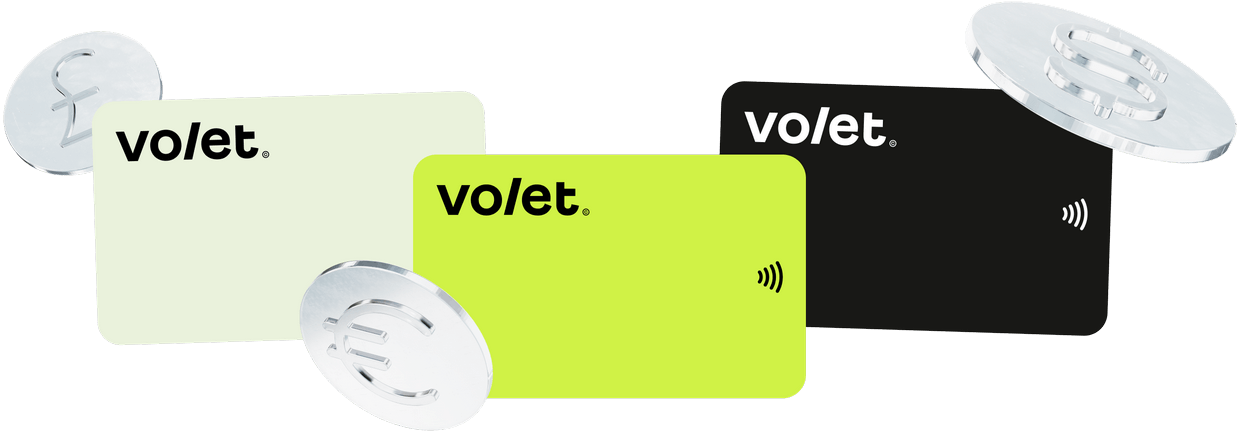
The jump from digital balance to real-world spending is where many platforms either succeed or disappoint. A wallet can look impressive on screen, but if using the money in everyday life is inconvenient, the user still feels trapped in a digital silo. Volet addresses that problem by offering virtual and plastic cards connected to the wallet, with the company describing them as truly global cards for spending balance easily online and offline.
That card layer is central to why the platform can function as more than a secure digital wallet. It becomes a virtual card wallet, a prepaid card wallet, a digital payment wallet, and for many users, a practical travel payment card solution. Volet says its global digital Mastercard is available in 150+ countries, while plastic card availability varies by region, including APAC cards and Europe cards across Europe, Turkey, and Israel. It also says virtual cards are issued instantly, while plastic cards can be delivered using standard or express shipping depending on region.
The details matter here. The cards are loaded instantly from the Volet fiat e-wallet, not directly from crypto. That means the platform is encouraging a specific flow: deposit or receive funds, convert if needed, move fiat into the card, then spend. This may sound like a small design choice, but it creates a cleaner separation between asset management and payment execution. For users who hold crypto or stablecoins, that can make the experience easier to understand. You are not wondering whether the merchant sees crypto, whether conversion happens invisibly, or whether settlement will fail. You move money into fiat and spend from there.
Volet also highlights 0% FX markup on its cards page, which is exactly the kind of detail frequent travelers and international spenders look for. Some cards additionally support Apple Pay and Google Pay, and the platform says certain digital card products can be used for offline contactless payments as well. In practical terms, this is what turns a digital account into a worldwide spending card rather than just a storage tool. The wallet stops feeling abstract when it can pay for dinner, software, transit, subscriptions, travel bookings, and day-to-day purchases.
Why Volet Can Appeal to Crypto Users Without Being Crypto-Only
One of Volet’s more interesting strengths is that it is clearly crypto-friendly without being crypto-exclusive. That is an important distinction. Some platforms are built so heavily around crypto culture that mainstream payment use feels secondary. Others avoid digital assets almost entirely, which limits flexibility for modern users who earn, hold, or transact in stablecoins and major cryptocurrencies. Volet sits somewhere in between. It actively supports crypto wallets and crypto payment flows, but keeps fiat usability at the center.
On its official crypto pages, Volet says users can buy popular assets, create crypto wallets, store coins, send and receive crypto, and move value between internal wallets or external crypto addresses. It lists support for assets such as USDT, USDC, BTC, ETH, SOL, XRP, and TON, among others. The company also notes that crypto wallets are created instantly and for free, and that wallet addresses are permanent, which makes receiving crypto more convenient over time. For people looking for a fiat and crypto wallet, that matters because it reduces the friction of repeated deposit steps.
The real appeal, though, is not merely storage. It is spendability. Volet explicitly positions its cards as a path from digital assets to everyday purchases. It explains that users can fund the fiat wallet via crypto or stablecoins and then load the card balance in USD or EUR. In everyday language, that means the platform can function like a crypto debit card experience even though the spending card itself is funded from fiat balance inside the account. For many users, this is actually clearer and more flexible than a more opaque direct-crypto spend model.
That makes Volet relevant to several search-driven audiences at once. Someone searching for a crypto friendly wallet, a stablecoin wallet, a crypto to fiat wallet app, a bitcoin wallet with card, a crypto card for travel, or a way to spend USDT with card is really looking for a bridge between digital assets and normal life. Volet’s feature mix is well aligned with that need. It lets crypto remain useful without turning every purchase into a mini lesson in settlement mechanics.
A Better Fit for the International Lifestyle
There is a reason phrases like digital wallet for travel, wallet for expats, wallet for international students, and global wallet for nomads are so common in search behavior. More people now live, work, and earn in ways that do not fit neatly inside one national financial system. Traditional banks can still handle some of those needs, but they are often slower, more fragmented, or less welcoming to mixed fiat-and-crypto lifestyles.
Volet makes sense in that context because its structure reflects cross-border reality. A user may load funds locally, receive an international payout, hold balances in multiple forms, use a virtual card for online purchases, rely on a physical or digital card for travel spending, and withdraw money as needed. Official materials say the platform supports sending and receiving money in fiat and crypto, using cards for online and offline purchases, and even withdrawing cash from ATMs. That is a meaningful mix for people whose lives are already spread across borders.
The psychology of this matters too. Many people do not want ten specialized apps for ten specialized tasks. They want one borderless e wallet that feels intuitive. They want a secure app for overseas payments, a wallet for foreign transactions, a cross border wallet app, and a travel card with app-based controls, even if they would not use all those phrases themselves. In practice, that means they want the money they receive to remain flexible. Volet’s combination of wallet, conversion, transfer, and card functionality fits that mindset well.
For travelers in particular, cards linked to a multi currency wallet can be more practical than moving money manually between bank accounts before every trip. For freelancers or remote workers, the appeal is slightly different: the wallet becomes a place where income can land, be managed, and then be deployed in multiple directions without unnecessary ceremony. And for global households sending money to relatives overseas, a system that supports internal transfers, bank withdrawals, card use, and crypto options offers more route choices when circumstances change.
Volet Also Speaks to Businesses, Not Only Individuals
Although the consumer side of the platform gets plenty of attention, Volet’s business tools are a major part of its overall identity. In fact, one reason the platform feels broader than a basic e-wallet is that it also functions as a business payment platform, payout infrastructure layer, and crypto-friendly merchant solution. Its official business materials describe a unified account for accepting payments, managing multi-currency balances, automating payouts, and running global operations without relying on fragmented providers.
That matters because many of the people attracted to the personal wallet side are not purely “consumers” in the traditional sense. They may be freelance professionals, creators, affiliates, marketplace sellers, publishers, merchants, or founders running small digital businesses. For them, the line between personal finance and business finance can blur quickly. The same platform that helps them receive a payout might also help them pay contractors, fund ads, cover subscription tools, or accept customer payments.
Volet leans into this overlap. It offers mass payouts via dashboard or API, says businesses can send thousands of payouts in crypto, stablecoins, or directly to fiat wallets inside Volet, and frames that as a way to avoid manual reconciliation and traditional delays. It also offers a hosted checkout solution for accepting crypto and fiat payments without backend development, plugins for websites and online stores, and an API that can accept payments, automate payouts, manage balances, and build custom financial flows. The API is described as having no setup or monthly fees, with charges applying only to processed transactions.
For businesses targeting creators, freelancers, affiliates, or global teams, this can be especially attractive. A wallet for cross border business needs is not only about holding funds. It is about orchestrating flows at scale. If a company can accept incoming payments, keep liquidity in fiat or crypto, and then distribute outgoing funds through the same infrastructure, the administrative burden drops. Volet’s business pages also say the platform supports near-market currency conversions, on-ramp and off-ramp operations, and funding via SEPA, SWIFT, or CIPS. That makes the product relevant not just to crypto-native businesses but also to hybrid companies operating between traditional finance and digital assets.
Security, Compliance, and Why Trust Still Matters
No payment platform can be taken seriously without a convincing security story. This is especially true for any service that touches both fiat and crypto, supports global users, and positions itself as a place to store and move value across borders. Volet’s security messaging is explicit: the company says finance is built on trust and that its users should be protected throughout the journey from KYC document submission to making payments. It also says user data is treated as sensitive and stored on physically protected, HSM-encrypted servers.
That technical language matters because the modern wallet conversation is no longer only about convenience. It is also about confidence. A secure digital wallet should not merely be fast. It should give users a clear sense that account protection, data handling, verification, and fraud prevention are taken seriously. Volet’s official company page further describes the platform as safe, regulated, and strongly focused on privacy and security.
On the user side, Volet’s own security guidance encourages enabling two-factor authentication and using good anti-phishing habits. That does not mean users can relax entirely, of course. No platform eliminates the need for strong passwords, careful login behavior, and sensible account management. But it does show that Volet is not treating security as an afterthought or a footnote buried under marketing language. It is positioning security as part of the product promise itself.
This matters especially for users looking for a wallet with 2FA, a compliant digital wallet, a secure prepaid wallet, or a safe multicurrency wallet. Those searches reflect a mature audience. They are not just hunting for the flashiest interface. They are looking for a platform that feels usable and protective at the same time. In global payments, that balance is essential.
The Value of Transparent Rails and Visible Costs
A common problem in payments is not merely that fees exist. It is that they appear unpredictably or are hard to understand in advance. One advantage of Volet’s current setup is that it publishes fee tables for personal and business activity, making the cost structure more visible before users commit to specific flows. That is not the same as saying every action is cheap, because different rails have different prices. But it does support a more transparent decision-making process.
For example, Volet’s personal fee page shows no-fee funding by transfer from a personal account, no-fee local bank transfer funding, no-fee crypto account loads, and a fixed charge for stablecoin funding, while card funding carries a percentage fee. On the withdrawal side, local bank transfers start from 1 percent, SWIFT withdrawals include a percentage plus a fixed amount, card withdrawals have their own charges, crypto withdrawals use network fees, and stablecoin withdrawals combine a percentage with network fees. Business payout pricing also varies depending on whether money is sent to Volet wallets, cards, crypto, or stablecoins.
Why does that matter for the user experience? Because a good international e wallet is not just one with a catchy promise of low fees. It is one where the user can pick the right rail for the task. If your goal is fast internal movement, one route may be close to free. If you need a bank withdrawal, another route may make more sense. If you are running a platform and need automated stablecoin payouts at scale, yet another path may be optimal. Simplicity comes not from flattening all use cases into one price, but from making the options intelligible.
In that sense, Volet’s value proposition is pragmatic rather than magical. It is not promising to make all payment costs disappear. It is trying to make global money movement more flexible, more connected, and more visible. For many users, that is the more credible promise.
Who Gets the Most Out of Volet?
The users most likely to appreciate Volet are those whose money life already crosses categories. A strictly local salary earner who uses one domestic bank account for everything may not feel an urgent need for a service like this. But people who move between countries, currencies, payment types, and earning models are much more likely to see the appeal.
Freelancers are a clear fit. They often need a payment solution for remote workers, an online wallet for consultants, or a wallet for international freelancers that can receive funds from abroad and turn them into practical spending quickly. Affiliates and publishers can also fit naturally into the platform’s payout-first logic, especially since Volet openly references affiliate and CPA network use cases. Creators and small digital teams may appreciate the combination of payouts, balance management, cards, and potential business tools. Travelers and expats may be drawn to the international card angle and the ability to manage funds outside a single local bank. Crypto users, meanwhile, may value a crypto-enabled e wallet that makes the jump from assets to everyday spending less awkward.
There is also a broader audience that may find Volet compelling simply because it feels more contemporary than legacy workflows. They may not describe themselves as crypto users, affiliates, or digital nomads. They may simply want a modern wallet for global payments. They want one app or account for cards and transfers, for exchange and spending, for incoming and outgoing money, for online shopping and occasional international use. In that sense, Volet’s appeal can be surprisingly mainstream even though some of its strongest tools serve highly digital users.
From Wallet to World Is Really About Friction Reduction
The title of this article is not really about geography. It is about friction. “From wallet to world” describes the ideal movement of money when there are no unnecessary barriers between receiving, holding, converting, sending, and spending. That is what users increasingly expect from a modern e-wallet. They do not want a system that treats those steps as unrelated products. They want a connected experience.
Volet’s current feature set suggests that this connected experience is exactly what it is trying to build. The platform combines personal wallet functionality, card spending, crypto support, internal transfers, bank and card withdrawal options, business payment services, mass payouts, hosted checkout, plugins, and API-based programmability. That is a broad stack, and the breadth matters because global spending is rarely one-dimensional anymore.
The real test of any platform like this is whether those features feel coherent in practice. Based on Volet’s official positioning, the answer appears to be yes: the wallet is not treated as an endpoint, but as the center of a larger ecosystem. Funds can enter from multiple directions, be managed in multiple forms, and leave through whichever rail best fits the moment. That is the underlying simplicity the brand is trying to offer.
For users searching terms like digital wallet, online wallet, multi currency wallet, crypto friendly wallet, borderless payment wallet, prepaid travel wallet, or international spending wallet, what they are often seeking is not novelty. They are seeking a service that reflects how money actually moves in modern life. Volet’s value is that it takes that reality seriously.
Final Thoughts
Volet works best when understood not as a single-purpose financial app, but as a bridge. It bridges earning and spending. It bridges fiat and crypto. It bridges personal use and business utility. It bridges internal transfers and external rails. And perhaps most importantly, it bridges the gap between digital balance and real-world use.
That is why the platform can resonate with such a wide range of users. To one person, it may feel like a secure digital wallet with virtual cards. To another, it may feel like a crypto spending account. To another, it may look like a global payout solution. To a traveler, it may resemble a worldwide spending card with better flexibility. To a founder, it may look like a payment infrastructure wallet with hosted checkout and API tools. The exact label changes, but the underlying promise stays the same: make moving and using money simpler across borders and across formats.
In a payments world full of disconnected tools, that promise is not trivial. It is what makes a platform feel useful rather than merely interesting. And that is the deeper reason Volet’s model stands out. It is not just offering a place to keep money. It is trying to make that money travel well.