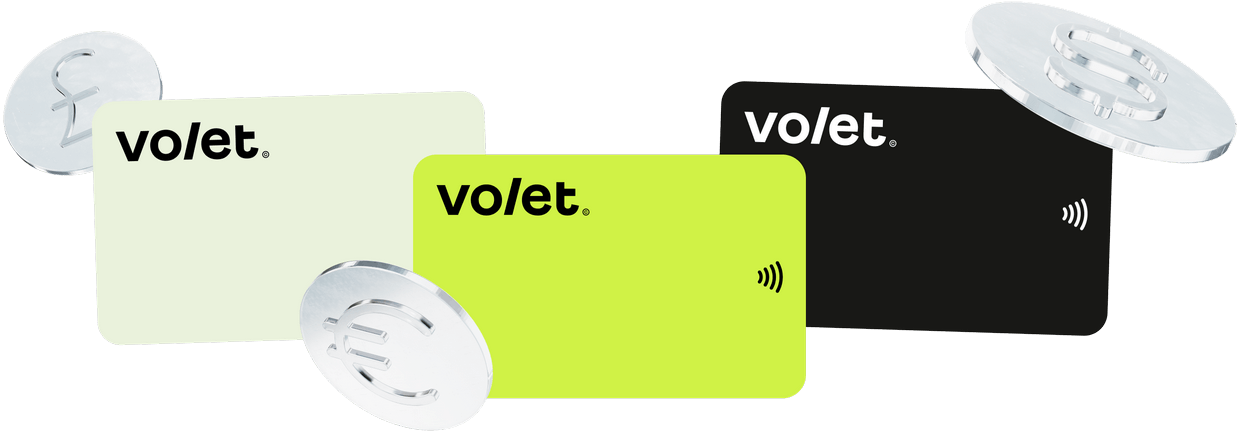

The way people move money has changed faster than traditional banking
For years, the bank card was treated as the center of modern payments. Open an account, receive a card, and use that card to shop online, pay in stores, withdraw cash, and manage daily life. That model still matters, but it no longer matches how a large share of people and businesses actually operate. Today, money moves through remote work, cross border payments, international freelancing, creator payouts, affiliate income, multicurrency spending, online subscriptions, digital services, global marketplaces, and increasingly, crypto and stablecoin flows that do not fit neatly inside the old branch-and-card framework. At the same time, the broader cross-border system still struggles with cost and friction. World Bank data published in 2025 showed that the global average cost of sending remittances remained 6.49 percent, still far above the long-standing international target of 3 percent, which helps explain why people continue searching for a faster, simpler, lower-friction way to send money abroad and manage payments internationally.
That is the backdrop that makes Volet relevant. Rather than positioning itself as just another prepaid card or a bank account substitute with limited digital extras, Volet presents a broader payment environment built around a secure digital wallet, crypto and fiat functionality, instant transfers, virtual and plastic cards, and tools for both personal use and global business payments. The card is still there, but it is no longer the whole story. In the Volet model, the wallet comes first, and the card becomes one access point inside a wider financial toolkit designed for people who need to receive, exchange, send, spend, and sometimes distribute money across borders without relying on several disconnected providers.
This shift matters because the real question in modern payments is no longer, “Do you have a card?” It is, “How easily can you move between holding money, converting it, spending it, paying others, receiving funds internationally, and managing everything from one place?” That is the question Volet is trying to answer. Its official positioning emphasizes e-wallets, cards, crypto wallets, free P2P movement, mass payouts, crypto acquiring, and business payment tools, all inside one ecosystem. For users searching for a digital wallet, an international e wallet, a global digital wallet, or an online banking alternative that feels built for cross-border life rather than domestic routine, that architecture is the core appeal.
Why the bank card alone no longer solves global payment needs
A traditional bank card is useful at the point of payment, but modern money problems rarely begin and end at checkout. A freelancer may get paid from another country, convert funds, send part of the balance to a contractor, pay for software subscriptions, and then spend the rest with a card. A creator may receive international payouts from affiliate platforms or ad networks and need to route those funds across currencies without waiting through slow manual processes. A small online business may need to accept customer payments globally and then pay suppliers, partners, or publishers in multiple regions. None of those workflows are solved by a card alone. They require a payment app or wallet that can coordinate movement before and after the tap, swipe, or online card entry.
The weakness of the older model is fragmentation. One provider handles incoming payments. Another handles cards. Another handles currency exchange. Another handles crypto. Another handles team payouts. Another handles merchant checkout. Each extra step adds time, possible fees, reconciliation work, and more opportunities for the user experience to break down. Even central-bank analysis continues to describe cross-border payments as slower, more expensive, and less transparent than domestic payments because they must pass through different currencies, legal frameworks, operating hours, and payment systems. That is why the modern fintech wallet is increasingly about unifying functions rather than merely issuing a card.
Volet fits directly into that transition. Its platform is not built around the narrow promise of “a card that works online.” It is built around the broader promise of movement: pay or get paid, move money and crypto, spend with cards, automate payouts, accept payments, and manage funds across borders. That is a bigger proposition than a prepaid card wallet. It is closer to an all in one payment app or borderless payment wallet designed for how international finance works now.
Volet starts with the wallet, not the branch
Volet’s own product language makes this clear. The homepage frames the service around e-wallets, crypto wallets, cards, instant P2P movement, business payments, and merchant tools. Its broader messaging emphasizes the ability to accept, send, receive, exchange, spend, and manage money and digital assets in one place. That is a very different starting point from a classic bank product, where the account exists first and every other function is bolted on around it. In the Volet structure, the digital wallet is the operating center. The card extends the wallet. The transfer features extend the wallet. The payout tools extend the wallet. The merchant tools extend the wallet.
That wallet-first model helps explain why Volet can appeal to very different kinds of users at once. Someone looking for a mobile wallet app for daily spending, someone searching for a multi currency wallet for international payments, and someone looking for a crypto friendly wallet that can move smoothly into fiat all care about the same underlying problem: they want one place where balances can be held, managed, converted, and used without constantly jumping between products. Volet’s structure is designed to reduce that jumping.
It also changes how people think about access. In older models, payment access meant having a card tied to a bank ledger. In the Volet model, access means having a wallet that can receive value, store value, exchange value, send value, and then make that value usable through cards, transfers, or withdrawals. That is why the platform feels more like a modern alternative to bank-dependent digital payments than a simple replacement card. It is not trying to imitate the old setup. It is trying to make the old setup less central.
One account for fiat, crypto, and multiple payment rails
One of the strongest features in the Volet model is that it is not tied to a single rail. The business pages describe a unified payment platform that combines crypto and fiat tools in one account, supports multi-currency balances, and lets businesses move funds across 180+ countries. The mass-payout pages describe funding through bank rails including SEPA, SWIFT, and CIPS, alongside card top-ups and crypto. That is important because modern global payments are rarely solved by one narrow route. Users need options depending on geography, timing, counterparties, and whether they are dealing with fiat, stablecoins, or crypto.
Volet’s business overview specifically says accounts can hold USD, EUR, USDT, USDC, BTC, ETH, and other assets. Its crypto materials describe buying and selling crypto and stablecoins, switching between crypto and fiat easily, and depositing or withdrawing at major exchanges. A separate Volet article on crypto wallets highlights support for major assets including BTC, ETH, USDT, USDC, LTC, XRP, TON, TRX, SOL, POL, AVAX, and BNB. That range matters because many users no longer think purely in one currency or one asset type. They want a fiat wallet, a stablecoin wallet, and a crypto wallet app experience without needing three separate ecosystems.
This is where Volet becomes more than a simple online wallet. It starts to resemble a multi asset wallet and currency exchange wallet that can support real life use cases. Holding multiple forms of value in one account is only helpful if those balances can then move where needed. Volet’s product structure suggests exactly that: top up, hold, exchange, spend, withdraw, or distribute. The user is not expected to solve every transition through a different provider. That is the real meaning of reinvention here.
Virtual cards make payment access immediate
A major reason people look for a modern e wallet is speed. They do not want to wait for traditional onboarding cycles and physical mail just to start spending online. Volet addresses that directly with its card lineup. On its cards page, the company says virtual cards are issued instantly, while plastic cards can be delivered through standard or express delivery depending on region. It also notes that availability depends on the specific card, with the global digital Mastercard available in 150+ countries, Europe-focused cards available across Europe, Turkey, and Israel, and APAC plastic cards positioned for the Asia-Pacific region.
That instant issuance matters because a virtual card wallet is now one of the most practical forms of digital payment access. It lets users pay for subscriptions, online shopping, digital tools, software services, advertising spend, and recurring online costs without waiting for a physical card. For users who need an instant virtual card, a virtual crypto card, or a money transfer app with virtual card functionality, this is one of the strongest bridges between wallet balance and actual utility. The balance becomes spendable quickly, and that dramatically reduces the friction between receiving money and using it.
Volet’s digital card pages also underline how product-specific features can make the wallet even more flexible. Its Virtual Mastercard USD page describes instant issue, global use, Apple Pay and Google Pay readiness, and 0 percent FX markup for that card. Rather than making a user choose between a multicurrency digital wallet and a practical spending tool, Volet is clearly trying to combine the two. The result is a stronger answer for people searching for a wallet with virtual Mastercard, a virtual payment card app, or an online wallet with debit card behavior built around fast online access.
Plastic cards still matter, but now as part of a smarter stack
Even in a digital-first world, the physical card still matters. People travel, withdraw cash, pay in stores, and want a familiar payment tool that works worldwide. Volet’s homepage describes instantly loaded plastic or virtual cards for worldwide ATM and POS payments, and its cards section explains that users load their cards from the Volet e-wallet. That is an important detail. The card is not floating separately from the account ecosystem. It is connected to the wallet and funded through it.
That connection creates a very different user experience from the traditional bank-card setup. Instead of thinking, “My card is my account,” the user thinks, “My wallet is my control center, and my card is one way to access that balance.” This is especially useful for international spending because it allows the account to function as a global wallet with prepaid Mastercard or Visa-style access rather than as a narrow domestic current account with limited outward flexibility. For travel, online purchases, retail payments, and cash access, that can feel far more adaptable than the standard bank card model.
It also helps explain why Volet can appeal to users looking for a travel payment card, a worldwide spending card, an ATM withdrawal card, or an international prepaid card without being defined only by those labels. The plastic card is useful, but it is not the core innovation. The core innovation is that the card sits inside a wider wallet, transfer, and exchange environment built for international movement.
Mobile wallet compatibility brings the system closer to everyday life
Modern payment access is not just about having a card number. It is about how seamlessly that card fits into day-to-day behavior. Volet’s cards page says some cards support Apple Pay and Google Pay, and its wallet usage guide specifically notes that certain digital cards can be added to Apple Pay or Google Pay for contactless payments. That means Volet is not just creating a stored-value product for browser-based use. It is also extending the wallet into the contactless mobile-payment habits that increasingly define ordinary spending.
For users, that matters because the difference between a useful account and a daily account is often how quickly it fits into routine behavior. If a digital wallet can move from funding to virtual card issuance to mobile-wallet provisioning to in-store contactless use, it starts to behave like a true wallet for everyday spending rather than a niche backup account. That is especially relevant for travelers, freelancers, and remote workers who may want a cashless payment wallet that works both online and offline without depending on a traditional bank branch.
In practical terms, mobile wallet compatibility also makes Volet more relevant to keywords and user intent around tap to pay wallet, mobile tap payments app, pay in stores worldwide, and online and offline payment wallet. Those use cases only work when the payment experience is integrated enough to disappear into daily life. Volet’s card and wallet structure is clearly designed with that in mind.
Volet’s crypto layer is not decorative; it is part of the payment flow
A lot of payment products mention crypto but treat it as an isolated feature. Volet appears to do something more practical: it connects crypto and stablecoins to the rest of the wallet experience. The crypto section on the official site says users can quickly buy and sell crypto and stablecoins, switch between crypto and fiat easily, and deposit or withdraw at large crypto exchanges. That is not framed as a side tool for speculation. It is framed as a working part of how money moves within the account.
That becomes even more important when paired with the card environment. Volet’s cards FAQ explains that many users choose its cards as cards for crypto by loading funds from a fiat e-wallet that was topped up via crypto or stablecoins. In other words, the platform does not force merchants or card networks to operate in crypto. Instead, it lets the user manage the crypto-to-fiat bridge inside the wallet and then spend through familiar card rails. That is a much more practical design for everyday use, because it keeps checkout behavior normal while preserving the flexibility of crypto funding on the user side.
This is exactly why Volet can appeal to people searching for a crypto debit card, bitcoin wallet with card access, a crypto payment wallet, or a stablecoin spending wallet. The attraction is not only that crypto exists in the ecosystem. It is that crypto can be converted into spending power, withdrawals, transfers, or card-funded balance without forcing the user into a disconnected exchange workflow every time. That is what turns a crypto wallet app into something that can support daily financial life.
A smoother path from crypto to fiat and then into real-world spending
Volet’s own educational materials reinforce this idea. Its article about how to transfer crypto to a bank account describes a model where users can receive stablecoins like USDT or USDC into their wallet addresses, convert them into fiat such as USD or EUR, and then withdraw through bank rails without going through a separate exchange trading terminal. That matters because for many users, the biggest problem is not holding crypto. It is getting from crypto to usable cash, transfers, or spending access without too many intermediate steps.
This is where Volet becomes highly relevant to the growing search intent around crypto off-ramp wallet, exchange crypto to fiat, wallet for moving crypto to fiat, and app to use crypto for purchases. The platform’s structure suggests that crypto and fiat are not treated as entirely separate worlds. They are treated as connected balances inside one environment that can also feed cards, bank withdrawals, or peer transfers. That is a stronger value proposition than either a pure crypto wallet or a pure prepaid card on its own.
For users who earn in crypto, hold stablecoins, or simply want a crypto friendly wallet without embracing a highly technical Web3 workflow, that practical bridge may be one of Volet’s biggest strengths. It offers exposure to digital assets while still serving people whose end goal is ordinary life: pay bills, spend online, travel, send funds, or withdraw to bank.
Receiving money is just as important as spending it
One of the most useful ideas in Volet’s positioning is that payment access should begin before spending. The homepage says users can get paid by employers or affiliate programs, receive CPA network payouts, distribute funds to a team, and move money or crypto instantly between Volet wallets or crypto wallets. That is important because many users first experience payment friction not when they try to buy something, but when they try to receive money from somewhere else.
Volet’s August 2025 wallet guide describes what users can do after getting paid into the platform. It notes that funds can be stored, converted between currencies, used to buy crypto, withdrawn to debit or credit cards, withdrawn to bank accounts, or sent to another user. It also specifically says users can send money directly to cards issued worldwide in supported currencies. This is exactly the sort of connected functionality that makes a wallet more compelling than a standalone travel card or prepaid card wallet. The wallet is not just a payment endpoint. It is a decision point. Once the funds arrive, the user has several paths forward without leaving the system.
This is why Volet makes sense as a payment solution for remote workers, publishers, affiliate marketers, consultants, online entrepreneurs, and anyone else whose income may arrive from outside the banking patterns that traditional cards were designed around. For these users, receiving money online, receiving international payments, and then choosing how to route those funds is often the real challenge. Volet is clearly built to address that sequence.
Free instant P2P movement adds everyday flexibility
Volet also stands out by emphasizing free instant P2P transfers for personal accounts. Its homepage says users can instantly move money and crypto between Volet wallets or crypto wallets with no fees for personal accounts. That may sound like a simple convenience feature, but in practice it is an important part of what makes a wallet useful in daily life. People do not only want to spend from their balance. They want to send money to family, friends, teammates, collaborators, and contractors quickly and cleanly.
This strengthens Volet’s appeal as a p2p payment app, an instant p2p transfers tool, and a global family remittance wallet. If a user can receive funds, hold them, convert them, send a portion to another user instantly, and still keep the rest ready for card spending or withdrawal, the wallet becomes more than a storage product. It becomes a money movement app with real internal utility. For many users, especially those operating internationally, that kind of internal speed matters just as much as external rails.
It also shows how Volet is trying to reduce the small daily frictions that make global payments exhausting. Large cross-border infrastructure problems are one part of the story. The other part is the constant minor inconvenience of moving funds around between people and balances. Instant P2P functionality helps turn the wallet into a practical everyday tool rather than a once-a-month transfer solution.
Why freelancers and remote workers are a natural fit
Freelancers and remote workers often need financial tools that behave more like operating systems than single-purpose accounts. They may bill clients internationally, get paid through digital platforms, pay for subscriptions in one currency, receive income in another, and occasionally use crypto or stablecoins for transfers or treasury. Volet’s homepage and business pages speak directly to this reality by highlighting employer payments, affiliate payouts, team fund distribution, multicurrency balances, and automated payouts. That is not accidental language. It is clearly aimed at users whose income and expenses already span borders and platforms.
For this audience, the value of Volet is not just lower friction at checkout. It is the ability to reduce the number of separate tools needed to run an international financial life. A freelancer who needs a wallet for international freelancers, a digital wallet for remote teams, or a payment solution for remote workers is often trying to simplify admin as much as reduce fees. The more functions that exist in one place, the less time gets wasted on moving money between providers, reconciling balances, and waiting for different systems to catch up.
Volet’s structure is especially useful here because it spans the whole chain. Get paid. Store the balance. Convert if needed. Send some onward. Spend some via card. Withdraw some elsewhere. That is the daily rhythm of many remote-first professionals, and it is much closer to how they actually live than the old idea of a salary account plus a single debit card.
Creators, affiliates, and digital entrepreneurs need payouts as much as payments
The same logic applies to creators, affiliates, and digital entrepreneurs. Monetization in these fields is often fragmented by design. One platform sends ad revenue, another pays affiliate commissions, another handles sponsorship income, and another manages tips, rebates, or referral payouts. Volet explicitly addresses this world by saying users can receive affiliate program payouts and CPA network payouts, while its business payout pages focus on rewards, withdrawals, bonuses, tips, and affiliate commissions at scale. That is a strong sign that the platform understands payout-heavy business models, not just consumer payments.
That matters because many popular payment tools still treat creators and affiliates as edge cases. They can often receive money, but the post-payment workflow is clumsy. Volet’s model looks much more attractive for people seeking a payout wallet for creators, affiliate payout wallet, online payout platform, or wallet for digital creators because it connects incoming payments to spend, withdrawal, and onward transfer in one place. A creator can be paid, keep a working balance, and still use the account for subscriptions, travel, software, or contractor payments.
This is one reason Volet can naturally enter the conversation around a PayPal alternative wallet, Skrill alternative, Neteller alternative, or wider fintech wallet app for global users. The strongest alternatives are not just cheaper. They are more complete. Volet’s appeal lies in the way it combines receiving, holding, paying, exchanging, and spending into one flow rather than a set of loosely related services.
Travelers, expats, and international shoppers need more than foreign card acceptance
Travelers and expats are often told that the main international-payment problem is foreign card acceptance. In reality, the bigger issue is managing money before, during, and after the trip. They may need to exchange currencies, hold balances, withdraw cash, make online bookings, use contactless payments, and stay flexible if income arrives from another country while they are abroad. Volet’s wallet-plus-card design is well matched to that reality. The platform offers virtual and plastic cards, worldwide ATM and POS use, instant loads from the e-wallet, and some mobile wallet support, all tied to a broader multicurrency and crypto-capable account.
This makes Volet attractive as a travel money card app, a prepaid travel wallet, a digital wallet for living abroad, or a payment account for travelers. The benefit is not only that the card can work internationally. The benefit is that the balance behind the card can be managed in a way that suits international life. A user may top up, exchange, receive funds, send money, or even bridge from crypto before spending. That is a more realistic travel-finance setup than simply relying on one domestic bank card and hoping it behaves well everywhere.
For expats, students abroad, or overseas workers, the same advantage applies. These users are not tourists making one foreign transaction. They are living inside a cross-border financial routine. A global wallet with prepaid card features, internal transfers, conversion, and multiple withdrawal paths can be much more practical than products designed mainly for domestic account holders taking occasional trips.
Volet’s business side shows that this is bigger than a consumer wallet
One of the strongest signals that Volet is trying to reinvent payment access rather than just modernize card access is its business platform. The official business overview says Volet lets businesses accept payments, automate payouts, and manage funds across 180+ countries with no setup fees and onboarding that can go live in 24 hours or less. It also describes the product as a unified business payment platform combining crypto and fiat tools in one account, allowing businesses to avoid fragmented banking rails and multiple providers.
That is not the language of a consumer wallet with a few B2B extras. It is the language of payment infrastructure. A business wallet with cards is useful, but a business payment platform that can accept customer funds, hold balances, convert assets, and distribute payouts starts to solve much larger operational problems. For SMEs, online merchants, affiliate networks, SaaS companies, marketplaces, and other borderless businesses, this is where the real value emerges. The payment product stops being just a finance tool and starts becoming part of the operating model.
This also broadens Volet’s relevance to search intent around business payment platform, b2b payment platform, borderless business account, online account for global payments, and global transfer and card app. The platform is clearly built to serve both sides of the money equation: collecting funds and then moving them onward. That is what many fast-moving businesses actually need.
Merchant acceptance is built around fast access to funds
Volet’s accept-payments materials emphasize immediate incoming payments, fiat or crypto pricing, and withdrawal options through bank, card, or crypto. The business overview also highlights avoiding delays, chargebacks, and reconciliation issues through one integrated setup. For online businesses, that positioning is powerful because the traditional acquiring model often creates reserve policies, settlement lags, and operational uncertainty that can choke growth even when sales are healthy.
By presenting itself as a wallet-connected payment platform rather than only a gateway, Volet is trying to shorten the distance between getting paid and using the money. That has obvious advantages for merchants that need fast liquidity, international collections, or flexible treasury management. A business can accept customer payments, keep funds inside a multi-currency account, exchange if needed, and then redeploy those funds into payouts, withdrawals, or operational spending. This is where Volet begins to look like a payment gateway alternative wallet and a digital account for global spending at the same time.
For merchants comparing the old model with newer fintech options, that tighter loop can be just as important as headline processing rates. It reduces waiting, reduces operational sprawl, and gives businesses more control over when and how settlement becomes usable balance. That is a meaningful upgrade over legacy systems where the merchant account, treasury account, payout system, and business card may all live in different places.
Mass payouts may be one of Volet’s most important differentiators
Mass payouts are where Volet’s ecosystem becomes especially compelling. Its official payouts page says companies can send payouts to 180+ countries through stablecoins, crypto, or Volet wallets, with recipients able to cash out locally to card, bank, or exchange. It also says payout automation can be handled through API or CSV/XLS uploads, and that Volet parallelizes blockchain transactions so thousands of payouts can complete in minutes.
This matters for far more businesses than it might first appear. Marketplaces, gaming platforms, creator apps, affiliate networks, remote-first companies, bonus systems, referral platforms, and digital services all face the same operational question: how do you pay large numbers of people in different places quickly and without using several disconnected systems? Volet’s answer is that a single balance and a single payout stack can handle bulk rewards, withdrawals, commissions, bonuses, and contractor payments globally. That is a strong use case for anyone looking for an international payout solution, mass payout wallet, or online payout platform that can operate across both fiat and crypto-oriented payment behavior.
It is also a good example of why Volet goes beyond the bank card concept. A bank card can help a recipient spend money after it arrives. It does nothing to help the sender distribute money at scale. Volet’s payout tools solve the access problem from both directions: recipients get easier ways to receive and use value, and platforms get easier ways to deliver it. That two-sided advantage is one of the clearest reasons the product feels modern.
Transparent fees matter because global payments are often death by a thousand cuts
Cross-border finance is not frustrating only because single fees can be high. It is frustrating because costs often stack invisibly across several providers. One service charges for receiving. Another charges for converting. Another charges for payout. Another charges for card issuance. Another adds cross-border markup or settlement friction. Volet clearly tries to compete against that complexity with transparent fee pages for both personal and business use. Its personal fees page says there are no fees for opening or closing an account, verification, or monthly or annual maintenance. Its business page says the same at the account level and then lists specific transaction types and starting rates.
The business fee page is especially revealing because it shows how Volet thinks about the system. Payments from Volet wallets start from 0.5 percent, crypto and stablecoin payments start from 0.25 percent, payouts to Volet wallets start from 0.5 percent, payouts to cards start from 2.5 percent, and payouts to crypto or stablecoins start from 0.25 percent. Whether those numbers are competitive for a specific use case will depend on the business, jurisdiction, and flow, but the structure itself shows that Volet is trying to make the payment map legible. It is offering a unified system with visible price points rather than forcing users to guess where hidden friction sits.
That kind of clarity matters because international users often care just as much about predictability as about finding the absolute cheapest single rail. If a wallet can reduce operational sprawl and remove multiple extra steps, it may save time and money even when comparisons are not perfectly one-dimensional. In that sense, Volet’s fee transparency strengthens its position as a low fee e wallet, an affordable money transfer app, and a modern wallet for global payments.
Security and account control are essential when one wallet does more
A wallet that lets users receive money, hold multiple assets, move funds instantly, spend through cards, and potentially run business payouts must be trusted. Volet puts clear emphasis on that point. Its security page describes intelligent environment monitoring, physical and software OTP tokens, payment passwords, IP restrictions, strong customer authentication, and multi-tier account and payment protection for both merchant and personal accounts. The page presents security as customizable and central to the platform, not as a hidden background detail.
The support center reinforces that practical focus by urging users to enable 2FA, use the available security tools in settings, avoid storing passwords insecurely, and watch for phishing. This matters because the more flexible a wallet becomes, the more valuable in-app control becomes as well. Users looking for a wallet with 2FA, secure online payments, a safe multicurrency wallet, or a secure prepaid wallet are not just looking for marketing language. They want to know that the platform understands the stakes of becoming a central payment hub.
There is also a broader trust dimension. Volet’s business materials emphasize fraud protection and compliance-oriented workflows, while its data-processing agreement references GDPR-era legal frameworks. That does not mean users should skip due diligence, but it does show that the platform is presenting itself as a compliant digital wallet and payment platform rather than an improvised workaround sitting outside normal expectations of operational security and privacy.
Volet works because it reflects how people actually use money now
The strongest thing about Volet is not any one feature in isolation. It is the way the features align with modern payment behavior. People increasingly expect one app to handle cards and transfers, online and offline spending, domestic and international movement, fiat and crypto, personal finance and business workflows. They want a payment super app mentality even if the product itself remains focused. Volet’s structure clearly leans in that direction: one account, several rails, multiple asset types, instant internal transfers, cards, merchant tools, and payouts.
That is why it feels relevant across so many use cases. For the freelancer, it is a wallet to receive and spend. For the remote worker, it is a payment account for global income. For the traveler, it is a multicurrency spending environment with card access. For the crypto user, it is a bridge from digital assets to real-world transactions. For the merchant, it is a payment stack that helps shrink the gap between payment acceptance and usable funds. For the platform operator, it is a payout engine. Each of those angles reflects the same deeper truth: people do not want separate money tools for every stage of modern life.
In that sense, Volet is not merely offering an alternative card. It is offering an alternative model of access. The card is still important, but it is no longer the hero. The wallet is the hero, because the wallet is what connects receiving, holding, exchanging, sending, spending, and scaling into one experience.
Why “beyond the bank card” is the right way to think about the product
The phrase “beyond the bank card” captures something important. It does not mean cards are obsolete. It means cards should no longer be the entire mental model for global payments. A card solves one moment in the chain: the moment of purchase or withdrawal. But today’s payment challenges begin much earlier. How do you get paid internationally? How do you hold multiple currencies or assets? How do you move from crypto to fiat? How do you distribute payouts to teams or affiliates? How do you accept customer payments and then use that liquidity quickly? These are wallet problems, transfer problems, payout problems, and platform problems, not just card problems.
Volet’s product stack suggests that it understands this shift. It has cards, yes, but it also has the surrounding systems that make cards more useful: instant issuance, instant internal movement, multicurrency balances, crypto support, payout automation, merchant acceptance, and withdrawal flexibility. That is the kind of connected architecture that makes a digital wallet feel like a real bank alternative for online payments and global access, even when it is not trying to be a bank in the traditional sense.
For users searching terms like best international wallet, online wallet with debit card, alternative to PayPal for international payments, best e wallet for international use, or digital wallet for borderless commerce, the real attraction is not just a cheaper transfer or prettier app. It is a more complete answer to how money moves now. That is the territory Volet is aiming to own.
Conclusion: Volet turns payment access into a full system, not a single tool
If you strip away the marketing language and look at the underlying structure, the reason Volet stands out is simple. It is not trying to solve only one payment moment. It is trying to solve the full journey around that moment. The platform combines a digital wallet, multicurrency balances, crypto and fiat support, instant P2P transfers, virtual cards, plastic cards, mobile wallet readiness on some cards, bank and card withdrawals, merchant acceptance tools, and global mass payouts. That is why it feels larger than a prepaid card and more flexible than a narrow online wallet. It is built as a connected system for sending, receiving, exchanging, storing, spending, and distributing money across borders.
For individuals, that makes Volet compelling as a global digital wallet, a multi currency wallet, a crypto friendly wallet, and a practical online wallet with card access. For freelancers, creators, and remote workers, it can function as a payment solution that reduces tool sprawl and gives faster control over incoming funds. For businesses, it can serve as both a payment collection stack and an international payout solution, all inside one framework. In a world where cross-border payments are still too fragmented, too expensive, and too slow, that kind of integration is not just convenient. It is increasingly what users expect.
That is the deeper meaning behind the title. Going beyond the bank card does not mean leaving cards behind. It means putting them in their proper place. The future of global payments belongs to platforms that treat the card as one access point inside a smarter, more adaptable wallet ecosystem. Volet is clearly positioning itself in exactly that space: a borderless e wallet and payment platform built for people and businesses that need to move money the way modern life actually moves.