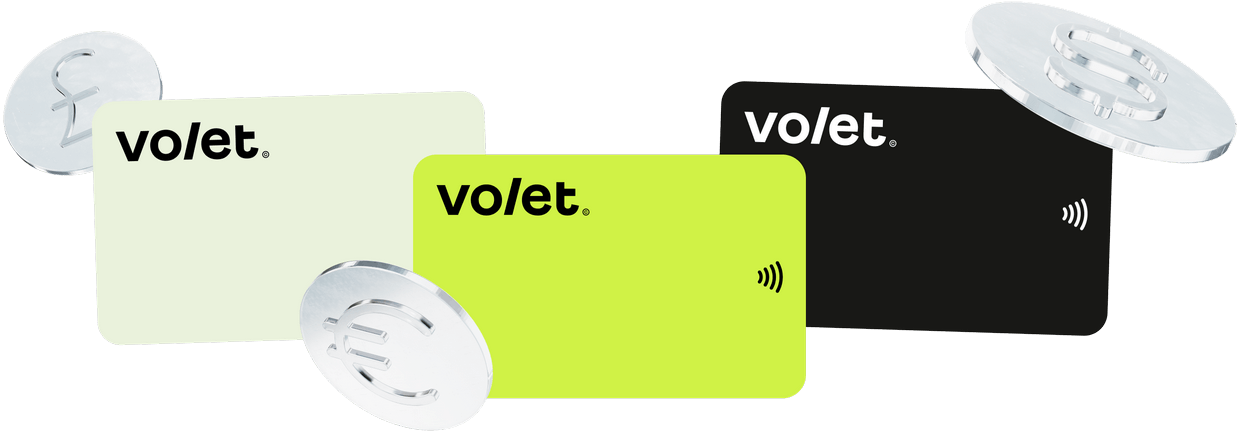

The old idea of money no longer matches the way people actually live
There was a time when most financial lives were simple by design. People earned in one country, held money in one bank, paid in one currency, and spent through a fairly limited set of channels. That model still exists, but it no longer describes a growing share of modern users. Today, a freelance designer in Lisbon can bill a U.S. client, pay a software subscription in euros, receive a platform payout in dollars, hold part of the balance in stablecoins, and then use a virtuelna kartica for ad spend or online purchases before ever thinking about a traditional bank branch. A founder can run a remote team across five countries. A creator can collect affiliate revenue from one network, get paid by a marketplace in another region, and then spend that money while traveling. The rhythm of money has changed, but the structure of many payment tools still lags behind it. Cross-border finance remains more expensive, slower, and less transparent than domestic payments in many cases, with the World Bank still reporting a global average remittance cost of 6.49 percent and the BIS noting that the cost of using cards across borders remains well above domestic usage.
That disconnect creates a peculiar kind of friction. People do not just need a place to store value anymore. They need a digital wallet that can receive, hold, exchange, send, and spend money across different rails without forcing them to rebuild the process every time the form of money changes. They need an e wallet that feels as comfortable with online shopping as it does with international money transfer, as useful for a virtuelna kartica as for a physical spending card, and as practical for fiat balances as for kripto-friendly spending. In other words, they need a cleaner way to spend across worlds. That is the larger promise behind modern global wallet products, and it is also where Volet is trying to make its case: not just as a basic online wallet, but as a more unified payment environment for people and businesses that operate beyond one local financial system. Volet’s current public positioning centers exactly on that broader role, describing the service as a payment hub for e-wallets, cards, kripto, and B2B payments.
Why global spending still feels fragmented in a digital-first world
For all the progress in fintech, money still tends to break into pieces the moment it moves beyond domestic use. A user may need one service to receive funds, another to convert currencies, another to withdraw to bank, another to issue cards, and still another to manage kripto balances or platform payouts. A business may need one provider for checkout, one for payroll, one for contractor payouts, one for stablecoin settlement, and another for expense cards. None of those tools are necessarily bad on their own. The problem is cumulative. Every extra platform introduces another login, another fee schedule, another compliance workflow, another delay, and another chance that the user experience stops feeling seamless and starts feeling improvised. The BIS has emphasized that cross-border payments remain difficult because they pass through multiple institutions, compliance layers, messaging systems, and settlement arrangements. So when users complain that international money movement still feels messy, they are not imagining it. The system really is structurally more complex.
That is why the most interesting wallet products today are not merely trying to digitize a single payment step. They are trying to reduce the number of steps users need in the first place. The appeal of a modern multi currency wallet is not that it erases all complexity from the financial system. It is that it hides more of the operational burden behind one interface and one account structure. A cleaner wallet experience means fewer handoffs between separate providers, fewer moments where users need to stop and think about which rail they are on, and fewer compromises between speed, usability, and reach. In that sense, convenience is only part of the story. The deeper value is coherence. The best borderless payment wallet is often the one that makes earning, moving, exchanging, and spending feel like parts of one continuous journey rather than four unrelated tasks.
What a cleaner payment experience really means
When people talk about easy global spending, they often reduce the topic to speed. Speed matters, but it is not the full answer. A cleaner payment experience also means continuity. Money should be easy to receive, easy to keep in a useful form, easy to convert when needed, and easy to spend through familiar instruments. It should be possible to move from digital balance to virtuelna kartica, od kripto to fiat wallet, from payout account to cross-border spending, without feeling like the financial product ends every time a new use case begins. That is what makes an all in one wallet app feel genuinely modern. It is not just fast at one thing. It is consistently usable across several of the things that matter most.
In practical terms, that kind of product usually has a few recognizable traits. It supports multiple asset types. It allows instant internal movement or peer-to-peer transfers. It connects to bank rails and card rails. It offers some form of currency exchange or conversion. It can issue payment cards, whether virtual, physical, or both. It includes security controls that are strong enough for a high-value account but usable enough for everyday consumers. And, increasingly, it serves both individuals and businesses, because many modern users sit somewhere between the two. They may be solo founders, remote contractors, creators, publishers, affiliates, or marketplace sellers. The wallet they need is often not purely personal or purely corporate. It is simply global. Volet’s public product structure reflects that exact design philosophy, spanning personal wallet functions, cards, kripto services, and business tools for payments and payouts.
Gdje Volet fits in the current wallet landscape
Volet’s official homepage presents the platform in unusually broad terms. Rather than describing itself as only a transfer app, only a kripto wallet, or only a pripejd karticu provider, it frames itself as a single account where users can accept, send, receive, exchange, spend, and manage fiat and kripto. The homepage also highlights a feature mix that includes free instant P2P transfers, deposit and withdrawal support on hundreds of websites, plastic and virtuelne kartice, multi-tier account protection, and live support. It says Volet has operated since 2014, serves more than 7 million users worldwide, supports 150+ countries, handles 1 million+ monthly transactions, and works with 10,000+ merchants. On the business side, its current materials expand that picture further with references to 20K+ business clients, 180 countries, 3M+ monthly transactions, global and local banking rails, API tools, hosted checkout, mass payouts, and business payment workflows.
Those details matter because they tell us what category Volet wants to occupy. It is not aiming to be just a travel card, just a digital wallet for online shopping, or just a kripto off-ramp. It is trying to be a broader payment operating layer for users who need more than one money function in one place. That is a meaningful distinction in a crowded market. There are many products that do one thing well. Far fewer attempt to combine an international wallet with virtuelne kartice, plastične kartice, kripto i stablecoin functionality, internal transfers, international payouts, business settlement tools, and developer infrastructure. The more global and digital a user’s life becomes, the more attractive that broader architecture can be. For a wallet for international freelancers, global entrepreneurs, affiliate marketers, remote teams, or digital nomads, breadth is not feature bloat. It is the entire point.
One account for fiat, crypto, cards, and movement
One of the clearest ideas in Volet’s current public positioning is that money and assets should live in a single account rather than across isolated silos. Its homepage explicitly says “money, kripto, cards in a single account,” and its business overview lists support for USD, EUR, USDT, USDC, BTC, and more. The digital card materials make the same logic concrete: users top up the Volet račun kod kripto, move funds into the fiat wallet, transfer USD to the card balance, and then spend. The support burden of switching between systems is reduced because the handoff happens within one environment rather than across several unrelated services.
That is a more important product decision than it may first appear. Many digital finance tools look smooth until the moment money needs to change form. They are good at storage but not spending, good at transfers but not cards, or good at kripto but awkward at everyday retail use. A wallet that covers those transitions more gracefully has a real advantage in cross-border life. The ability to receive value in one format, hold it inside a broader balance environment, and then redirect it into a card, a withdrawal, or another transfer is what makes a global digital wallet feel usable rather than theoretical. For people who live between currencies or asset types, this continuity is often more valuable than any single headline feature. It transforms the wallet from a stop on the journey into the place where the journey actually happens.
Why multi-currency logic matters more than ever
Multi-currency features are sometimes treated like travel perks, but they have become more central than that. A user may now earn in one currency, pay subscriptions in another, save in a third, and still want a card that works internationally without confusion. For a wallet to make sense in that environment, it must do more than simply display balances. It must help users move between currencies and payment types in a practical way.
Volet’s public pages indicate that the platform is built with this in mind. The business side emphasizes USD and EUR e-wallets alongside kripto i stablecoins, while the personal fees and wallet materials show support for account loading and withdrawals through bank transfer, cards, kripto, I stablecoins. The digital card is structured around USD, while broader card usage includes loading USD or EUR from the wallet into cards. The personal fee page lists local bank transfer coverage across a long list of currencies and regions, alongside SWIFT, card withdrawals, kripto isplate, i stablecoin withdrawal options. That is not the profile of a single-currency app. It is the profile of a multi currency payment app designed to live in the middle of a more international flow of money.
This matters for user experience as much as for economics. Even when a wallet cannot remove every fee or every corridor-specific limitation, it can still simplify how users think about their money. That is where a smart payment wallet becomes useful. It lets people manage multiple balances, shift from kripto to fiat, fund cards, and choose different exit routes without mentally switching systems at every step. For users who value a digital wallet with currency conversion, a wallet for multicurrency spending, or a money app for exchange and spending, that coherence can be more meaningful than a narrow promise of speed alone. It is the difference between a tool that solves one task and a tool that can support an entire pattern of financial life.
Sending and receiving money across borders without the old choreography
International payments often become frustrating not because one specific transfer takes too long, but because the full choreography around the transfer is clumsy. Money arrives in one system, gets converted in another, and is spent through a third. A platform payout may land quickly, but cashing it out is awkward. A kripto deposit may be fast, but using the funds in daily life requires extra steps. The ideal international wallet reduces those breakpoints.
Volet’s current homepage and support materials suggest this is a core part of its model. The platform says users can get paid by employers or affiliate programs, receive CPA network payouts, and move money or kripto trenutno između Volet wallets with no fees for personal accounts. The business side adds mass payouts, B2B and B2C payments, and business payment tools for companies paying partners, contractors, creators, suppliers, or users. In other words, the platform is built around the idea that receiving and distributing funds should be as important as storing them. That is especially relevant for people looking for an international payment account, an online payout platform, or a wallet for global entrepreneurs rather than a purely consumer lifestyle app.
The personal fee schedule reinforces the range of available routes. According to Volet’s current public pricing, users can load accounts by local bank transfer at no fee for listed corridors, by card at 3.5 percent for USD and EUR, by kripto bez naknade i od strane stablecoins with a fixed fee. Withdrawals include no-fee transfer to a personal account in USD and EUR, local bank transfer from 1 percent, SWIFT at 1 percent plus 25 USD, card withdrawal from 4.5 percent plus a fixed charge, kripto uz mrežnu naknadu i stablecoin withdrawal at 0.5 percent plus network fee. Users will naturally compare those numbers with their own needs, but the broader lesson is that Volet is designed around multiple ways in and multiple ways out. That is a defining feature of a wallet built for cross-border use.
Free internal movement can matter more than people expect
One of the understated but strategically important features on Volet’s homepage is the promise of free instant P2P transfers for personal accounts. That may sound like standard wallet language, but it is actually central to how modern payment ecosystems become sticky. When a wallet can move funds instantly between users without additional cost, it starts to behave less like a storage product and more like a living money network.
This is valuable in several contexts. Families using the same wallet ecosystem can send support to each other quickly. Freelancers can split project payments. Small teams can move funds between members without initiating a fresh external transfer each time. Online communities, partner networks, and creator teams can use the platform not just to receive money, but to circulate it. Internal transfer capability is especially compelling when it connects to other tools inside the same platform, such as cards, withdrawals, or business payout structures. In Volet’s case, the public materials consistently present internal movement as part of a larger payments environment rather than an isolated convenience feature.
There is also a psychological advantage here. People are more likely to keep balances in a wallet when they know those balances are not trapped. Free or low-cost internal movement makes the wallet feel active and useful, not static. This is one reason modern e wallet products often evolve beyond checkout or one-directional transfers. They become ecosystems of movement. For users who want a p2p payment app, instant p2p transfers, or a wallet that feels native to online and international life, that ecosystem quality matters. It changes the wallet from something you use occasionally into something you can build habits around.
Virtual cards are no longer a side feature
The internet-native economy has made virtuelne kartice far more important than they used to be. They are not just backup products for cautious shoppers or temporary payment instruments for niche use cases. They are now core spending tools for subscriptions, online shopping, marketplace purchases, digital advertising, cloud software, app payments, creator tools, travel bookings, and recurring business expenses. For many users, the instant virtuelna kartica is more relevant than the plastična kartica they may order later.
Volet clearly understands this. Its digital card page centers the Virtual Mastercard USD as an instantly issued product with global use, 0 percent FX markup, Apple Pay and Google Pay readiness, and a monthly spending capacity of up to USD 400,000 across payment types. The same page says users can go from kripto to card in a few steps: sign up, verify ID, top up the Volet račun kod kripto, order the digital card instantly, transfer USD to the card balance, and start spending. The card FAQ adds that virtuelne kartice are issued instantly and that many users treat Volet cards as kripto spending cards by loading the fiat wallet from kripto or stablecoins prvo.
That creates a compelling model for users who need a virtual payment card app or a wallet with virtual Mastercard functionality. Instead of holding digital assets in one place and managing online spending somewhere else, they can move from funding to spending inside a more unified system. Even for people who are not primarily kripto users, the convenience of instant card issuance remains attractive. It means faster access, less waiting, and more flexibility for time-sensitive online payments. In a financial world that increasingly moves at internet speed, instant digital issuance is not a luxury feature. It is part of what makes a wallet feel current.
Physical cards still matter because everyday life is still physical
For all the emphasis on digital-first finance, real-world spending remains essential. People still need a card for restaurants, taxis, groceries, hotel desks, pharmacies, stores, contactless terminals, and ATM access. A wallet that cannot bridge digital balances into everyday offline spending is still incomplete for many users.
Volet’s broader card materials show a clear attempt to cover this part of the market. The cards page says users can order either a virtual or plastična kartica, activate it when delivered, transfer USD or EUR from the Volet account, and start spending online and offline. The same page states that card availability depends on the specific product, with a global digital Mastercard available in 150+ countries, an APAC plastična kartica for the APAC region, and Europe cards across Europe, Turkey, and Israel. It also says some cards support Apple Pay and Google Pay, while virtuelne kartice izdaju se odmah i plastične kartice can be delivered through standard or express delivery depending on the region.
This kind of blended card strategy matters because different users need different levels of physical presence from their wallet. Some are satisfied with a digital card for online shopping and mobile tap payments. Others want a wallet with a fizička kartica, a contactless payment option, or cash access through a travel card with ATM support. The stronger the link between wallet balance and physical spending, the more plausible the wallet becomes as a daily financial tool rather than an occasional transfer account. That is one reason card issuance remains such a critical feature in the race to build the best international wallet. It turns digital finance into ordinary finance.
Mobile wallet compatibility adds another layer of everyday usefulness
A modern spending product does not live only inside its own app. Increasingly, users expect payment tools to work through the interfaces that already structure daily behavior, especially Apple Pay and Google Pay. That expectation is not trivial. Mobile wallet compatibility changes where and how a payment card can become part of ordinary life.
Volet’s support documentation currently makes an important distinction here. A May 2025 support article says the Digital card can be linked to Apple Pay or Google Pay after creation and OTP confirmation, while the main cards FAQ says some cards support Apple Pay and Google Pay and users should check the specific card descriptions for compatibility. The digital card page itself says the product is Apple and Google Pay ready and also states that offline payments are possible via Apple Pay and Google Pay at POS terminals, with ATM withdrawal via Google Pay available. This is exactly the kind of nuance that matters in a payments article: compatibility exists, but it depends on the specific product rather than functioning as a blanket statement across every card type.
Why does that matter so much? Because a wallet with mobile wallet support stops feeling like a separate financial island. It becomes part of the standard tap-to-pay behavior that many users already prefer. For people who want a travel card with app support, a digital card for retail purchases, or a wallet for NFC payments, that can be the difference between theoretical convenience and actual habit formation. When a digital wallet integrates well with the payment behavior people already use every day, it becomes much easier for that wallet to become central rather than occasional.
Travel spending is one of the clearest tests of a wallet’s usefulness
Travel has always exposed the weaknesses of fragmented finance. Cards may charge foreign transaction markups. Banks may flag unusual activity. Currency exchange can be inconvenient or expensive. Cash access may be inconsistent. Transfer tools that feel efficient at home can become far less practical abroad. That is why travel remains one of the cleanest real-world tests of whether a wallet is genuinely useful or merely well marketed.
Volet’s card materials speak directly to that test. The digital card page highlights “travel anywhere” and explicitly mentions booking flights, hotels, or cars with no FX markup on the product page. The main cards page positions the cards for online and offline spending, supports loading funds from the wallet, and presents them as tools for turning kripto- ili stablecoin-funded balances into ordinary purchases. Combined with the broader wallet structure for multiple asset types and cross-border movement, the result is a plausible travel payment model: keep value in the wallet, move the needed amount to card balance, and spend through a widely recognized card rail rather than navigating a patchwork of separate services.
This does not mean every traveler will use the same funding route or need the same features. Some will care most about online booking. Others will care about contactless in-store payments or cash access abroad. Still others will value the ability to receive income remotely while traveling and then spend directly from that same ecosystem. That is why the wallet for travel has evolved beyond the old prepaid travel card concept. It now includes international payment account functionality, digital cards, multicurrency logic, and often kripto-friendly rails as well. Volet’s current public feature mix fits squarely inside that more modern understanding of travel finance.
Crypto-friendly spending is moving from niche to practical
A few years ago, the phrase kripto card often sounded more aspirational than practical. Today, the category has matured into something more grounded. Users do not necessarily want to pay directly from self-custody wallets at every purchase. More often, they want a smooth bridge from kripto holdings or stablecoin balances into normal card spending. The winning products in this space are not always the ones that make the biggest ideological claims. They are the ones that make the transition from digital asset to everyday payment feel straightforward.
Volet’s current product design clearly leans into that bridge model. The digital card page explicitly says the card cannot be topped up directly with kripto, but that users can add kripto u Volet wallet, then transfer funds to the fiat wallet and instantly load the card. The broader cards FAQ says many users choose Volet cards as cards for kripto, loading funds from the fiat e-wallet after topping up via kripto or stablecoins. On the business side, Volet takođe naglašava kripto i stablecoin payouts, along with bank, card, and wallet-based cash-out options for recipients. This is not a pure kripto-spending fantasy. It is a hybrid model designed to make kripto i stablecoins usable within a more conventional payment framework.
That matters because it matches what many real users actually want. They do not need the entire financial system rebuilt around kripto overnight. They need a kripto friendly wallet that lets them receive, hold, convert, and spend without excess friction. Stablecoins and digital assets are increasingly part of cross-border finance, especially where speed and global reach matter, but everyday spending still tends to happen through familiar instruments like Mastercard, Visa, bank transfer, or local card acceptance. Products like Volet are interesting precisely because they accept that reality and try to bridge it cleanly.
Stablecoins are changing expectations around money movement
You do not need to believe that stablecoins will replace traditional finance to see why they matter. Their rise has changed what users now expect from payments: faster settlement, broader availability, more flexible cross-border movement, and reduced dependency on banking hours or corridor-specific friction. Even when a user ultimately spends through a fiat card or withdraws to a bank, stablecoins can still influence the structure of the journey.
The official policy conversation reflects this. The BIS has continued to describe cross-border payments as too slow, too expensive, and too opaque relative to domestic systems, while also recognizing that new technologies are pushing change. That pressure is one reason hybrid models are gaining ground. They combine kripto or stablecoin rails where useful, and then route funds into more familiar payment formats for daily use. Volet’s mass payout pages show exactly this logic: businesses can fund balances via bank, card, or kripto; send in stablecoins, kripto, Ili da Volet wallets; and recipients can then cash out locally to card, bank, or exchange. In other words, stablecoins are not presented as an isolated universe. They are part of a broader money movement stack.
For businesses, this can be especially attractive in use cases involving affiliates, micro-payouts, creators, remote contractors, and globally distributed partner networks. Volet’s mass payout materials say even low-value payouts remain viable, that internal transfers start from 0.5 percent, and that stablecoin i kripto payouts start from 0.25 percent on the business pricing page. Whether those economics are optimal depends on the company and corridor, but the structural appeal is clear: one platform can coordinate multiple forms of settlement without forcing the business to run entirely separate payment stacks for each recipient preference. That is a meaningful shift in how global payouts can be designed.
The business side may be the most underrated part of the story
Many people approach global wallets as consumer products, but the business layer may be where some of the most important differentiation now happens. If a platform can help individuals spend more cleanly while also giving companies better tools for checkout, contractor payments, partner rewards, and mass disbursements, it becomes much more than a personal finance app. It becomes infrastructure.
Volet’s business overview makes this ambition clear. The company describes itself as one platform for kripto and fiat payments, with no setup fees, no monthly fees, kripto payment gateway tools, global mass payouts, tools to pay teams and suppliers, support for SEPA, SWIFT, CIPS, FPS, local methods, and Web2 and Web3 tools including API, checkout, CMS plugins, and DeFi smart contracts. It also organizes its use cases around CPA and affiliate networks, digital platforms, trading and iGaming platforms, digital goods and marketplaces, remote teams and agencies, and global companies paying contractors. That is not the language of a narrow business account. It is the language of a payment infrastructure layer trying to solve several adjacent business problems through one system.
This matters to the broader spending story because recipients ultimately live at the other end of business payouts. When a creator platform, affiliate network, or marketplace can distribute funds more efficiently, users feel that improvement directly. They get paid faster, they receive money in forms they can actually use, and they have a cleaner path from incoming payout to outgoing spending. In that sense, consumer convenience and business efficiency are not separate stories. They are connected. The best online payout platform for a business often becomes the more useful wallet for the person being paid.
Mass payouts are one of the clearest real-world use cases
Ako postoji jedno područje gdje Volet’s current public materials stand out, it is mass payouts. The dedicated mass payouts page is one of the clearest expressions of the platform’s overall philosophy. It says businesses can send payouts to 180+ countries via stablecoins, kripto, ili Volet wallets, and that recipients can then withdraw locally to card, bank, or exchange. It describes three main payout models: platform-initiated mass payouts, user-initiated withdrawals, and manual payouts to freelancers and creators. It also says businesses can fund balances by bank, card, or kripto, choose how to pay via API or dashboard, and go from setup to live payouts in 24 hours or less.
That is a compelling proposition for global businesses, but it is also useful context for understanding Volet as a whole. The product is not only about giving one person a better wallet. It is about creating an environment where payment flows can begin with a platform or business and end in a form that is usable for the recipient. For a payment solution for freelancers, a wallet for remote workers, or an international payout solution for creators, that end-to-end view is highly relevant. It means the wallet is not just waiting for money to arrive. It is part of the machinery that can bring the money there in the first place.
Hosted checkout and APIs make the wallet ecosystem more complete
Another strong sign that Volet is aiming beyond a simple wallet model is the presence of developer and merchant tools. The business site references API, checkout, CMS plugins, and smart-contract tools, while the main business overview highlights kripto payment gateway functionality and hosted payment tools. That suggests a platform that wants to sit at multiple points in the payment chain: acceptance, storage, payout, and spending.
Why is that significant for an article about spending? Because modern spending is increasingly connected to platform economies. People buy digital goods, subscribe to software, run ad campaigns, pay contractors, receive affiliate income, and settle invoices inside ecosystems that are themselves software products. A wallet that connects more naturally to those business flows has a stronger chance of becoming a daily utility. For merchants, marketplaces, agencies, and startups, the value is not just in taking payments. It is in turning payment acceptance into balance management, payout automation, and cost-controlled spending without forcing the business to leave the same environment. That is how a payment super app or payment hub starts to emerge: not by claiming to replace every financial product, but by covering enough of the flow that the user stops needing as many separate ones.
Security is one of the reasons a wallet can feel clean instead of risky
Convenience without security is fragile. The more functions a wallet takes on, the more dangerous it becomes to treat security as an afterthought. Users who keep money, cards, transfers, kripto, and business payment activity inside one environment need to know that the product has serious protections built in.
Volet’s public security materials are unusually detailed in this respect. The company says both merchant and personal accounts come with intelligent environment monitoring, physical and software OTP tokens, payment passwords, IP restrictions, and multi-tier account and payment protection. The security page also says 2FA can be delivered through preferred messengers, with physical and software tokens also available. On the homepage, Volet reinforces that its money and assets are “fully covered and secured” and describes the account environment as “100% safe, regulated, multi-tier account protection.” Those are strong claims, so users should always evaluate them in the context of their own risk tolerance, but it is clear that the platform sees security as part of its core product identity rather than an invisible backend issue.
This is especially relevant in the types of use cases Volet appears to target: international spending, kripto-to-fiat movement, platform payouts, card management, and business transfers. A wallet that is useful for global money movement must also be credible as a secure online payment platform. Otherwise, every convenience feature comes with a shadow of uncertainty. In that sense, security is not separate from cleanliness. It is part of what makes a payment experience feel under control. For users who want a wallet with 2FA, a secure prepaid wallet, or a safer online payment card environment, this is not a side issue. It is foundational.
Compliance and verification are part of the trade-off
There is no global wallet without compliance. Users may prefer immediate onboarding and minimal friction, but any product that supports international transfers, card issuance, kripto funding, and payout tools will also need verification processes. The real question is not whether compliance exists. It is how clearly the platform explains what it is needed for and how it fits into the user journey.
Volet’s support pages are fairly direct on this point. Verification is not obligatory to open an account, but it is required to fully use the platform, unlock all types of transfers and deposits available in the user’s country, access full transaction limits, and order cards. For some services such as SEPA-related activity or specific card orders, additional identity or address verification may be required, and card issuers can impose their own document requirements. The card-order support page specifically says card issuers may require identity and sometimes address verification again, with the issuer checking submitted documents within a couple of days.
That balance makes sense in a modern regulated wallet. Ease of access matters, but so do fraud controls, sanctions compliance, issuer rules, and corridor-specific obligations. For users, the most practical interpretation is simple: a wallet that wants to operate across global payment rails cannot stay entirely anonymous and fully functional at the same time. The cleaner experience is not “no compliance.” The cleaner experience is compliance that feels integrated, understandable, and proportionate to the features being used. On that front, Volet appears to be fairly transparent about the relationship between verification and full feature access.
Zašto Volet may appeal to freelancers, creators, and remote-first users
Some of the clearest beneficiaries of this kind of wallet model are people whose finances are inherently cross-border or platform-based. Freelancers often need to receive client payments online, manage software subscriptions, send money abroad, and keep spending tools ready for both work and personal use. Creators may collect affiliate payouts, platform income, ad revenue, or bonuses from international sources. Remote teams may need one account for incoming business revenue and another layer for contractor payouts. Traditional bank accounts can still play a role, but they do not always fit the reality of how these users earn and spend.
Volet’s public language repeatedly points at these audiences. The homepage mentions employers, affiliate programs, and CPA network payouts. The business site highlights use cases for affiliate networks, digital platforms, agencies, remote teams, global companies, creators, freelancers, and marketplaces. The mass payouts page explicitly references agencies, SMBs, startups, creator platforms, exchanges, and apps that need automated or user-driven withdrawals. That is not accidental positioning. It suggests that Volet understands the modern payment user not only as a shopper, but as a participant in the digital economy.
This is also where the phrases PayPal alternative, Skrill alternative, Neteller alternative, or online banking alternative start to become meaningful. They are not exact substitutes in every respect, but they point to the same underlying demand: people want a more capable wallet for global payments, not just a local account with limited international flexibility. For users who want a payment solution for remote workers, a wallet for international online businesses, or a digital alternative to a bank account for cross-border use, Volet’s multi-rail structure is clearly part of its appeal.
The bigger reason products like this matter
The appeal of a platform like Volet is not just that it bundles a lot of finance features together. Plenty of products do that. The more interesting question is whether those features fit a recognizable pattern in how modern money works. In Volet’s case, the answer appears to be yes. The product story consistently revolves around receiving, holding, exchanging, distributing, and spending value across borders and across asset types. The business story revolves around checkout, payouts, contractor payments, mass disbursements, and settlement flexibility. The card story revolves around turning wallet balances into everyday retail use. The security story revolves around making all of that feel safe enough to use regularly. That kind of coherence is increasingly rare and increasingly valuable.
More broadly, these are the kinds of products that reveal where payments are heading. The future of global money movement probably will not belong to one single rail. It will belong to products that can bridge several rails intelligently. Bank transfers will remain important. Cards will remain important. Stablecoins will keep shaping expectations. Wallet balances will become more central. Business payout systems will keep merging with consumer spending tools. The winners are likely to be the services that reduce the friction between those layers. In that sense, the cleaner wallet is not just nicer to use. It is closer to where the market is going.
A cleaner way to spend across worlds, in the fullest sense
What makes the phrase “a cleaner way to spend across worlds” resonate is that it captures more than one kind of improvement. It is about cleaner spending, yes, but also cleaner receiving, cleaner conversion, cleaner distribution, and cleaner control. It is about lowering the number of times a user has to leave one payment environment to accomplish the next financial task. That is the deeper problem many global users are trying to solve, whether they describe it that way or not.
Volet’s current public offering makes a strong case for itself in that context. It presents a digital wallet built around fiat and kripto in one account, instant internal transfers, multiple deposit and withdrawal routes, virtual and fizičke kartice, mobile wallet support on eligible products, security layers such as 2FA and IP restrictions, and business tools for mass payouts, checkout, and global settlement. It is positioned for people who earn online, spend internationally, manage several currencies, work remotely, pay teams, run marketplaces, or want a borderless payment wallet that is more capable than a narrow single-purpose app. Taken together, those features describe not just a payment tool, but a more unified financial environment.
That is why this kind of product matters now. The old financial map assumed most users lived in one monetary world at a time. Increasingly, they do not. They move between local and international, personal and business, digital asset and fiat, online checkout and offline purchase, instant transfer and longer-term storage. The wallet that feels most modern is the one that does not force those worlds apart. It lets them meet in one place, under one logic, with fewer interruptions. On the evidence of its current public materials, that is exactly the role Volet is trying to play. And for a growing number of users, that may be the cleanest answer of all.