
The way people use money has changed faster than the way many financial tools were originally built. A growing number of people now earn online, spend across borders, hold more than one currency, and expect their money to move just as easily as their messages, files, or bookings do. A freelancer in Europe may be paid by a client in Asia, subscribe to software priced in U.S. dollars, pay contractors in another region, and still need a card for groceries, transport, or hotel stays. A traveler may want one balance for online bookings, a mobile wallet for contactless payments, and a backup way to withdraw cash at an ATM abroad. A creator, affiliate marketer, or remote worker may receive income digitally but still need that income to become instantly usable in ordinary life. That is the real shape of modern spending, and it is exactly why platforms like Volet are drawing attention. Volet positions itself as a secure e-wallet and payment platform that combines fiat balances, krüpto functionality, transfers, cards, and business payment tools inside one account structure. On its official site, Volet highlights that it has been operating since 2014, serves 7 million-plus users across 150+ countries, processes more than 1 million monthly transactions, and works with 10,000+ merchants.
Mis teeb Volet especially relevant in 2026 is that it is trying to solve a broader problem than simple online checkout. It is not merely presenting itself as a place to hold a balance or perform one-off transfers. Its homepage describes the wallet as a place to accept, send, receive, exchange, spend, and manage fiat and krüpto, while also highlighting instant P2P transfers, deposits and withdrawals on hundreds of websites, and access to plastic or virtuaalsed kaardid for spending. That combination matters because global users do not live in one payment lane anymore. They move between bank rails, wallet balances, online merchants, subscriptions, krüpto assets, and card spending all the time. The more those functions live in separate products, the more friction the user feels. Volet’s value proposition is that it tries to turn those fragmented functions into one practical money hub. In SEO terms, that makes it relevant not only as a digital wallet or e wallet, but as a borderless payment wallet, a multi currency wallet, an international payment app, and a digital alternative to a traditional bank-centered money stack.
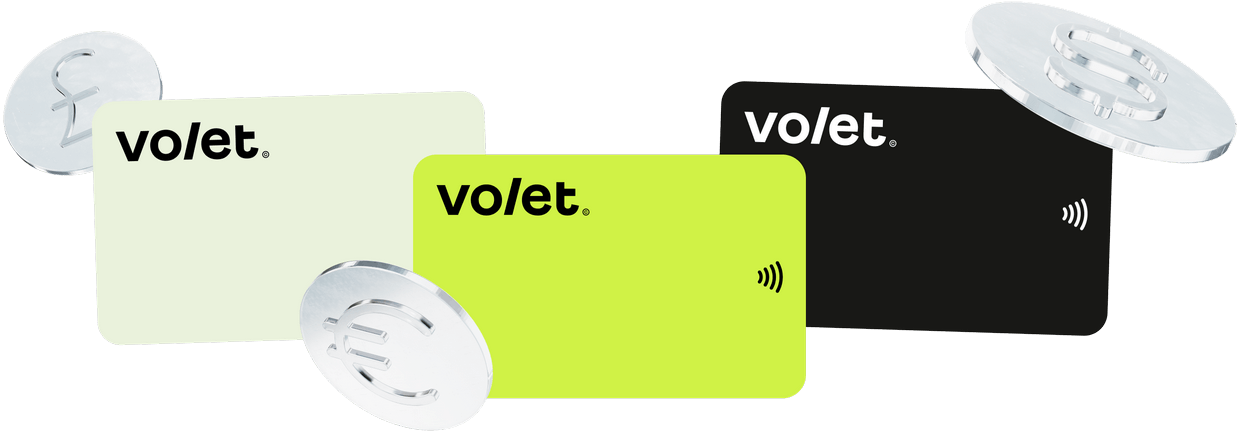
That positioning becomes even more interesting when you look at how Volet talks about spending specifically. On its cards pages, Volet says users can order virtual or plastkaardid, load them from their e-wallet, and spend online or offline. It also states that virtuaalsed kaardid are issued instantly, that some cards support Apple Pay and Google Pay, and that card availability depends on region. The global digital Mastercard is listed as available in 150+ countries, Europe cards are available across Europe plus Turkey and Israel, and APAC plastkaardid are offered in the Asia-Pacific region. This is an important detail because it shows Volet is not pretending every card product is identical everywhere. Instead, it is building a region-based card ecosystem around the main wallet. That makes the platform more practical for people searching for a travel payment card, a worldwide spending card, an online wallet with deebetkaart functionality, or a wallet with füüsiline kaart ja virtuaalne kaart support in one app.
The stronger SEO version of this story begins with a simple truth: spending worldwide is no longer a niche lifestyle. It is mainstream behavior. People book hotels on global travel sites, pay foreign sellers through international checkout systems, subscribe to software from overseas vendors, shop on marketplaces that bill in multiple currencies, and increasingly expect to spend in stores through mobile wallets or contactless cards wherever they happen to be. That shift has made older financial assumptions feel clumsy. Traditional bank accounts often still work best when income, spending, and withdrawals all happen inside the same domestic system. But modern users do not always live that way. They need a smart payment wallet that can adapt to international use, not just a legacy account that tolerates it. Volet’s structure is built around that reality. Its wallet is designed to connect incoming funds, currency conversion, card loading, sending, receiving, and withdrawing into one user experience. For people looking for a best international wallet, a best e wallet alternative, or an online banking alternative for cross-border life, that kind of integration is the real selling point.
Why Worldwide Spending Requires More Than Just a Card
Many payment services market themselves around the card because the card is the most visible part of the experience. It is what gets tapped in a shop, entered at checkout, or linked to a mobile wallet. But the real value of an international spending product usually lies behind the card. It lies in how easily the user can receive funds, exchange them, split them, move them, or reload them when life changes. A card without a capable wallet behind it can feel like a convenience feature rather than a financial system. Volet appears to understand that distinction well. Its own messaging consistently centers the wallet first, then the cards as an extension of the wallet balance. Users create an account, order a virtual or plastkaart, load USD or EUR from the Volet account, and then start spending online and offline. In other words, the card is the spending surface, but the wallet is the operating system behind it. That is exactly what many international users need: not just a payment instrument, but a place where their money can be managed before it is spent.
This difference matters a great deal for travelers, remote workers, expats, and digital nomads. A person living internationally does not only make purchases. They also receive payments, exchange funds, top up balances, move money to family or collaborators, and occasionally need to change exit routes depending on cost, urgency, or geography. Sometimes they want to spend directly from a card. Sometimes they want to withdraw to a bank. Sometimes they want to transfer to another wallet or a krüpto address. A digital finance app that only handles one of those tasks will eventually force the user back into multiple disconnected systems. Volet is more compelling because it tries to cover the broader pattern. Its homepage highlights free instant P2P transfers for personal accounts, support for sending and receiving money and krüpto, and the ability to get a plastic or virtuaalne kaart to spend worldwide. That makes it less like a narrow prepaid tool and more like a multi-function online payment platform.
Travel Spending: Where Volet Starts to Make the Most Sense
Travel is one of the easiest ways to understand the practical appeal of Volet. People do not just travel with one payment need. They travel with several. Before the trip, they may need to book transport, hotel rooms, insurance, tickets, or tours online. During the trip, they may need to pay in stores, restaurants, taxis, airports, or public transport systems. In some destinations, they may also need cash. And all of this may happen while their money originally came from another country, another currency, or even another asset class such as krüpto or stablecoins. A travel wallet that truly works has to support this full chain, not just one touchpoint. Volet’s wallet-plus-card model is built for that kind of use. The wallet can act as the balance center, while the card becomes the everyday spending tool. That is a stronger structure for travel than relying entirely on one old bank card and hoping exchange rates, ATM acceptance, and digital wallet compatibility all line up smoothly.
The regional card setup also makes travel use more realistic. Volet says its global digital Mastercard is available in more than 150 countries, while some other cards are region-specific. Virtuaalsed kaardid are issued instantly, and some support Apple Pay and Google Pay, which means eligible users may be able to add the card to a mobile wallet for contactless use. On the digital card page, Volet also states that offline payments are supported via Apple Pay and Google Pay at POS terminals and that ATM withdrawal via Google Pay is available. These details matter because international travel today is deeply tied to mobile-first convenience. Many travelers want a travel wallet with virtuaalne kaart functionality that starts working before physical plastic even arrives. They want to book online, land in a new country, and still be able to pay through a phone or watch if needed. Volet’s setup speaks directly to that kind of behavior.
There is also a psychological advantage in using a wallet-backed prepaid structure for travel. Many users prefer not to expose their full main-account balance to every merchant, especially when spending across unfamiliar regions or online stores they may never use again. With Volet, the wallet acts as the core balance and the card is loaded from it, which can make travel budgeting feel more deliberate. A traveler can decide how much to move into spendable card form before a trip or before a specific spending period. That does not replace the need for healthy payment security habits, but it does give the user more control over how much value is sitting at the edge of their payment environment at any one time. From an SEO perspective, that makes Volet relevant not only as a best digital wallet for travel, but as a safer online payment card and digital card for travel-minded users who want more control over global spending.
Shopping Worldwide: Online, In-Store, and Across Borders
Volet is equally interesting from the online shopping angle, because international shopping has become far more varied than it used to be. It is not just about buying a product from a foreign website. It now includes recurring subscriptions, digital services, software renewals, marketplace tools, ad accounts, domain registrations, creator platforms, hosting fees, and countless other card-based charges that can originate anywhere in the world. That is why an instant virtuaalne kaart võib olla nii väärtuslik. Volet ütleb selle virtuaalsed kaardid are issued instantly, which means a user can move from signup or incoming funds to spendable card credentials without waiting for postal delivery. For people who operate online businesses, manage global subscriptions, or need to pay an invoice or platform bill quickly, that time advantage matters. A virtuaalne kaart wallet that can be activated in minutes is a practical solution, not just a flashy feature.
The digital card product is especially relevant to users who think globally by default. Volet states that its digital Mastercard supports online payments up to high limits and offline payments via Apple Pay or Google Pay, with a total monthly spending capacity of up to $400,000 across payment types on that product. That level of capacity will be far above what most individuals need, but it signals that the digital card is not being framed only as a tiny backup card. It is positioned as a serious spending tool for users who may need large online or operational spending capacity. That is highly relevant for agency owners, media buyers, software-heavy businesses, and entrepreneurs looking for a wallet for global subscriptions, ad spend, or international online shopping. In SEO language, Volet can reasonably map to searches like virtuaalne kaart for online purchases, money transfer app with virtuaalne kaart, digital card for subscriptions, and wallet with virtual Mastercard.
Volet’s broader card ecosystem also matters for users who want flexibility rather than one fixed payment behavior. Some may prefer a digital card for faster issuance and online use. Others may want a plastic ettemakstud kaart for stores and ATMs. Others may use both: a virtuaalne kaart for subscriptions and online purchases, a plastkaart for physical travel and everyday retail payments. Because Volet’s cards are loaded from the wallet balance, the user can match the product to the context without leaving the same money environment. That is one of the reasons Volet can be described as a smart payment wallet rather than just a card issuer. The user is not choosing between disconnected financial products. They are choosing between different ways to use the same underlying account and balance.
Spending in Multiple Currencies Without Rebuilding Your Financial Life
One of the biggest frustrations in cross-border finance is that people are often forced to reorganize their whole money system just to spend efficiently in different currencies. They open specialized accounts, maintain separate transfer tools, keep backup cards, and juggle krüpto and fiat services separately. Volet is interesting because it reduces the need for those silos. Its business overview says the platform combines krüpto and fiat tools in one account, while its wallet positioning focuses on sending, receiving, exchanging, spending, and managing fiat and krüpto from one place. That kind of architecture makes it highly relevant to the multi currency wallet category, not just because it can hold more than one balance, but because it connects those balances to real-world spending tools.
This is especially useful for users whose money does not behave domestically even when their lifestyle appears ordinary. A consultant living in one country might be paid in euros, spend in local currency, pay SaaS tools in dollars, and hold part of savings in stablecoins. A creator may accept payments globally, receive affiliate revenue, and need a worldwide payment wallet that can support both online and offline use. A modern wallet for multicurrency spending is not just about seeing multiple currency labels in an app. It is about being able to receive, convert, and deploy value across currencies without repeatedly leaving the platform. Volet’s business and payment pages emphasize instant currency exchange, low FX fees, and the ability to withdraw via bank, card, or krüpto. That makes the platform relevant for people seeking a currency exchange wallet, an online foreign exchange wallet, or a digital wallet with currency conversion built into everyday spending flows.
Withdrawals Matter More Than Most Payment Apps Admit
Many money apps are good at taking money in and less impressive when it is time to move money out. That is often where user frustration begins. A platform can feel sleek and modern until the user needs to reach their money in a way that matches their life. Volet’s value becomes clearer here because it offers several withdrawal routes rather than one rigid off-ramp. On the personal fee page, Volet lists withdrawals to personal accounts in USD and EUR with no fee, local bank transfers from 1%, SWIFT withdrawals in USD at 1% plus 25 USD, withdrawals to Visa and Mastercard cards at 4.5% plus a flat amount, krüpto võrgutasuga väljavõtmised ja stabiotsiin withdrawals at 0.5% plus network fee. The point is not that every route is ideal for every user. The point is that users get options. That flexibility is critical in cross-border life, where the best withdrawal method can change based on urgency, location, currency, and recipient preference.
The card side adds another layer of usefulness. Volet’s own materials say füüsilised kaardid can be used for ATM withdrawals, and the homepage describes its cards as suitable for worldwide ATM and POS payments, with availability depending on region. For travelers and mobile professionals, this matters because cash still plays a role in many countries. Even people who prefer cashless payments can find themselves needing an ATM for transport, local vendors, tips, or backup liquidity when digital acceptance is inconsistent. A digital wallet with cash access is much more practical for global use than one that assumes every destination is perfectly card-friendly. By combining wallet balances, regional card products, and cash access through füüsilised kaardid, Volet offers something closer to a full travel spending stack rather than a purely online payment solution.
What is important here is not to oversimplify the economics. Volet clearly notes that fees and limits vary by product, currency, and region, and its blog specifically advises users to review those details inside the account before ordering a card. That is a realistic and useful stance. International spending tools should be judged by how transparently they present options, not by vague promises that every action is always cheap. Volet looks strongest when framed honestly: it gives users multiple ways to reach and use their money, and the smart choice depends on the specific use case. That is far more valuable in practice than a one-size-fits-all claim.
Crypto to Everyday Spending: Where Volet Has a Distinct Edge
Üks Volet’s clearest advantages is that it is trying to make krüpto-funded spending feel less awkward. Many users do not want a fully krüpto-native checkout experience in everyday life. They do not necessarily want merchants to accept on-chain payments directly, nor do they want to manually off-ramp through multiple services every time they need spending money. What they want is a krüpto friendly wallet that lets digital assets become practical spending power. Volet’s cards page addresses this directly. It says many users choose Volet kaardid kaartidena kellelegi krüpto, laadides raha fiati e-rahakotist, mida täiendati läbi krüpto or stablecoins. It also says that users can deposit via BTC and instantly load USD or EUR to the card, describing that as the same experience as a bitcoin deebetkaart but with more flexibility in fund management.
That is a very important nuance. Volet is not pitching magical direct krüpto swipes everywhere in the world. It is pitching a bridge. Crypto or stablecoins enter the wallet, the user loads fiat to the card, and the card then works within the normal card acceptance ecosystem. For many users, that is exactly the right design. It keeps krüpto useful without forcing the real world to change. Someone who earns in USDT, holds BTC, or manages digital assets as part of a broader portfolio can still turn part of that value into spendable money for flights, groceries, software, hotels, or retail purchases. That makes Volet relevant to search intents like krüpto fiat rahakoti rakendusse krüpto card for travel, spend krüpto kogu maailmas, stabiotsiin rahakott, krüpto spending account, and everyday krüpto rahakott.
Volet’s asset support adds credibility to that use case. Its krüpto pages and fee tables list support for BTC, ETH, TON, BNB, SOL, POL, AVAX, LTC, XRP, and TRX, alongside stablecoins such as USDT and USDC on multiple major networks. The platform also says users can send, receive, buy, and sell supported krüpto assets and move them within the Volet system instantly and for free in some internal flows. That makes Volet broader than a simple card-linked krüpto gimmick. It is a fiat and krüpto wallet with a real multi-asset component, which is why it can appeal to both krüpto-native users and ordinary spenders who just want a reliable krüpto off-ramp into daily payments.
This matters even for users who are not deeply invested in krüpto kultuur. Stabiilkiinid are increasingly relevant for global payments because they can act as a transfer medium in situations where users want speed, access, or broad international utility. A user who receives stablecoins from a client or partner does not necessarily want to leave those funds stranded in a krüpto-only environment. They may want to convert and spend. Volet’s design helps there by making krüpto support part of a larger payment and card ecosystem. That is the distinction that turns it into a credible krüpto payment wallet rather than a niche wallet app for speculators.
Sending and Receiving Money Without Leaving the Same Ecosystem
Spending is only one side of the equation. A platform becomes much more useful when the same account can also act as the receiving and transfer layer. Volet’s homepage emphasizes free instant P2P transfers for personal accounts and says users can move money and krüpto vahel Volet rahakotid või krüpto wallets. It also promotes getting paid by employers or affiliate programs and receiving CPA network payouts. This is not a minor add-on. For global users, the line between receiving and spending is thin. The easier it is to move from incoming money to spendable balance, the more practical the wallet becomes. That is why Volet is not just appealing as a wallet for spending abroad, but as a wallet to send and spend, a fast money transfer app, and a cross border wallet app.
For freelancers, remote workers, creators, and affiliate marketers, this matters a great deal. These users often do not struggle with earning money. They struggle with the path between being paid and actually using the funds. A creator may receive a payout from a network, then need to pay software subscriptions, travel costs, editing tools, or ad spend. A freelancer may receive overseas client funds, then split them between daily spending, savings, contractor payments, and withdrawals. A global wallet that compresses those steps into one environment has clear value. Volet’s combination of receiving, P2P movement, card loading, and withdrawal options makes it especially suited to the kinds of users who live online but still need very ordinary financial outcomes: paying bills, buying tools, funding travel, and managing working capital.
Miks Volet Fits Freelancers, Creators, and Digital Nomads So Well
If one user group seems especially well aligned with Volet, it is people who live financially across borders without thinking of themselves as “international finance” users. Freelancers, creators, affiliates, consultants, marketplace sellers, software founders, remote employees, and digital nomads all have a common problem: the internet pays them in flexible ways, but real life still expects familiar forms of spending. They may receive fiat, krüpto, or platform payouts. They may work from multiple countries. They may need to pay international invoices, subscriptions, suppliers, or collaborators. And they usually care less about financial ideology than about operational ease. They want a wallet for international freelancers, a payment solution for remote workers, or a wallet for digital nomads that helps them move through daily financial life without building a patchwork of services. Volet is very clearly aiming at this crowd.
The appeal here is not that Volet replaces every possible financial relationship. It is that it reduces workflow friction. A freelancer can receive money, keep it in a wallet, convert between supported assets, load a card, pay for subscriptions, and withdraw when needed. A creator can receive international payments, manage spending through a digital card, and maintain optionality between fiat and krüpto routes. A digital nomad can rely on the wallet as a payment account for travelers while still retaining access to bank withdrawals, card spending, and P2P transfers. This is why Volet feels more like a borderless e wallet for modern online work than a simple “travel card” product, even though travel is one of its strongest use cases.
Business Spending, Merchant Payments, and Payout Infrastructure
Although this article focuses on spending worldwide, one of Volet’s biggest advantages is that it also has a meaningful business side. Its business overview says Volet is a unified business payment platform combining krüpto and fiat tools in one account. It specifically says businesses can accept payments, manage multi-currency balances, automate payouts, and run global operations without relying on multiple fragmented providers. The page also lists services including krüpto acquiring, mass payouts to creators, freelancers, affiliates, and teams, multi-currency balances, local and global banking rails such as SEPA, SWIFT, CIPS, and FPS, API automation, and smart-contract tools. That means Volet is not just a wallet for personal global spending. It is also trying to be payment infrastructure for businesses that operate internationally.
That has a spillover effect on spending relevance. Business users do not only need to collect money; they also need to deploy it. A merchant or platform using Volet to receive funds may also need to pay contractors, creators, employees, suppliers, or affiliates. Volet’s business pages say companies can pay contractors, suppliers, creators, affiliates, and remote teams in 180+ countries, with recipients able to withdraw to local banks, cards, or krüpto wallets. That is meaningful because it bridges the gap between business payments and individual spending. A payout is only useful if recipients can actually use the money without delay or unnecessary friction. In that sense, Volet’s wallet-and-card ecosystem supports not just the sender, but also the recipient.
The accept-payments page strengthens this case further. Volet says businesses can accept e-wallet and krüpto payments from around the world, with no setup fees, go-live time in 24 hours or less after verification, and support for payments in major fiat currencies and tokens including USD, EUR, TRY, BRL, VND, USDT, USDC, BTC, ETH, TON, and XRP. It also emphasizes that incoming funds are available right away, with instant currency exchange and low FX fees highlighted. For global businesses, this matters because it reduces the delay between being paid and actually having usable money. That, again, ties back to worldwide spending. Money that can be accepted globally and then spent, paid out, or withdrawn quickly is more useful money.
Volet’s business fee table also provides concrete numbers that show how the platform thinks about payouts and collections. Merchant receive-payment pricing is listed from 0.5% for payments from Volet wallets and from 0.25% for krüpto ja stabiotsiin payments. Mass payouts are listed from 0.5% to Volet rahakotid, 2.5%-lt Visa või Mastercard kaartidele ja 0.25%-lt krüpto ja stabiotsiin destinations. For companies running affiliate programs, exchanges, creator platforms, remote teams, or international services, those payout rails matter because the recipient’s next step is often spending. A wallet that can receive payouts and then connect to card spending or local withdrawal is inherently more useful than a payout system that leaves users stranded after the transfer.
Volet kui PayPal Alternatiiv, Skrilli alternatiiv või panga alternatiiv
A lot of search interest around platforms like Volet comes from comparison intent. People are not always searching for a platform by brand name. They are often searching for a PayPal alternative wallet, a Skrill alternative, a Neteller alternative, a Wise alternative for payments, or simply a bank alternative for online payments. That comparison does not mean every platform solves the exact same problem the exact same way. But it does reflect what users are actually trying to achieve: move money globally, spend it easily, and avoid unnecessary friction. Volet’s mix of cards, wallet balances, krüpto support, transfers, and business payment tools makes it a plausible candidate in these comparison searches because it spans multiple common needs rather than only one.
Kus Volet especially stands out is in the overlap between krüpto-friendly finance and ordinary spending. Traditional money apps may handle fiat well but feel awkward for krüpto users. Some krüpto apps may handle digital assets well but feel clumsy for everyday spending. Volet is trying to operate in the middle by letting users manage fiat and krüpto in one environment, then connect those balances to cards, bank withdrawals, or business payouts. That makes it more relevant for users who want a fintech alternative to banks, a krüpto friendly wallet, or a digital wallet for global payments without splitting their life across too many apps.
Security, Verification, and Why Trust Still Decides Everything
No matter how convenient a wallet appears, global users will not rely on it for meaningful spending unless they trust it. Volet’s security materials make trust a central theme. Its security page says the company’s philosophy is to protect users from the moment they submit KYC documents through payments and beyond, and it says data is treated as sensitive and stored on physically protected, HSM-encrypted servers. It also says users and merchants can choose from more account protection tools than on most other payment platforms. Meanwhile, Volet’s international payment security blog recommends strong passwords, two-factor authentication, and careful attention to phishing, reinforcing that security is expected to be part of normal platform use, not an optional extra.
Compliance is part of that trust picture as well. Volet’s AML and privacy materials say the platform uses KYC and AML procedures, monitors suspicious activity, and may require additional information or documentation for higher limits and enhanced verification. That can add steps to onboarding, but it is also part of what makes a global payment platform credible in a regulated environment. Users searching for a secure payment app with 2FA, a compliant digital wallet, or a verified payment wallet are usually not asking for fewer checks at any cost. They are asking for a service serious enough to protect funds while still being practical to use. Volet’s messaging suggests it is aiming to meet that balance.
This matters especially when the wallet is used for travel and international payments. A person who relies on a wallet for flights, hotel bookings, daily spending, or business cash flow needs confidence that the service treats security as infrastructure, not marketing decoration. Features such as 2FA, account verification, monitoring, and encrypted data storage are not glamorous, but they are foundational to whether a secure digital wallet actually feels safe enough for real use. Volet’s language on this front is one of the reasons it can be positioned as a trusted e wallet for international payments rather than only a convenience app.
Fees, Limits, and the Realistic Way to Evaluate Volet
The smartest way to evaluate Volet is not to ask whether every action is the cheapest possible. The smarter question is whether the platform gives users enough flexible routes that they can choose the most efficient option for their specific situation. On the personal side, Volet lists no fee for transferring from a personal account to load the wallet, no fee for many local bank transfer loads, a 3.5% fee for loading via Visa or Mastercard, no fee for krüpto account loads, and a 1 USD fee for stabiotsiin account loads. On the withdrawal side, it lists no fee for transfers to a personal account in USD or EUR, local bank transfer withdrawals from 1%, SWIFT in USD at 1% plus 25 USD, and card withdrawals starting at 4.5% plus a flat amount. It also notes a 1 USD monthly inactivity fee after six months without transactions. These details show a product designed with multiple routes, not one single “correct” way to use the platform.
That means the right way to use Volet depends on what you are trying to do. If you want fast internal movement between users, the P2P features may be the most attractive option. If you want to fund card spending from krüpto, krüpto-to-fiat wallet flow may be the best fit. If you want to send money to a bank, local transfer or SWIFT may make more sense. If you want quick operational spend, an instant virtuaalne kaart may be the right tool. A platform like Volet should therefore be judged less like a single bank product and more like a toolkit for money movement. For users who think globally, that is often the most realistic and helpful way to choose a payment app.
A Real-World Example of How Volet Can Fit Daily Life
Imagine a remote worker who receives a payout from an overseas company. With Volet, that person could receive the funds into the wallet, keep part of the balance there, convert between supported assets if needed, load a virtuaalne kaart for immediate software or travel spending, and later withdraw part of the balance to a bank or use a plastkaart for ATM cash access where supported. If the person also has a krüpto side income or stabiotsiin balance, they can use the same environment to bridge that digital value into spendable fiat card funds. Nothing about that flow is futuristic. It is very ordinary modern life, and that is precisely why Volet’s structure can be so useful.
Now imagine a traveler instead of a remote worker. They can use the wallet before the trip to hold balance, book online through a virtual card, and rely on contactless support through mobile wallets if their chosen card supports Apple Pay or Google Pay. During the trip, they can spend at stores or withdraw cash when needed. After the trip, they can move unused funds elsewhere through bank transfer, card withdrawal, or krüpto routes depending on what makes sense. That is why Volet fits not just the image of a digital wallet for travel, but the more practical reality of a travel money card app with transfer and withdrawal flexibility behind it.
For a business or platform, the flow expands again. It can accept global payments, hold and exchange balances, distribute funds through mass payouts, and allow recipients to access spending or withdrawal options on the recipient side. That ecosystem effect is one of Volet’s strongest qualities. A payment platform becomes more valuable when collection, payout, and usage happen inside the same broader system instead of across disconnected providers.
The SEO Bottom Line: Why Volet Fits the Modern Global Payment User
The strongest SEO framing for Volet is not just “digital wallet with a card.” It is “one account designed to help modern users move from getting paid to actually using their money worldwide.” That distinction is what separates a generic financial app from a platform built for global reality. Volet combines a secure e-wallet, international transfers, krüpto ja stabiotsiin support, instant virtual cards, regional plastic cards, business payments, payout infrastructure, and multiple withdrawal paths. It can therefore appeal to many overlapping search intents: best international wallet, multi currency payment app, krüpto friendly wallet, online wallet with debit card, wallet for digital nomads, wallet for freelancers, travel wallet with virtual card, international payout solution, global wallet with prepaid Mastercard, and borderless payment wallet. All of those searches point back to the same user desire: less fragmentation between earning, holding, moving, and spending money.
See on ka põhjus, miks Volet has broader relevance than a single audience category. It can matter to travelers because it supports online and offline card use plus ATM access. It can matter to freelancers and creators because it helps bridge international or digital income into daily spending. It can matter to krüpto users because it offers a path from digital assets to spendable fiat card balances. It can matter to businesses because it supports accepting payments, automating mass payouts, and managing multi-currency funds in one place. The common thread is not any one feature. The common thread is flexibility. Volet is trying to be the wallet that connects global money movement with practical daily utility.
Final Thoughts: Why “Travel, Shop, Withdraw” Describes Volet So Well
In the end, the title says almost everything that matters. Travel, shop, withdraw: these are not separate financial worlds anymore. They are pieces of one continuous money journey. A person gets paid online, converts or holds value in the form that suits them, spends digitally before a trip, taps to pay abroad, withdraws cash when necessary, sends money to someone else, and continues the cycle from the same balance hub. A strong modern e-wallet has to support that continuity. Volet appears to be built around exactly that idea. Its official pages show a platform that combines fiat and krüpto wallets, instant virtual cards, region-based physical cards, contactless support on some products, bank and card withdrawals, krüpto support, free personal P2P transfers, and business payment infrastructure in one ecosystem.
For users who live locally but spend globally, for travelers who want more than a one-note travel card, for freelancers who need a wallet for international payments, for creators and affiliates who want payout flexibility, and for krüpto users who want a simpler route into everyday spending, Volet stands out because it tries to make money usable at every stage of the journey. It is not just an account where value sits. It is meant to be a working environment for moving, exchanging, spending, and withdrawing value across borders. In a world where financial life is increasingly international even for ordinary users, that matters a great deal. And that is why Volet deserves to be seen not only as a digital wallet, but as a practical worldwide spending platform for the modern global lifestyle.