
The New Shape of Money in a Connected World
The way people use money has changed faster than the way many financial products are still built. One person may earn in euros, hold part of their balance in stablecoins, pay for SaaS tools in dollars, send money to a contractor abroad, and then use a virtual card for subscriptions and a plastic card while traveling. A business may collect payments from global customers, pay affiliates in multiple countries, settle supplier invoices through different rails, and still want one place to manage balances without stitching together a dozen disconnected services. That is the environment Volet is aiming at. Its public product positioning describes a single ecosystem where personal wallets, cards, crypto tools, business payments, payouts, and developer integrations are all connected instead of being treated as isolated products.
That framing matters because many older payment products were built for a narrower era. They were designed around one country, one asset type, one settlement method, or one simple consumer transaction. But modern users often need more than a traditional e wallet, more than a crypto wallet, and more than a prepaid card. They need something that can receive, hold, move, convert, and spend money across borders and across formats. Volet’s current site consistently presents the platform as a bridge between traditional money and digital assets, with cards and business tooling layered on top. On its company page, it says the mission is to make financial services simple, safe, and reliable while making digital assets feel as easy to deal with as a banking app.
That is why a longer conversation about Volet is useful. It is not just another online wallet with a card attached, and it is not just a crypto feature bundle dressed up as a payment app. What Volet appears to be building is a broader money movement platform for people and companies whose financial lives are international, digital, and increasingly mixed across fiat and crypto. For individuals, that means more control over how money is stored and spent. For businesses, it means more ways to accept payments, send payouts, automate workflows, and reduce operational friction.
What Volet Actually Is
Volet’s own product structure says a great deal about how it wants to be understood. The site is organized around personal products, business products, crypto features, cards, and developer tools. The personal side centers on wallet use, cards, fees, and related consumer features. The business side includes accept payments, crypto payment gateway, mass payouts, and business payments. The developer side includes API, Hosted Checkout, and plugins. That layout makes the platform’s ambition quite clear: it is not presenting itself as a narrow single-feature service, but as a connected payment environment for both individual and business use.
On its company page, Volet describes itself as a “money-meets-crypto ecosystem” that has been operating since 2014 and is built to drive broader adoption through simplicity. It says people and businesses around the world use it to pay, get paid, store money, swap assets, and manage digital assets securely. On the accept-payments page, it also says it has operated since 2014, supports 150+ countries, serves 7M+ worldwide users, handles 1M+ monthly transactions, and works with 10K+ merchants. Those are company claims, but they show how Volet wants the market to see it: not as a niche experiment, but as established payment infrastructure with global reach.
For readers trying to place Volet in familiar language, the easiest description is this: it functions as a digital wallet and online payment platform that combines multi-currency wallet behavior, crypto wallet functionality, card-based spending, and business payment tools inside one account framework. That makes it relevant to users looking for a borderless payment wallet, an international e wallet, a wallet with virtual card support, a crypto friendly wallet, or a business payment platform that can handle both incoming and outgoing flows.
A Wallet Built for More Than Holding a Balance
At the heart of Volet is the wallet itself. The company repeatedly presents the account as a hub for accepting, sending, receiving, exchanging, storing, and spending money and digital assets. It also says hundreds of websites worldwide support Volet wallets for deposits and withdrawals, which suggests the wallet is meant to operate across a wider partner ecosystem rather than only inside the app. That matters because the practical value of a wallet depends on what can happen after funds arrive. A balance that simply sits there is not enough. A balance that can be moved, exchanged, withdrawn, and spent begins to feel like a real everyday financial tool.
This is one of the reasons Volet stands out in the crowded digital wallet space. Many products do one job well and then hand the user off to another service for the next step. One app is for receiving money. Another is for crypto. Another is for spending with cards. Another handles payouts. That stack can work, but it creates friction, delays, repeated compliance checks, and mental overhead. Volet’s model is closer to a consolidated wallet approach. It tries to keep the user inside one account for a larger share of the financial journey, whether that journey begins with a deposit, a crypto balance, a business payment, or an internal transfer.
That integrated model is especially relevant now because money has become more fragmented in form but more unified in expectation. People do not think in terms of financial rails the way providers do. They simply expect to be able to receive money, exchange it, pay with it, or send it onward without needing to care whether the underlying mechanism is a bank transfer, an internal wallet transfer, a blockchain settlement, or a card load. Volet’s design language suggests it understands that expectation. It markets the wallet not as a static storage layer, but as an active environment where balances can be used in multiple ways.
Bringing Fiat and Crypto Into the Same Daily Workflow
One of Volet’s strongest current themes is the connection between fiat money and crypto. The company page says the platform was built as an early fiat-crypto gateway and still sees itself as a bridge between traditional money and digital assets. Its crypto overview says Volet accounts include crypto wallets and lists support for BTC, ETH, USDT, USDC, XRP, TON, LTC, TRX, SOL, POL, AVAX, BNB and additional assets, while the company page also displays BCH and EURC among the supported ecosystem assets. The important point is not just the asset list. It is the operating model around that list: users can send, receive, buy, sell, and hold supported digital assets while keeping them inside the same broader account environment as their fiat activity.
That kind of integration matters because most users do not want separate worlds anymore. They do not want a pure banking product that ignores digital assets, nor a crypto-only tool that becomes awkward the moment real-life spending enters the picture. They want a crypto wallet app that can interact with daily finance, or a fiat and crypto wallet that reduces the friction between earning, holding, converting, and spending. Volet’s public product language is built around exactly that promise. It says users can store, send, and receive coins through their own wallet addresses, buy and sell crypto, and send and receive assets within Volet instantly and for free.
This helps explain why Volet feels relevant to several different audiences at once. Someone deeply familiar with stablecoins may see it as a stablecoin wallet that is easier to use in the real world. Someone less crypto-native may see it as a digital wallet with crypto features that do not take over the experience. Someone comparing online wallets for international use may simply see value in being able to move between fiat and crypto without setting up a separate exchange-and-spend workflow. All three readings point back to the same strength: Volet is trying to make asset type less of a barrier in day-to-day money movement.
Instant Internal Transfers and Faster Everyday Movement
A wallet becomes far more useful when it supports fast movement between users and balances. Volet’s site says users can instantly move money and crypto between Volet wallets or crypto wallets, and its crypto page notes that internal asset transfers within Volet are instant and free. That is a small detail on paper, but in practice it is one of the features that can make a platform feel fluid rather than static. The faster money can move within the ecosystem, the less users have to wait on traditional settlement delays just to complete routine actions.
For individual users, that can support the kind of behavior people expect from a modern p2p payment app: sending money to another user, moving funds quickly, or redistributing a balance without formal banking steps. For a global family, remote household, or close network of business collaborators, that kind of internal speed can matter just as much as international transfer support. It reduces the sense that money is trapped inside a formal process and makes the wallet feel more like an active financial tool.
For businesses, the same internal transfer logic has operational value. If recipients can receive funds into Volet and then use those funds for spending, exchanges, withdrawals, or additional transfers, then the original payout becomes more useful than a one-way settlement. The money lands inside a working ecosystem rather than simply ending its journey. That is one reason Volet’s consumer and business features feel closely related rather than separate. Instant transfers on the personal side reinforce payout usefulness on the business side.
Cards That Turn a Wallet Into Something You Can Actually Live With
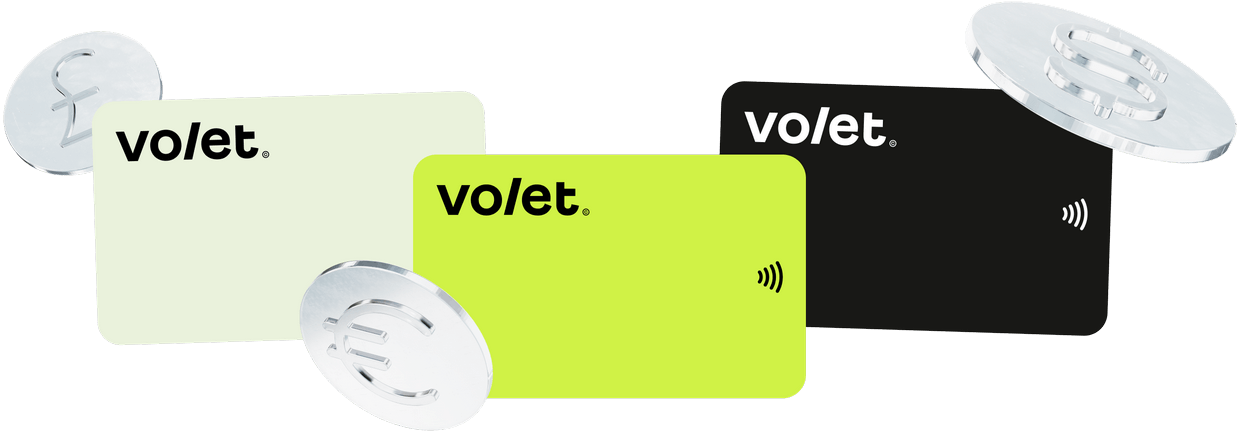
A digital wallet only goes so far until it gains direct spending power. Volet’s cards are designed to provide that next step. Its cards overview says it offers both virtual and plastic cards so users can spend their balance easily, online and offline. It lists several regional formats, including a global digital card available in 150+ countries, an Asia-Pacific plastic card, a Europe virtual card, and a Europe plastic card. The card page also says card balances are loaded instantly from fiat Volet e-wallet balances only, which is a key operational detail because it shows how the platform connects its wallet and card layers.
That relationship between wallet and card is central to the product’s usefulness. The card is not being positioned as an isolated prepaid product with a separate funding experience. It is a spending extension of the broader wallet account. Users move USD or EUR from their Volet balance, load the card, and then spend online, in stores, or in some cases at ATMs, depending on the card and region. On the general cards page, Volet says users transfer USD or EUR from their account and then start spending online and offline; it also says withdrawals via ATMs are supported as part of the overall card proposition.
This matters because spending is where many multi-feature payment apps either prove themselves or fall apart. If the spending layer is clumsy, slow, or detached from the main wallet experience, the product begins to feel fragmented again. Volet’s card positioning suggests it wants the opposite effect. The wallet is meant to be where money sits and moves; the card is meant to be where that money becomes daily utility. That is exactly what people are looking for when they search for an online wallet with debit card behavior, a wallet with physical card support, or a virtual payment card app that connects smoothly to broader balances.
The Digital Card and the Appeal of Instant Issuance
Volet’s digital card page gives the clearest picture of how the card strategy works for individual users. The company says its Virtual Mastercard USD is issued instantly, supports global use, has 0% FX markup, works in 150+ countries, and is ready for Apple Pay and Google Pay. It also outlines specific use cases including travel, luxury shopping, everyday purchases, apps, and healthcare payments. The page further states that payments run at the Mastercard rate with no extra markup and gives card limits that scale up to a $400,000 total monthly spending capacity across all payment types.
For consumers, that combination speaks to convenience and reach. Instant issuance means the user does not need to wait for a physical card before beginning to use the account for real purchases. Mobile wallet compatibility means the card can move quickly into contactless and point-of-sale scenarios. No FX markup and broad country support reinforce the travel and international spending angle. This is why Volet naturally fits into searches around instant virtual card, virtual Mastercard wallet, digital card for travel, and global debit card app. The value is not just having a card, but having one that can begin working almost immediately inside a broader international wallet environment.
Volet also says the digital card can be used for offline point-of-sale payments through Apple Pay and Google Pay, and that ATM withdrawal via Google Pay is available. For users who live increasingly through mobile devices, that matters. It means the spending layer is not limited to online checkout pages. It extends into physical retail and day-to-day purchases, which makes the wallet feel closer to a genuine everyday payment account.
A Practical Path From Crypto Balances to Everyday Spending
One of the most marketable parts of Volet’s card story is the crypto angle, but it is important to understand how that actually works. Volet’s cards page says many users top up their fiat e-wallet using crypto or stablecoins and then load the card from the fiat wallet. It frames this as a simple path from digital assets to everyday spending. The same page says users can deposit via BTC and then load USD or EUR to the card, which the company describes as delivering the same practical experience people are often looking for when they search for a bitcoin debit card.
That structure is more useful than it may first appear. Rather than turning the card into a narrowly branded crypto gimmick, Volet makes the broader wallet do the work of conversion and balance management. The card then becomes the spending instrument attached to that managed balance. For the user, this is a more flexible setup. A freelancer paid in crypto can convert only what they need for spending. A user holding stablecoins can top up the fiat wallet as needed. Someone traveling can retain the feel of crypto-enabled finance while actually spending through a familiar card-based payment interface.
In practical terms, that makes Volet relevant to anyone looking for a crypto card for travel, a crypto to fiat wallet app, a stablecoin spending wallet, or a wallet that can help bridge digital assets into ordinary payments. The company is not merely saying “crypto is supported.” It is showing how crypto can become usable at the point where people actually feel financial convenience: checkout, in-store tap payments, subscriptions, bookings, and day-to-day purchases.
Why Volet Makes Sense for Freelancers, Remote Workers, and Digital Nomads
Some platforms become more attractive the more international your life becomes. Volet is one of them. Its combination of wallet balances, internal transfers, fiat-and-crypto functionality, and virtual or physical cards clearly speaks to users who do not fit neatly into one local banking pattern. Freelancers paid by overseas clients, remote workers supporting households across borders, digital nomads funding travel from international income, and consultants juggling global tools and subscriptions all face similar friction points. They need a place to receive money, move it quickly, keep it in usable form, and spend it without unnecessary platform switching.
For these users, the appeal is not that Volet replaces every financial product on earth. The appeal is that it reduces the number of separate tools required for common international workflows. A user can receive funds, hold them in the account, potentially convert between asset types, move value internally, and then spend through a virtual or physical card. That is a stronger proposition than a simple payout endpoint or a single-purpose online wallet. It turns the account into something closer to a daily financial base for globally connected work and living.
It also helps explain why Volet fits so naturally into terms like wallet for freelancers, wallet for digital nomads, international e wallet, borderless payment wallet, or online wallet with debit card support. The platform’s public features map closely to real-world remote work patterns: international receipt of funds, optional crypto handling, fast internal transfers, and spending flexibility once the money lands.
Travel, Cross-Border Living, and Day-to-Day International Spending
Travel and cross-border living create very particular payment needs. A traveler or expat may care less about abstract financial innovation and more about whether the service actually works when booking hotels, paying in shops, handling foreign transactions, and accessing funds without traditional banking friction. Volet’s digital card page leans into exactly these everyday use cases. It highlights travel, online spending, and in-store use, while the broader cards page emphasizes worldwide availability depending on the card, instant virtual issuance, Apple Pay and Google Pay support for some cards, and the ability to load cards from the wallet balance quickly.
The lack of extra FX markup on the digital card page is especially relevant in that context. Foreign transaction costs can quietly erode the value of cross-border spending products, so a card that advertises Mastercard rate payments with no extra markup has an immediately understandable appeal. Combined with a wallet that can already hold and move funds across different formats, the card becomes useful not just as a payment tool, but as part of an international spending setup that feels more deliberate and less patched together.
This is why Volet fits naturally into the conversation around travel payment cards, multi currency wallets for everyday spending, digital wallets for expats, and worldwide spending cards. It is not simply about buying something abroad once or twice. It is about creating a payment environment that travels well because the wallet, card, and transfer tools are already built around global movement.
Security, Support, and the Confidence Layer
Features matter, but people trust payment platforms only when the security and support picture feels strong enough to justify everyday use. Volet’s public materials repeatedly stress that point. On the company page, it describes itself as safe and regulated and says it places a strong focus on privacy and security. On the security page, it says both personal and merchant accounts come with extensive security tools, including intelligent environment monitoring, payment passwords, IP restrictions, and multi-tier account and payment protection. It also says 2FA can be delivered through messenger-based one-time passwords as well as software or physical OTP tokens.
Again, these are company claims, not outside audits summarized here, but they are still important because they shape how the platform is meant to be experienced. Volet is not presenting security as a background checkbox. It is presenting it as a customizable layer that both consumers and businesses can actively use. That is significant in a product with cards, wallet balances, payouts, and business payment flows. The more the account can do, the more important it becomes for users to feel they have serious control and protection around access and payments.
Support is part of the same confidence story. The cards page highlights 24/7 live support with “real people,” and the accept-payments page says businesses receive personal support during setup and integration. In payment products, where onboarding, verification, and settlement flows can become stressful quickly, visible support often matters more than flashy product language. It can be the difference between a platform that looks attractive and one that actually feels usable in practice.
An Extra Consumer Layer: Gift Cards and Alternative Spend Paths
Volet’s personal ecosystem goes a little further than wallet, crypto, and cards. Its shop page says users can choose from hundreds of digital gift cards across categories such as payments, entertainment, gaming, shopping, and travel. It says these can be purchased instantly with crypto, that no KYC is required for the shop flow described there, and that cards can be bought for oneself or sent by email as gifts. That is not the main reason most people will sign up, but it does add another spending dimension to the account.
Why does that matter? Because modern digital wallets are often judged by how many useful exits they provide for balance utilization. Direct card spending is one exit. Withdrawals are another. Gift cards create a third path that may be attractive for users who want a fast digital spend option or who operate in environments where gift cards are a practical stand-in for direct purchases. In that sense, the shop is not a random add-on. It fits the broader Volet theme of turning balances into usable outcomes.
It also adds to the feeling that the platform is built around actual user behavior rather than abstract wallet theory. People do not just store money. They spend it, gift it, convert it, or use it to access services. The more ways a platform supports those behaviors inside the same ecosystem, the more complete it begins to feel.
Volet for Businesses: A Unified Business Payment Platform
If the personal side of Volet is about flexibility, the business side is about operational compression. On its business overview page, Volet says it is a unified business payment platform that combines crypto and fiat tools in one account. It says businesses can accept payments, manage multi-currency balances, automate payouts, and run global operations without relying on multiple providers or fragmented banking rails. That is a strong statement, and it neatly captures the core business promise: reduce the number of moving parts required to run global money flows.
For businesses, this kind of consolidation can have a much bigger effect than it first appears. Every additional provider in a payment stack tends to add integration complexity, operational risk, fee layers, reconciliation work, and support dependencies. If checkout lives in one system, payouts in another, crypto in a third, and treasury balances in a fourth, the business eventually spends too much time connecting tools instead of using them. Volet’s business model is appealing because it tries to bring those functions closer together. Incoming payments, outgoing disbursements, crypto-to-fiat flexibility, and developer tools all sit under one platform brand and one account logic.
This is especially relevant for online businesses, cross-border service firms, creator platforms, marketplaces, SaaS operators, and companies with distributed contractors or partners. These businesses do not simply need a merchant account. They need a money movement system. The more global their operations become, the more that distinction matters.
Accepting Payments: Fiat, Crypto, and Faster Access to Funds
Volet’s accept-payments product page is one of the clearest examples of how the platform is trying to serve international commerce. The page says businesses can set prices in fiat or crypto and accept payments through Volet or directly in crypto. It lists supported payment currencies and assets including fiat currencies such as USD, EUR, TRY, BRL, and VND, stablecoins including USDT and USDC across major chains, and popular cryptocurrencies such as BTC, ETH, TON, and XRP. For businesses that sell globally, that kind of breadth can expand the range of customers who can pay without forcing the merchant into a single settlement model.
Volet also emphasizes speed and accessibility of funds. Its page says incoming money is available right away, with no holds and no chargebacks in this model, and that merchants can withdraw via bank, card, or crypto in any currency. It further notes instant currency exchange and low FX fees. For business owners, those details matter because the biggest problem with many payment systems is not taking the payment itself, but waiting on settlement or losing flexibility once the funds arrive. A business that can accept globally and then decide whether to hold, exchange, withdraw, or reuse the balance for payouts is in a much stronger cash-flow position.
The commercial structure Volet describes is also part of the appeal. The accept-payments page says there are no onboarding fees, no monthly subscriptions, no settlement fees, and no cross-border surcharges, with flat fees depending on payment method. It also says small businesses can receive their first payment in one day or less after onboarding and verification, and that merchants can go live within 24 hours with personal support during setup. Those are company claims, but they make clear that Volet is trying to compete not only on features, but on launch speed and simplicity.
Why This Matters for Small Businesses and Global Online Sellers
A lot of payment platforms sound attractive until a smaller business actually tries to adopt them. Suddenly there are setup fees, long onboarding cycles, contract friction, or technical requirements that make the product feel enterprise-only. Volet’s accept-payments and Hosted Checkout messaging push hard in the opposite direction. It says businesses can start fast, avoid pointless setup layers, and launch without complex development depending on the integration route chosen. That is why the platform can appeal both to growing e-commerce operators and to leaner digital businesses that want international reach without a months-long infrastructure project.
This is especially useful for businesses that sell digital products, software, memberships, services, or app-based offerings. These businesses often care about more than just cards. They want broader payment acceptance, global reach, quick access to funds, and a path to future payout automation if the business grows into affiliate programs, reseller ecosystems, or marketplace-style operations. Volet’s product range makes that transition easier because payment acceptance and payout functionality already live in the same environment.
In other words, Volet’s business value is not only that it can help a merchant get paid today. It is that it may also help that merchant operate more flexibly tomorrow, once the business starts paying others, expanding regions, or adding more complex treasury flows.
Mass Payouts: One of Volet’s Strongest Business Use Cases
If there is one area where Volet’s business pitch becomes especially compelling, it is mass payouts. The company’s payout page says businesses can send thousands of payouts worldwide in minutes through API or dashboard, using USDT, USDC, crypto, or deposits directly to Volet fiat wallets. It also says payout automation can be handled by API or by CSV/XLS uploads and that the system parallelizes blockchain transactions so thousands of payouts can be completed quickly.
That is a powerful proposition for businesses built around outbound money movement. Think affiliate networks, ad-tech firms, content platforms, creator economies, remote workforce systems, cashback and rewards businesses, gaming and betting ecosystems, marketplaces, and any service where the company pays large groups of users or partners regularly. In those settings, payout friction is often the real bottleneck. It can hold back growth, generate support tickets, and create geographic blind spots where the company wants to operate but cannot pay people efficiently. Volet’s payout system is explicitly designed to solve those problems by combining blockchain rails, Volet wallets, automation, and multiple withdrawal options.
The flexibility on the recipient side is particularly important. Volet says recipients can receive funds into fiat wallets within Volet and then withdraw locally via card, bank transfer, or crypto. That matters because not every recipient wants the same thing. One freelancer may prefer stablecoins. Another may want local bank withdrawal. Another may want card access. The payout becomes more useful when the business does not have to predict or impose a single destination method.
Paying Contractors, Suppliers, and Remote Teams More Smoothly
Volet’s business payments product takes the payout idea and applies it to more day-to-day company operations. Its business-payments page says companies can send salaries, project payments, bonuses, or one-off transfers in stablecoins or to Volet wallets, and that recipients can choose withdrawal methods based on what works in their region. It also says businesses can send and receive payments through stablecoins, cryptocurrencies, and traditional rails including SEPA, SWIFT, CIPS, and local methods.
That multi-rail design is important because business finance is rarely uniform. A European supplier may prefer a bank transfer. A contractor in another region may want stablecoins. A partner may want wallet-based receipt and later card withdrawal. A business using only one rail ends up forcing its own limitations onto everyone it pays. A business using a platform that can mix fiat and crypto depending on the region has more room to operate intelligently. Volet says exactly that on its business-payments page: companies can mix crypto and fiat to reduce friction across regions.
For businesses with global teams, this can make the platform feel like more than a payment processor. It begins to look like a payment operating layer for distributed work. That is why Volet naturally fits into terms like global payroll wallet, contractor payment platform, borderless business account alternative, and business wallet for international payments. Its features align with how internationally distributed businesses actually function: collecting from one place, paying out in another, and managing balances somewhere in between.
API: For Businesses That Want Control and Automation
Volet’s developer tools add another major dimension to the platform. The API page says businesses and even personal projects can use a single API to accept crypto, send payouts, manage balances, handle conversions, and manage liquidity. It also says there are no setup, subscription, or API call fees and that users pay only for the transactions they process. In addition, the API page explicitly positions the tool for SaaS and e-commerce, while also mentioning personal projects like donations or small payouts.
That is a meaningful feature set because it opens Volet up to different layers of sophistication. A solo founder can use the API to automate part of a simple payment flow. A SaaS company can embed payment logic into a product. A marketplace can build custom payout rules. A larger platform can use the API for payments, treasury handling, conversions, and automated settlement logic. In each case, the same underlying advantage applies: the business is not just getting a payment button. It is getting programmatic access to a broader money movement environment.
This is one of the reasons Volet’s business proposition feels broader than a standard payment gateway. The API is not framed as a thin checkout wrapper. It is framed as an entry point into payments, payouts, conversions, and balance management. That makes it more attractive to businesses that expect their financial workflows to grow more complex over time.
Hosted Checkout: Fast Launch Without Heavy Development
Not every business wants to build through an API. That is where Volet’s Hosted Checkout becomes particularly useful. The Hosted Checkout page describes it as a ready-to-use payment page managed by Volet, where users are redirected to a secure payment page, the company generates payment details, the customer chooses the preferred payment method, and Volet confirms the transaction before the funds arrive in the merchant wallet. The page says businesses can start accepting fiat and crypto in minutes and that no complex coding is required.
The real strength of this model is speed without sacrificing range. Hosted Checkout supports websites, blogs, SaaS products, membership sites, e-commerce stores, and even mobile or Telegram apps through a webview. The page says businesses can use it without backend coding and without bearing PCI compliance burden on their own side. For companies that want international checkout capabilities but do not want a long engineering cycle, that is a compelling middle ground between a full custom integration and a limited no-frills payment widget.
Volet also says Hosted Checkout has no setup or subscription fees and uses flat, predictable pricing where users pay only per transaction. That fits neatly with the broader business message across the site: accessible onboarding, lower friction, and the ability to start operating globally without needing enterprise-scale implementation resources first.
Plugins: No-Code Adoption for CMS and E-Commerce Users
The plugin layer makes Volet even more accessible to smaller teams and non-technical merchants. The plugins page says Volet’s CMS plugins connect Hosted Checkout to a website, shop, or blog without coding and handle the flow from payment creation to confirmation automatically. It lists use cases such as websites, landing pages, e-commerce stores, membership portals, and digital product platforms. It also says supported installations can be done in minutes and that if a system is missing, Volet can build and release a plugin at no extra cost.
That matters because a huge number of online businesses do not begin as fully custom software products. They begin on WordPress, WooCommerce, OpenCart, or other CMS and commerce stacks. The Hosted Checkout FAQ says the solution is ideal for WordPress, WooCommerce, OpenCart, and similar platforms where merchants want no-code integrations. That expands Volet’s relevance well beyond the developer crowd. It becomes not only an API-ready platform, but also a realistic option for operators who want to move fast with a more standard site setup.
In practical terms, this means Volet can meet businesses at different stages of maturity. A merchant can start with a plugin, graduate to Hosted Checkout customization, and later adopt the API for deeper control. Because all of those layers sit within the same product family, growth does not necessarily require changing providers each time the business becomes more sophisticated.
Why the Combined Stack Matters More Than Any Single Feature
It is tempting to evaluate platforms like Volet one feature at a time: the wallet, the card, the crypto functions, the payouts, the API. But the bigger story is how those pieces reinforce one another. The wallet becomes more useful because cards make balances spendable. The cards become more useful because the wallet can be funded through multiple formats, including crypto and fiat. Business payments become more useful because balances can be held, exchanged, and redeployed without leaving the platform. Payouts become more useful because recipients have multiple withdrawal paths after receiving funds. Developer tools become more useful because they sit on top of a system that already handles several different payment and treasury functions.
That is the real reason Volet feels modern. It is not because any one feature is unprecedented in isolation. Digital wallets exist. Crypto wallets exist. Virtual cards exist. Hosted checkouts exist. Mass payouts exist. What feels more current is the decision to connect those things inside one coherent platform story. Modern users and modern businesses are tired of unnecessary handoffs. They want systems that acknowledge how money actually moves now: across borders, across asset types, across apps, across teams, and often at a pace that traditional structures do not handle gracefully.
In that sense, Volet is not just selling convenience. It is selling continuity. Instead of asking the user to restart their workflow every time they switch from receiving to spending, or from checkout to payout, it tries to keep those actions inside one ecosystem. That continuity is what makes the platform interesting to both individuals and businesses.
Who Gets the Most Value From Volet
The people who get the clearest value from Volet are those who operate across boundaries. That includes freelancers paid by international clients, remote workers receiving compensation in different formats, digital nomads who need a travel-friendly wallet and card setup, online sellers serving a global customer base, and businesses paying affiliates, creators, contractors, or suppliers across multiple countries. These are the users for whom a conventional, single-rail payment product often starts to feel restrictive.
For consumers, the strongest appeal is the ability to keep transfers, asset handling, and spending closer together. For businesses, the strongest appeal is the ability to unify incoming and outgoing flows while keeping integration options flexible. Volet’s public feature set supports both of those stories very clearly. It offers a practical consumer wallet environment and a more infrastructure-oriented business environment without making them feel like separate companies accidentally sharing the same brand.
That coherence is worth emphasizing because it is increasingly rare. Plenty of payment brands bolt on consumer features after starting as business tools, or bolt on business tools after starting as consumer wallets. Volet’s current product structure feels more intentionally connected than that. The wallet, cards, crypto, payouts, and developer tools all point back to one repeated idea: make global money movement simpler, broader, and more usable.
The Bigger Picture: Modern Payments With Global Freedom
If you strip away the marketing language and look at the product architecture underneath, Volet’s core offering becomes easy to understand. For individuals, it offers a digital wallet that can hold and move value, interact with crypto, support instant internal transfers, and connect to virtual or plastic cards for real-world spending. For businesses, it offers a payment platform that can accept global payments, support multi-currency balances, automate mass payouts, pay contractors and suppliers, and integrate through API, Hosted Checkout, or CMS plugins. Those are not random feature clusters. Together, they form a more complete answer to how money actually moves in 2026.
That is why the title of this article fits so well. Modern payments are no longer just about sending money from point A to point B. They are about global freedom: the freedom to receive money in different ways, to hold multiple asset types, to exchange value when needed, to spend worldwide, to pay people in the format that works best for them, and to build payment logic into products without unnecessary complexity. Volet’s current public platform is built around that idea from top to bottom.
For anyone searching for a modern digital wallet, a multi currency wallet, a crypto friendly payment app, a wallet with virtual and physical cards, or a business payment platform for international operations, Volet is worth understanding in full rather than in fragments. Its real value is not hidden in one headline feature. It is in the way the wallet, cards, crypto tools, payout systems, and business integrations work together to create a more connected payment experience for both individuals and companies.