
Money no longer sits still. It arrives from one place, pauses in another, gets exchanged into a different currency, moves again to a friend, a freelancer, a supplier, or a family member, and then turns into everyday spending through a card, a phone, or an online checkout. That is the real shape of modern finance for remote workers, online businesses, creators, affiliates, digital nomads, expats, travelers, and globally minded shoppers. What people want now is not just a place to store value. They want a digital wallet, e wallet, online wallet, or global digital wallet that helps them send money online, receive money online, convert balances, and spend internationally without feeling like they need five different financial apps to complete one week of real life. The broader market problem is easy to see: the World Bank says the global average cost of sending remittances is still 6.49% of the amount sent, while BIS research published in 2026 notes that retail and remittance cross-border payments remain slower and more expensive than domestic payments. The IMF has likewise argued that digital money and digital payments innovations can improve cross-border payments by reducing costs, increasing speed, and improving transparency.
That is exactly why platforms like Volet matter. Instead of treating sending, receiving, exchanging, and spending as separate financial jobs, Volet presents them as parts of one connected flow. On its official site, Volet describes itself as a secure e-wallet and payment platform with cards, crypto support, business payment tools, and free instant P2P transfers. Its cards page says the brand has been trusted worldwide for more than 10 years, operates across 180 countries, serves 10M+ users, and handles 3M+ transactions per month. Its business pages position the platform as a unified account where crypto and fiat tools live together so users can accept payments, manage balances, automate payouts, and run global operations without fragmented rails.
That is why “One Balance, Many Directions” is more than a slogan. It captures a financial reality. Today’s users do not just want a wallet for storage. They want a multi currency wallet, borderless e wallet, wallet to send and spend, online wallet with payment cards, international payment account, and often a crypto friendly wallet too. They want one balance that can move in several directions without every step becoming a separate logistical problem. The stronger your financial mobility needs become, the more valuable that kind of continuity becomes.
Why send-and-spend platforms are becoming more important
The old financial model assumed that most people earned locally, banked locally, spent locally, and occasionally sent money abroad. That world still exists, but it is no longer the only default. A consultant in Stockholm might invoice a client in Dubai, buy software from a U.S. company, pay a contractor in Southeast Asia, and travel to Berlin the next week. A creator might receive revenue from an affiliate network, transfer part of it to a collaborator, keep some of it in stablecoins, and spend the rest through a virtual card for subscriptions and ad tools. A family supporting relatives overseas may need an easy international money app that makes routine transfers feel less like a special event and more like ordinary money management. The World Bank’s Global Findex 2025 emphasizes the rise of digital financial services and updated global data on how adults use formal and informal financial services to make payments, save, borrow, and manage risk in the digital economy.
What that means in practice is that users increasingly judge financial tools by flow, not by isolated features. A platform may be good at receiving money, but if spending from that balance is awkward, the experience still breaks. Another may be strong for card use, but weak for inbound transfers, international payout handling, or crypto conversion. The market is gradually rewarding platforms that shorten the chain between receiving value and using value. That is also why the language around payment products has shifted. People are looking for an all in one payment app, digital finance app, online payment platform, fintech wallet app, or modern alternative to banking app because they want fewer handoffs in the middle of financial life.
Volet fits naturally into this trend because it is designed around continuity. Its homepage emphasizes free instant P2P transfers and the ability to move money and crypto between Volet wallets or crypto wallets. Its personal-fees page shows that users can fund accounts through local bank transfer, personal account transfer, card payments, crypto, and stablecoins. Its cards pages then extend the same balance into day-to-day spending through virtual and plastic products. The business side adds payment acceptance, hosted checkout, APIs, and mass payouts. Taken together, that is not one feature. It is a movement system.
What Volet is really offering
At first glance, Volet can look like a standard secure digital wallet with cards. That description is not wrong, but it is incomplete. The more accurate view is that Volet is trying to operate as a connected digital payment wallet where receiving, storing, converting, sending, and spending are part of one account logic. Its business overview page explicitly says the platform combines crypto and fiat tools in one account so companies can accept payments, manage multi-currency balances, automate payouts, and run global operations without multiple providers. The personal side reflects the same philosophy in simpler form through balance storage, transfers, card funding, and withdrawals.
That matters because many users no longer divide their finances into neat categories. A single person may need a fiat wallet, crypto wallet app, virtual card wallet, travel payment card, wallet for overseas shopping, and fast international payment app at different moments in the same month. A business may need payment acceptance, contractor payouts, supplier payments, currency conversion, and a way to keep treasury balances in both fiat and digital assets. Platforms that solve only one step now feel incomplete.
Volet’s advantage in that landscape is not that it claims to do everything imaginable. It is that the platform focuses on the most connected money actions. Hold balances. Move them. Exchange them. Withdraw them. Load them to cards. Accept them via checkout. Distribute them via payout tools. That is a tighter and more useful proposition than a generic promise of “financial innovation.” It is particularly relevant to anyone searching for a wallet for cross border business, wallet for international freelancers, global transfer and card app, online wallet for worldwide transactions, or a digital wallet for borderless commerce.
One account, more than one type of value
The reason the “one balance” idea works is that Volet is built around more than one asset type. On its business pages, Volet says companies can manage USD, EUR, USDT, USDC, BTC, ETH, and more in one account. On the personal-fees page, the platform lists support for USD and EUR account transfers, multiple major crypto assets including BTC, ETH, TON, BNB, SOL, POL, AVAX, LTC, XRP, and TRX, plus USDT and USDC across several networks. The off-ramp guide published by Volet in March 2026 says the platform supports USDT on nine networks and USDC on seven for auto-conversion routes.
That is important because a multi asset wallet is not just about variety. It is about reducing forced exits. If a user must leave one platform every time they want to switch from crypto to fiat, or from stored value to spending, then the account is not really central. It is only temporary. Volet is trying to stay central by making it possible to keep different forms of value in one environment and then choose what to do next from there.
This is also where Volet starts to make sense for mixed-use users. Someone paid in stablecoins may want a crypto to fiat wallet app without the complexity of a traditional exchange interface. A freelancer receiving dollars may want a usd wallet app that can also handle eur transfers later. A traveler may want a multicurrency payment app that helps them hold funds, exchange when needed, and load a spending card. An online business may want to keep part of its operating liquidity in fiat and part in stablecoins, then decide later whether to pay out to team members, send money to a bank account, or keep the balance ready for cross-border settlement. Volet’s current structure appears designed for precisely those kinds of overlapping needs.
Funding the wallet without overcomplicating the process
A global wallet is only as useful as its funding paths. If it is difficult to get money into the account, the rest of the product matters less. Volet’s personal-fees page provides a detailed look at how users can load the account. According to the current fee schedule, transfers from another personal account in USD or EUR are free, local bank transfer funding in a wide range of currencies is free, Visa and Mastercard loads in USD or EUR are charged at 3.5%, crypto deposits are free, and stablecoin deposits for USDT or USDC carry a fixed 1 USD fee. The same page says there are no fees for account opening or closing, verification, and monthly or annual maintenance, aside from a 1 USD monthly inactivity fee after six months without transactions.
Those details matter for everyday practicality. A wallet that claims to be borderless but forces narrow deposit choices tends to create frustration fast. By contrast, Volet’s funding mix suggests several entry routes for different types of users. Traditional users can approach the platform through local bank transfers or card funding. Crypto users can approach it through asset deposits and stablecoin transfers. Users already inside the Volet ecosystem can move funds between personal accounts. That flexibility is what makes a wallet feel like an operating environment instead of a single-purpose endpoint.
It also reinforces Volet’s usefulness for people whose income or capital sources vary month to month. A remote worker might receive a local transfer one month and a stablecoin payment the next. A digital creator might fund the account from a card for fast online spending, then later receive an affiliate payout to the wallet. A business may top up through bank rails for payroll one week and crypto for global disbursement the next. The more these workflows live inside one account structure, the less friction accumulates over time.
Receiving money online and keeping it usable
Receiving money is where many financial experiences begin, but it is also where many platforms stop being convenient. A payout lands, the money is visible, and then the real work starts. How do you transfer it? Exchange it? Spend it? Withdraw it? Send part of it to someone else? A useful online wallet should not only answer the first question of receipt. It should answer the second question of usability.
Volet leans directly into that problem. On its homepage and related materials, it presents the platform as a place where users can send and receive payments in both crypto and fiat and then use prepaid cards for spending. In a 2025 article about what to do after getting paid to the platform, Volet explicitly describes itself as a payment system and digital wallet that lets users receive payments in crypto and fiat currencies and spend the money via prepaid cards. That matters because it clarifies the product’s intended workflow: getting paid is not the end state, it is the beginning of what comes next.
This is why Volet feels relevant to people searching for payment solution for freelancers, payout wallet for creators, online wallet for consultants, wallet for affiliate marketers, or wallet for digital creators. These groups often care less about abstract financial features and more about continuity after the payout hits. They want to know whether the balance can be used immediately and flexibly. Volet’s product structure strongly suggests that the platform is trying to answer yes.
There is also a psychological advantage to this model. When money lands in a wallet that is already connected to transfer options, conversion tools, and spending cards, it feels more like money you own and control than money waiting in a holding room. That difference matters. A platform becomes genuinely useful when the user stops thinking about where the balance is trapped and starts thinking about what they want to do with it next.
Sending money online without building extra friction
Volet’s homepage emphasizes free instant P2P transfers for personal accounts and says users can instantly move money and crypto between Volet wallets or crypto wallets. That may sound like a straightforward feature, but internally fast transfers are one of the most important qualities in any payment ecosystem. People use them for family support, shared expenses, split business costs, micro-payouts, reimbursements, and routine team transfers. When those flows are delayed or expensive, even a feature-rich platform starts to feel heavy.
For that reason alone, Volet makes sense as a p2p payment app or instant p2p transfers tool for people who already want a broader e-wallet environment. The key benefit is not only speed. It is the removal of mental overhead. If both sender and recipient can operate inside the same system and move balances instantly, one of the most common financial use cases becomes much simpler. That simplicity becomes especially powerful when the same wallet can then be used for bank withdrawal, card loading, or further transfers.
Volet’s off-ramp and business materials extend the sending story beyond internal movement. The platform’s March 2026 crypto-to-bank guide says users can convert crypto into a fiat balance and then withdraw to their bank. The business pages say companies can send and receive payments through stablecoins, crypto, SEPA, SWIFT, CIPS, and local methods. The contractor-payments page says recipients can choose the best withdrawal option for their region, including card, bank transfer, or crypto. That broader rail mix is exactly what people mean when they search for terms like app for sending money abroad, transfer funds globally, send money across borders, or wallet for overseas workers.
Exchanging currencies and bridging different rails
The modern payment problem is not just transfer. It is translation. People increasingly need to move value across currencies, regions, and asset classes. Traditional bank-led systems often make that process slower and less transparent than users want. The IMF has pointed to digital-money innovation as a way to improve cross-border payments through lower cost, greater speed, and better transparency, while the ECB has argued that improved interoperability can reduce costs, increase speed and transparency, and shorten transaction chains.
Volet fits into this broader shift by combining wallet functionality with conversion paths. Its off-ramp article explains that digital wallets with off-ramp functionality combine a crypto wallet, a currency converter, and fiat withdrawal in one place. It also describes two basic approaches: manual crypto deposit then conversion, or auto-conversion where the crypto deposit becomes a fiat balance on arrival. For users who do not want to navigate order books or trading terminals, this approach is less about speculation and more about utility.
That is why Volet can appeal to very different types of users under one product logic. A traveler may think of it as a currency exchange wallet. A freelancer may think of it as a fiat and crypto wallet that helps them move between payment types. A global entrepreneur may think of it as a wallet with instant exchange and usable payout options. The labels change, but the core value stays the same: less distance between the form money arrives in and the form you need it to become.
From wallet balance to real-world spending
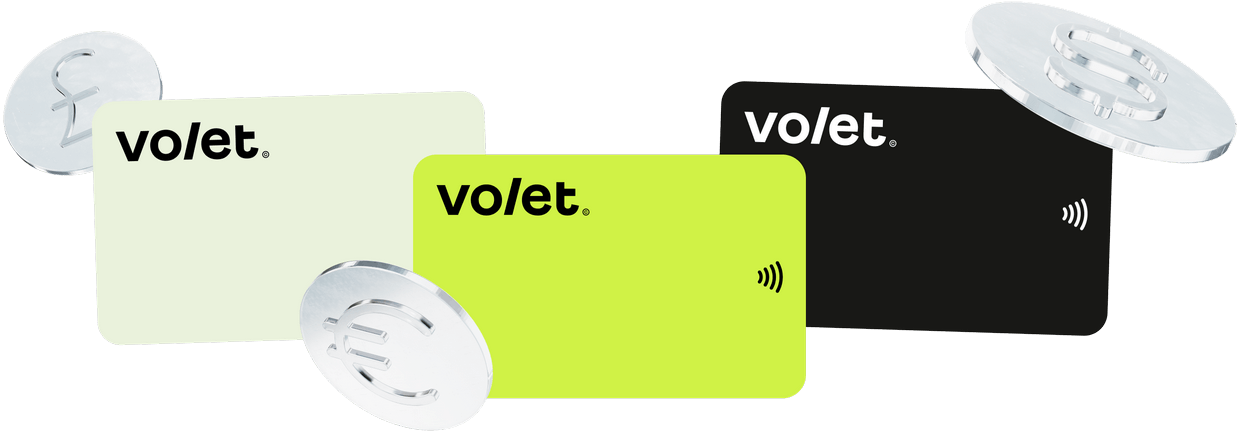
The send side matters, but the spend side is where a wallet proves itself. Volet’s cards page makes this part of the product very explicit. The platform says its virtual and plastic cards are designed to help users spend their balance easily anywhere. The same page outlines a simple process: create an account, order a virtual or plastic card, activate it if needed, transfer USD or EUR from the Volet account, and then begin spending online and offline.
That process turns Volet from a transfer-and-balance platform into an everyday spending wallet. It is the difference between a wallet that holds value and a wallet for everyday purchases. Once the balance can become a card balance, the platform begins to work as a wallet for groceries and travel, digital wallet for daily spending, online and offline payment wallet, and one app for cards and transfers. Those are not just keyword phrases people search. They are real descriptions of how users measure usefulness.
Volet’s card catalog is also broad enough to match different spending needs. The cards page says the Global digital Mastercard is available in 150+ countries, Europe cards are available across Europe, Turkey, and Israel, and APAC plastic cards serve the Asia-Pacific region. It also says virtual cards are issued instantly and plastic cards can be delivered via standard or express methods, depending on the region. That makes the product relevant not only as a wallet with physical card, but also as an instantly issued virtual card or digital card for travel and online use.
Why the virtual-card angle is especially strong
Instant virtual cards solve one of the most common modern payment problems: people often need card functionality before they need plastic. They need to pay for software subscriptions, ads, streaming services, domains, cloud tools, online shopping, or travel bookings today, not after a card arrives in the mail. Volet’s card pages say virtual cards are issued instantly, and the main cards page notes that the digital card can be used with 0% FX markup and in 150+ countries.
That makes Volet particularly interesting for people who think in terms such as virtual card wallet, create virtual card instantly, virtual card for online purchases, secure virtual card for shopping, digital card for subscriptions, or wallet with virtual Mastercard. The immediate value is obvious. The user does not need to wait for the platform to become practical. The moment a funded balance can become a live card, the wallet starts participating in daily life.
The platform also says some cards support Apple Pay and Google Pay, with availability depending on the specific card. That matters because mobile-wallet compatibility narrows the gap between digital account management and real-world point-of-sale convenience. For users who increasingly live through phones rather than physical wallets, the ability to route a funded balance into mobile tap payments makes the difference between “online wallet” and “real spending tool.”
The physical-card side and the travel use case
Even in a world full of digital payments, plastic still matters. Travelers want a backup. Expats want something they can carry. Some merchants still prefer or require physical cards. ATM access can remain important, especially in places where local cash use has not disappeared. Volet’s physical-card options make the platform more credible as a travel wallet with cash withdrawal option and as an international prepaid card for cash access, even though users still need to check the relevant card program and current fees before relying on it.
The travel angle is especially important because international spending is often where finance becomes visibly frustrating. People dislike opaque exchange costs, unpredictable card acceptance, and the need to bounce money across accounts before they can use it. Volet’s cards page says the digital card carries 0% FX markup, and the broader cards lineup is explicitly framed for global use. That makes the platform attractive as a travel money card app, payment account for travelers, secure travel card app, or international spending wallet.
There is also a practical lifestyle advantage here. A user can receive a payment, hold the balance in the wallet, move some portion to a card, and then use that card online, in stores, or potentially for cash access depending on the card type. That is simpler than moving from payout service to bank account to separate card product every time money needs to become everyday spending power.
The crypto-friendly side of everyday finance
Volet’s current product language makes clear that the company sees crypto as part of ordinary payment life, not as a separate world users must enter and leave through a trading portal. The cards page says many users choose the cards as cards for crypto, loading funds from a fiat e-wallet that was topped up via crypto or stablecoins. It also says users can deposit through BTC and then instantly load USD or EUR to the card, creating the same practical experience as a bitcoin debit card but with more flexibility in how the funds are managed.
This matters because most people searching for a crypto debit card or bitcoin wallet with card are not asking for abstract blockchain purity. They are asking a simpler question: can value that originates in crypto become spendable with minimal friction? Volet’s answer is essentially yes, by routing that value through the wallet balance and into a virtual or physical card.
The March 2026 off-ramp guide supports this interpretation. Volet explains that its off-ramp setup combines a crypto wallet, conversion function, and fiat withdrawal in one place. It describes KYC, supported networks for USDT and USDC auto-conversion, and bank-withdrawal paths after conversion. For users who earn in crypto, this makes Volet relevant as a stablecoin wallet, crypto to fiat wallet app, spend USDT with card solution, secure crypto spending wallet, or digital wallet with crypto conversion. The essential point is utility. Crypto does not need to sit idle. It can move toward daily use.
A strong fit for freelancers, creators, and global earners
Volet’s positioning is especially compelling for users whose income is fragmented, international, or digital-first. The platform’s homepage says users can get paid by employers or affiliate programs and receive CPA network payouts. The contractor-payments page says businesses can use Volet to pay creators, freelancers, and partners in multiple countries, while the mass-payout page describes bulk disbursements through dashboard or API.
That combination makes Volet particularly relevant to the modern solo-economy and creator-economy user. A freelancer does not want only a payout account. They want a wallet for international freelancers that can also support online purchases, tool subscriptions, ad spending, payouts onward to collaborators, and occasional bank withdrawals. A creator wants a payout wallet for creators, but also something that can become a spending balance for software, travel, subscriptions, or team reimbursements. An affiliate marketer or publisher wants a practical path from payout to usable funds. Volet’s account-plus-card structure addresses that reality more directly than products that end their usefulness at the moment funds arrive.
There is also a time value component here. The more steps that exist between “I got paid” and “I can use this money,” the more the user experiences the system as friction. Volet’s appeal is that it shortens the psychological and operational distance between those moments. That can make a meaningful difference for users who are paid irregularly, globally, or in mixed asset types.
From personal wallet to business operating layer
Volet becomes even more interesting when viewed from the business side. The business overview page says the platform is a unified business payment platform combining crypto and fiat tools in one account. It explicitly highlights accepting payments, managing multi-currency balances, automating payouts, and running global operations without fragmented banking rails. The contractor-payments page adds that businesses can send and receive stablecoins, crypto, and payments through SEPA, SWIFT, CIPS, FPS, and local methods. It also says users can manage USD, EUR, USDT, USDC, BTC, ETH, and more in one account.
That means Volet is not just another wallet for small purchases. It is also presenting itself as payment infrastructure for global commerce. This matters for agencies, remote teams, marketplaces, exchanges, SaaS products, publishers, and online merchants that need more than one payment function. They need to collect, hold, convert, and distribute funds across borders. In older systems, those jobs often lived across separate providers. Volet is trying to collapse more of that into one environment.
For many businesses, that consolidation is the real value proposition. A business wallet for international payments becomes more valuable when it also works as a business payout solution, contractor payment app, merchant payout wallet, borderless business account, and online account for international transfers. The fewer reconciliation gaps there are between payment acceptance and payout execution, the more useful the system becomes operationally.
Mass payouts and global teams
One of the clearest examples of Volet’s business orientation is its mass-payout offering. The mass-payout page says businesses can send thousands of payouts worldwide in minutes and that payouts can be distributed through API or through CSV/XLS uploads from the dashboard. It also says the platform supports USDT, USDC, and crypto payouts, as well as direct delivery into fiat wallets inside Volet, where recipients can then withdraw by card, bank transfer, or P2P exchange.
This is important because mass payout is one of the most painful cross-border business tasks. Whether the recipients are creators, marketplace sellers, affiliates, contractors, or remote workers, the challenge is always the same: one company needs to distribute many payments across different regions without spending its own week managing manual exceptions. Volet’s payout tools are clearly aimed at that problem.
The business-fees page gives further texture to the model. It lists payouts to Volet wallets in USD or EUR from 0.5%, payouts to Visa and Mastercard cards from 2.5%, and payouts to crypto from 0.25%, with separate structures for stablecoins and other rails. That is the kind of information businesses look for when evaluating a business transfer app or global disbursement card platform: not only whether the feature exists, but whether the cost structure is predictable enough to build around.
Accepting payments without building everything from scratch
Volet’s business offering is not only about sending money back out. It is also about taking money in. Its hosted-checkout page describes a ready-made payment flow managed on Volet, where merchants redirect users to a secure payment page, the customer pays using a preferred method, and funds arrive in the wallet. The page says there is no backend coding or PCI compliance burden on the merchant side and no setup or subscription fees, only per-transaction charges.
That makes Volet relevant not only as a payment app or wallet, but as a practical online payment platform for small and medium businesses that do not want to build a full payment stack. A hosted page is especially useful for websites, digital products, landing pages, membership platforms, and merchants who want crypto and fiat acceptance without a heavier integration burden.
For users who do want more control, Volet’s API page says the company offers a free payment gateway API with no setup fees and no monthly fees, allowing businesses to accept crypto payments, automate payouts, manage balances, and create custom payment flows. The plugin page adds no-code options for WordPress, Joomla, OpenCart, and other CMS-driven environments, and says missing plugins can be built at no extra cost. That spectrum matters because it lets Volet operate across several business maturity levels: simple hosted checkout, no-code plugins, or deeper developer integrations.
Security and compliance are part of the product, not extras
Any platform built around global transfers, stored balances, and card spending has to answer the trust question. Volet’s public materials suggest that security is not treated as a marketing add-on but as a core layer of the platform. Its security article says the company offers intelligent monitoring, IP restrictions, payment passwords, and two-factor authentication, and recommends that users activate at least two security features simultaneously. The same article says Volet monitors for unusual activity and may halt transactions until verified by the user.
That matters for both personal and business users. A secure app for overseas payments or secure payment app with 2FA is not only about encryption jargon. It is about whether the platform behaves responsibly when activity looks abnormal. Users moving money internationally, especially across multiple rails or asset types, want to know there is some fraud-resistant architecture behind the convenience.
Volet also appears to take verification and compliance seriously. Its hosted-checkout page says users must verify their profile to enable payment tools. Its off-ramp guide states that users complete KYC before using those conversion and withdrawal flows. Together, those details position Volet less as a casual money toy and more as a compliant digital wallet built for actual financial operations.
Fees, transparency, and the practical cost question
No discussion of payments is complete without cost. Volet’s personal-fees page is useful because it presents a fairly concrete structure rather than vague promises of “low fees.” Personal account transfers in USD or EUR are free in and out. Local bank transfer loading is free. Local bank withdrawals start from 1%. SWIFT withdrawals in USD are 1% plus 25 USD. Card withdrawals start at 4.5% plus a fixed amount. Crypto withdrawals carry network fees, while stablecoin withdrawals are 0.5% plus network fee.
What matters here is not that every user will love every number. It is that the platform gives a usable framework for planning. A user deciding between bank transfer, stablecoin movement, or card withdrawal can actually compare routes. A business considering mass payout versus card payout versus crypto payout can model costs according to recipient profile. Predictability is a major part of perceived affordability in cross-border finance.
That is especially relevant when set against the broader market backdrop. Cross-border payments are still widely criticized for hidden fees, long chains of intermediaries, and weak visibility into what the recipient will actually receive. The World Bank’s remittance data and BIS research both underline that the global system remains too expensive and too slow for many users. Platforms that combine clearer routing options with visible fee schedules have an advantage, even before they reduce cost.
Why Volet can feel like a bank alternative without trying to be a bank clone
Many users searching for tools like Volet are not trying to recreate the traditional bank experience. In fact, they are often trying to avoid it. They want something more flexible than a domestic bank account, more usable than a payout-only portal, and more integrated than juggling several services at once. This is where Volet begins to feel like a digital alternative to bank account workflows without pretending to be a branch-based banking substitute.
The wallet-first model gives users online signup, balance management, card access, and multiple transfer options in one environment. The cards layer provides spending. The conversion layer provides flexibility. The business tools provide payment acceptance and distribution. For many globally active users, that combination is more relevant than the classic local-bank feature set.
That does not mean Volet replaces every banking need. It does mean the platform can function as a practical digital alternative for many payment-heavy tasks: global receiving, online spending, multicurrency holding, crypto-to-fiat conversion, contractor payments, affiliate payouts, remote-team spending, and travel-related card use. In that sense, Volet is best understood not as a bank clone but as a payments-centered financial tool built for borderless use.
Who gets the most value from this kind of wallet
The best use case for Volet is not one narrow persona. It is anyone whose money has to move before it becomes useful. That includes freelancers paid by international clients, creators receiving partner or affiliate income, remote teams paying contractors, global entrepreneurs managing software and supplier spend, travelers wanting an online wallet with debit-card-style functionality, and crypto users who want a cleaner bridge between digital assets and everyday purchases. Those use cases are directly reflected across Volet’s homepage, contractor-payments page, cards page, payout tools, and off-ramp materials.
It is also a strong fit for people who dislike fragmentation. If your current routine requires one app to receive, another to convert, another to send, and another to spend, then a connected wallet becomes valuable almost immediately. The more international, digital, or mixed-asset your financial life becomes, the more that continuity matters.
Of course, users still need to do normal due diligence. Card availability varies by region. Some mobile-wallet features depend on the specific card. Certain deposit and withdrawal routes have different fees. Verification is part of the process. Businesses should assess whether hosted checkout, API, or payout tools match their actual flow. But those are the normal evaluation steps for any serious payment platform. They do not weaken Volet’s core proposition. They define the practical context in which it operates.
The bigger picture: one balance, fewer interruptions
The reason Volet’s model works conceptually is that it reflects how money actually behaves now. Users do not want every financial task to trigger a platform switch. They want one balance that can move in several directions. They want to receive international payments, send money abroad, convert currencies, fund a virtual card, spend through a physical card, withdraw to a bank, or move crypto into a more spendable form without rebuilding the journey every time.
Volet’s current product lineup suggests that this is exactly the problem it wants to solve. Its personal account structure supports multiple deposit and withdrawal paths. Its internal transfer model emphasizes free instant P2P for personal users. Its cards turn wallet balances into everyday spending tools. Its off-ramp flow shortens the path from crypto to fiat. Its business tools add checkout, plugins, API access, contractor payments, and mass payouts. That is why the platform feels coherent. Everything points toward movement, not just storage.
In a market where cross-border payments are still too expensive, too fragmented, and too often slower than users expect, platforms that reduce handoffs have a real advantage. The World Bank, BIS, IMF, and ECB all point in the same direction: payments are moving toward greater digital integration, better interoperability, and shorter, more transparent routes. Volet’s value is that it tries to make that future practical at the user level.
Conclusion
A strong digital wallet today is not just a place to park money. It is a tool for motion. It should help you receive money online, send money online, hold multiple currencies, bridge fiat and crypto, issue a virtual card instantly, fund a physical prepaid card, and spend globally without turning every transfer into a separate project. That is the promise behind a modern global digital wallet, and it is the standard users increasingly expect from any serious international payment app.
Volet’s current offering makes the platform stand out because it treats those needs as connected rather than separate. The wallet balance can be funded through multiple routes. Internal transfers are designed to be immediate for personal accounts. Cards turn balances into usable purchasing power. Crypto can move toward fiat and card spending without a long detour through exchange-style complexity. Businesses can accept payments, automate payouts, and support teams, creators, or contractors across borders using a connected set of tools.
That is why “One Balance, Many Directions” is such a fitting way to describe the platform. The real strength of Volet is not one isolated feature, one card, one transfer rail, or one funding method. It is the way those pieces work together to create a send-and-spend experience that feels built for modern international life. For freelancers, travelers, creators, remote teams, online businesses, and anyone who needs a borderless e wallet or smart payment wallet, that matters more than ever.