The new standard for money is flexibility
Money used to be much simpler, at least on the surface. People were paid into one bank account, spent from one card, made the occasional transfer, and rarely needed to think about whether their financial tools worked across borders, currencies, or digital asset ecosystems. That world is fading fast. Today, people work remotely for overseas clients, subscribe to services billed in foreign currencies, send money to friends and family abroad, shop globally, hold part of their savings in digital assets, and expect to move between all of those behaviors without opening five different apps. At the same time, digital payment adoption keeps growing, remittances remain enormous on a global scale, and institutions focused on payments increasingly describe digital money and digital payment infrastructure as key to faster, more transparent, and lower-friction cross-border finance.
That shift is exactly why the idea of a modern digital wallet has become so powerful. People no longer want a narrow tool that only stores value or only sends transfers. They want an online wallet that can adapt to the way money actually moves now. They want something that can hold multiple balances, support international payments, offer card access, help with everyday purchases, enable fast transfers, and reduce the awkward gaps between traditional finance and crypto. The search language around the category tells the same story: users increasingly look for terms like multi currency wallet, global digital wallet, virtual card wallet, prepaid card wallet, crypto friendly wallet, borderless e wallet, and international payment app because they want one account that can do more than one job.
That is the space Volet is built for. Volet presents itself as a money-meets-crypto ecosystem that has been serving users since 2014, with the goal of making digital assets and traditional money easier to manage in one place. Its company pages describe a platform that helps people and businesses pay, get paid, store value, swap assets, and move between fiat and crypto more simply and securely. In other words, Volet is not trying to be just another e wallet. It is aiming to be a broader financial hub for a world where personal spending, global transfers, digital assets, and business payments increasingly overlap.
That is what makes the title of this article so fitting. “One Wallet, Many Possibilities” captures the core appeal of Volet better than almost any feature checklist could. The platform’s real promise is not that it does one impressive thing. It is that it tries to remove fragmentation from modern financial life. With Volet, the same account can potentially become your digital payment wallet, your travel spending wallet, your wallet with virtual card access, your fiat wallet, your crypto wallet app, your transfer tool, and, for many users, even part of your business payment flow.
Why a one-wallet model matters more than ever
The strongest case for a wallet like Volet begins with a very simple problem: too many financial tools are still built in silos. A person might receive money through one provider, store it somewhere else, move it into crypto on a different service, use a separate card app for purchases, and rely on another platform entirely for business payouts or contractor payments. Every one of those transitions adds friction. Some add fees. Some add delays. Some create confusion around rates, settlement times, verification, or withdrawal options. What users increasingly want is not another isolated finance tool. They want continuity.
Volet’s product design clearly leans into that desire for continuity. Across its personal, crypto, cards, and business pages, the platform consistently repeats the same larger idea: one app can cover both traditional money and crypto, balance storage and active spending, receiving and sending, personal use and business operations. That messaging matters because it reflects how users actually think when they look for the best e wallet for international use or a secure app for overseas payments. They are not looking for abstract innovation. They are looking for fewer interruptions between getting paid, moving money, managing funds, and using those funds in real life.
A good wallet experience, then, is not simply about having many features on a landing page. It is about whether those features connect naturally. Can the balance you receive become the balance you spend? Can the crypto you hold become usable purchasing power? Can the same account work for global transfers, local withdrawals, and everyday online payments? Can one system cover the distance between money arriving and money being useful? Volet’s answer to those questions is the essence of its appeal.
What Volet is really offering
At its core, Volet is offering a unified wallet environment that brings together fiat balances, crypto functionality, payment cards, internal transfers, and business payment tools. The platform describes itself as beginner-friendly but powerful, built to make crypto as simple to deal with as a banking app while also serving global payment needs for individuals and companies. That combination is central to the Volet experience because it allows the service to speak to very different user goals without losing its identity. Someone can approach Volet as a digital wallet for travel, a wallet for international freelancers, a crypto payment wallet, or an online wallet with debit card features, and still meet the same broader product ecosystem.
The “many possibilities” in the title are not theoretical. They are built into how the platform is structured. Volet’s homepage highlights getting paid by employers or affiliate programs, receiving CPA network payouts, sending money within teams, automating mass payouts, using crypto wallets, and accessing cards. Its business pages expand that range to accepting global payments, managing multi-currency balances, automating payouts, and running operations without fragmented providers or traditional banking bottlenecks. That makes Volet relevant not only as an alternative finance wallet for consumers, but also as a digital account for global spending and a payment infrastructure wallet for businesses.
This breadth is what helps Volet stand out in a crowded fintech market. Many services can do one piece of the puzzle well. Some are strong on remittances. Others on crypto custody. Others on virtual cards. Others on business disbursements. Volet’s ambition is different. It wants the wallet itself to become the place where those flows meet. That is why the platform feels aligned with search terms like all in one payment app, one app for cards and transfers, wallet to send and spend, transfer spend and exchange app, and global wallet for modern payments.
A fiat and crypto wallet in one environment
One of Volet’s most important strengths is that it does not treat fiat and crypto as separate universes. Its company and crypto pages repeatedly stress that the platform bridges traditional money and the crypto space, making digital assets easier to deal with for regular users and businesses. The wallet supports fiat balances such as USD and EUR alongside a wide set of digital assets and stablecoins, including USDT, USDC, BTC, ETH, TON, XRP, SOL, POL, AVAX, BNB, LTC, and others. That matters because it transforms the user experience from a simple account into a true multi asset wallet.
This combined model is more practical than it may appear at first glance. Plenty of people no longer think in purely traditional financial terms. Freelancers may get paid in stablecoins. Traders may want easier off-ramping into spendable balances. Remote workers may prefer a crypto friendly wallet but still need fiat tools for daily life. Businesses may want the ability to move between digital assets and traditional currency depending on payout geography or treasury needs. By supporting both worlds in one account, Volet gives users optionality instead of forcing them into a rigid financial lane.
That flexibility is one of the biggest reasons Volet fits so naturally into modern search intent. When people look for a fiat and crypto wallet, a crypto to fiat wallet app, a stablecoin wallet, or a crypto enabled e wallet, they are often looking for functionality that goes beyond holding assets. They want movement, conversion, usability, and access. Volet’s crypto pages emphasize that users can buy and sell crypto and stablecoins, switch between crypto and fiat easily, deposit and withdraw at major crypto exchanges, and send or receive assets within Volet instantly and for free. That turns crypto from a passive holding into something more operational.
Funding the wallet in ways that reflect real life
A modern wallet is only as useful as its funding options. If money cannot enter easily, the rest of the product experience becomes academic. Volet’s personal fees page shows a practical range of funding methods: transfers from another personal account at no fee in USD or EUR, local bank transfers at no fee in a wide list of currencies, Visa and Mastercard card funding at 3.5% for USD or EUR, crypto deposits with no platform fee for many assets, and stablecoin deposits such as USDT and USDC for a flat 1 USD fee. Supported crypto and stablecoin networks span several major ecosystems, giving users more than one way to bring funds in.
That breadth matters because different users approach a wallet from different starting points. Some receive salary via bank transfer. Some top up with a card. Some move money in from another ewallet. Some fund via crypto or stablecoins. Some load an account to prepare for travel or online purchases. A flexible funding layer makes Volet more useful as a reloadable online wallet, top up wallet, digital wallet with balance, and international payment account. It helps the service function for global users who do not all share the same banking infrastructure.
Volet’s personal fees page also makes clear that the platform is not just about loading funds. It is about being able to move them back out in ways that suit different geographies and needs. Personal account withdrawals can go to other personal accounts at no fee in USD or EUR, to local bank transfer from 1% across many currencies, to SWIFT in USD, to cards, or out through crypto and stablecoin rails with network or percentage-based fees depending on method. This reinforces a key part of the Volet experience: the wallet is designed not just to collect money but to route it onward in ways that match the user’s real-life destination.
That is especially important for international users. A wallet that is easy to fund but hard to withdraw from is not a true borderless payment wallet. Volet’s combination of local bank options, card-based cash-out routes, and crypto withdrawals gives it broader practical relevance for people who live, work, or transact across countries. This is where the service starts to make sense as an app for sending money abroad, a wallet for USD transfers, a wallet for EUR transfers, an online remittance wallet, or a cross border wallet app.
Sending and receiving money without breaking the flow
The homepage of Volet highlights one of the wallet’s clearest day-to-day advantages: free instant P2P transfers for personal accounts. The platform says users can instantly move money and crypto between Volet wallets or crypto wallets, making it easier to send, receive, and distribute funds between family, friends, team members, or other recipients. That one capability does a lot to define the service as more than a storage app. It turns the wallet into an active transfer layer.
Why does that matter so much? Because the value of a wallet grows dramatically when balances can circulate without friction. If a user receives funds in one place but has to leave that environment to share them with others, the wallet’s usefulness drops. Internal P2P transfers make the account feel alive. A freelancer can receive funds and move part of them to a collaborator. A business can distribute payouts within the same ecosystem. A user can receive money online and send part of it onward almost immediately. That is the kind of experience people are often seeking when they search for instant P2P transfers, p2p payment app, fast money transfer app, or instant money transfer wallet.
Volet also positions itself as a receiving account for digital work and internet-based income. Its homepage explicitly references getting paid by employers, affiliate programs, and CPA networks. That is more significant than it sounds. Many wallets market themselves primarily around spending. Volet makes receiving part of the story too, which broadens its usefulness for affiliate marketers, publishers, creators, remote workers, freelancers, and anyone who earns from globally distributed digital business models.
In practice, this changes the way users can think about the wallet. Instead of seeing it as just a digital payment method, they can treat it as a financial base of operations. Get paid here. Hold funds here. Convert value here. Send money online here. Spend from here. Withdraw from here. The better those flows connect, the more convincing the one-wallet promise becomes.
Cards that transform a wallet balance into everyday utility
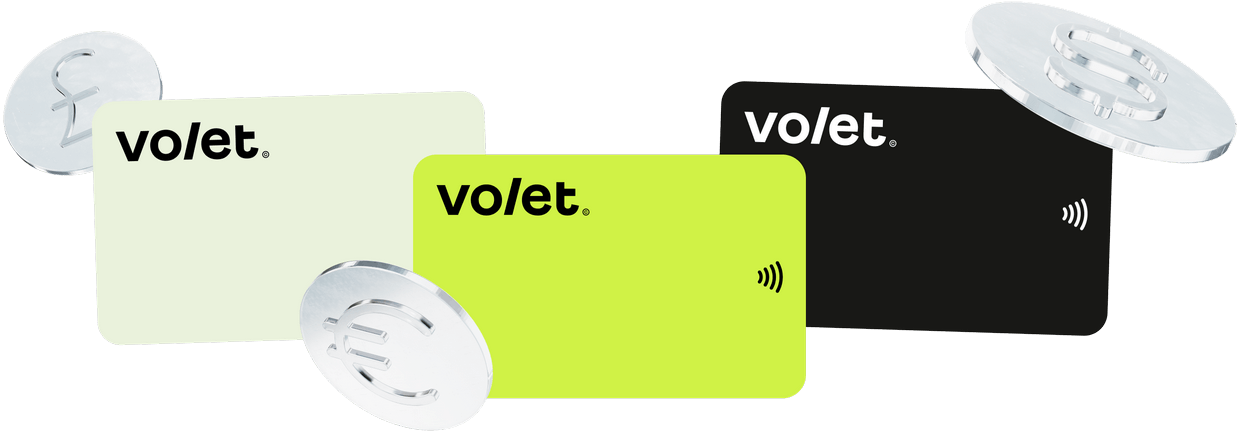
For many users, the most important moment in any wallet experience is the moment money becomes spendable outside the app. That is where Volet’s cards offering becomes central. The platform’s cards pages describe both virtual and plastic options and present them as globally usable payment tools linked to the wider wallet ecosystem. Availability varies by card type, with a global digital Mastercard available in more than 150 countries and regional card products available in APAC and across Europe, Turkey, and Israel. Virtual cards are issued instantly, while plastic cards are delivered depending on location and shipping method.
This is the point where Volet stops feeling like an abstract online wallet and starts feeling like a genuine spending platform. Once a balance can fund a card, the wallet becomes useful for online shopping, subscriptions, everyday purchases, and travel-related payments. It becomes relevant not just for managing money but for using it. That is why the cards layer is so important for keywords like virtual card wallet, prepaid card wallet, online wallet with debit card, money app with virtual and plastic cards, and global debit card app.
Volet’s digital card product is particularly strong for users who care about speed and online usability. The digital card page says the card is issued instantly, supports Apple Pay and Google Pay, uses Mastercard exchange rates with 0% FX markup, and is designed for global use. The help center also confirms that the digital card can be linked to Apple Pay or Google Pay after creation, using a one-time password flow. Those details matter because they make the card feel like an extension of the mobile wallet experience, not a separate product users have to learn from scratch.
The ability to add the card to Apple Pay or Google Pay also changes how people can use the wallet in daily life. A digital wallet becomes much more compelling when it can support contactless checkout, mobile payments, and faster in-store spending without the user waiting for a physical card to arrive. That is exactly the type of functionality people associate with a wallet with contactless payments, mobile tap payments app, tap to pay wallet, or international contactless card.
The spending experience: travel, online purchases, and everyday use
Volet’s digital card is clearly designed with real-world spending in mind. The product page says users can spend with no FX markup at the Mastercard rate, pay online and at the point of sale, and even access ATM withdrawals via Apple Pay or Google Pay in supported scenarios. The page also outlines substantial limits for point-of-sale and e-commerce purchases, while the help center gives more detailed operational limits for loading, daily use, and monthly use. Those details matter because they show that the wallet is meant for practical financial behavior, not just occasional novelty transactions.
That makes Volet especially relevant for travel and international lifestyle use. A card-backed wallet that can be funded from the same e-wallet balance, used across many countries, and integrated with mobile wallets naturally fits the needs of digital nomads, expats, students abroad, tourists, remote workers, and people who shop internationally. In that setting, Volet becomes more than a secure digital wallet. It becomes a travel wallet with virtual card support, an international spending wallet, a digital wallet for living abroad, and a wallet for foreign transactions.
It is also valuable for online spending patterns that have little to do with travel. Virtual cards are useful for subscriptions, software tools, streaming services, online shopping, digital advertising, app purchases, and general checkout security. People often want a wallet with card controls or a secure virtual card for shopping because they prefer not to rely on their traditional bank card for every online payment. By offering instantly issued virtual card functionality inside a broader wallet environment, Volet gives users another reason to centralize more of their digital spending in one place.
Crypto becomes more practical when it can be spent
The most interesting part of Volet’s cards offering may be how it connects crypto to everyday spending. The platform explicitly says many users choose its cards for crypto because they can load funds from a fiat e-wallet that was previously topped up via crypto or stablecoins. The digital card page makes the same logic clear: the card itself is topped up from the Volet fiat wallet, but that fiat wallet can be funded through crypto activity inside the broader Volet ecosystem. This is a subtle but powerful design choice because it turns digital assets into something closer to spendable financial utility.
That makes Volet much more relevant for users who are not looking for a purely speculative crypto app. They may want to hold BTC, ETH, USDT, or USDC, but they also want a path toward actual purchasing power. With Volet, the experience can move from receiving or holding crypto, to converting into fiat, to funding a card, to paying online or in stores. That is exactly the kind of operational flow behind search terms like crypto spending account, crypto to card spending app, spend crypto worldwide, stablecoin spending wallet, and wallet for moving crypto to fiat.
Just as importantly, Volet does not present this process as a technical or Web3-native ritual. Its company and crypto pages emphasize simplicity, accessibility, and reducing complexity for mainstream users. That framing matters because a lot of people are curious about crypto-enabled payments but do not want the burden of mastering multiple specialized tools. A crypto friendly wallet only becomes broadly useful when it can make digital assets feel less intimidating and more integrated into the familiar logic of a money app.
Security and compliance are part of the experience, not side notes
No wallet can be compelling without trust. Volet’s security pages show that the company understands this and treats protection as a core part of the user experience. The official security page describes intelligent environment monitoring, physical and software OTP tokens, payment passwords, IP restrictions, multi-tier account protection, OATH-compliant 2FA powered by Protectimus, PSD2-compliant dynamic linking, HSM encryption, secure SDLC practices, and PCI DSS certification. Its broader company pages also emphasize safety, privacy, and regulation as part of the brand identity.
From a user perspective, these features matter because financial convenience without security quickly becomes anxiety. People want fast access, but they also want spending alerts, protected logins, strong authentication, fraud-aware systems, and confidence that their payment environment is not casually exposed. A wallet that aims to serve both personal users and businesses must be able to signal that it takes account protection, payment protection, and background risk controls seriously. Volet’s product messaging does exactly that.
The crypto side reinforces the same point. Volet’s crypto pages say the platform monitors and screens transactions and addresses using blockchain analytics solutions for AML and KYT purposes. That is important because a wallet that bridges crypto and fiat cannot rely on informal trust signals alone. It needs to demonstrate that it is managing compliance and risk in a structured way. For users and businesses alike, this strengthens Volet’s positioning as a compliant digital wallet, a secure crypto spending wallet, and a trusted e wallet for international payments.
Support also plays a role here. Across several pages, Volet highlights 24/7 live support with “real people” instead of bots. That may sound like a small detail, but in payments it matters a great deal. When verification, transfers, withdrawals, or card activity are involved, responsive support can shape how safe the platform actually feels. Security is not just the technology stack. It is also the user’s confidence that real help is available when needed.
Why Volet makes sense for freelancers, creators, and remote workers
Volet’s homepage and business pages make it clear that the platform is designed with digital earners in mind. It talks about getting paid by employers, affiliate programs, and CPA networks, and it extends into business tools for paying contractors, teams, and partners globally. This is highly relevant in a world where more people work remotely, earn online, collaborate across countries, and need payment tools that fit a distributed lifestyle instead of a purely local one.
For freelancers, the value proposition is especially strong. A freelancer may need to receive international payments, hold funds in more than one currency, move part of a balance into crypto or out of crypto, pay for software subscriptions, send money to collaborators, and spend from the same earnings during daily life. That combination of needs is exactly where traditional bank accounts can feel clumsy and single-purpose payment apps can feel limiting. Volet’s account model, card access, and hybrid fiat-crypto functionality make it a credible wallet for international freelancers, digital creators, consultants, remote workers, and marketplace sellers.
The same is true for creators and affiliate-focused users. When a platform openly positions itself as a place to receive CPA network payouts and employer payments, it signals something important: it sees itself not only as a consumer wallet, but as an income-handling wallet. That makes it more attractive to users whose money originates online rather than through traditional domestic payroll. It becomes easier to imagine Volet as an affiliate payout wallet, ad revenue payout wallet, payout wallet for creators, or payment solution for freelancers because the product story already includes those behaviors.
A useful fit for digital nomads and globally mobile lifestyles
Few user groups capture the appeal of Volet better than digital nomads and globally mobile professionals. These users need a wallet that can travel with them, not one that breaks down the moment they cross a border, change billing currency, or need to move money from one ecosystem to another. Volet’s product design aligns well with that lifestyle because it combines international card functionality, a multi-currency balance environment, crypto friendliness, and several funding and withdrawal methods across local bank, card, and crypto rails.
For someone living abroad or working across countries, a wallet often has to do more than one thing on the same day. It may need to receive client funds, fund a virtual card, pay for software tools, convert balances, support travel purchases, and provide a route to local withdrawals. That is why users in this category often search for phrases like wallet for digital nomads, digital wallet for living abroad, wallet for cross border living, online wallet for tourists, prepaid travel wallet, or payment account for travelers. Volet’s appeal is that it can plausibly sit at the center of all of those activities instead of handling only one of them.
Volet as a business payment platform
The consumer experience is only half the story. Volet’s business pages show that the platform is also designed as payment infrastructure for companies. The business overview describes a unified business payment platform that combines crypto and fiat tools in one account, allowing companies to accept payments, manage multi-currency balances, automate payouts, and run global operations without fragmented rails or multiple providers. That is a very different proposition from a simple personal wallet, and it significantly expands what “many possibilities” means in the Volet ecosystem.
The contractor payments page adds more detail. Volet says businesses can send salaries, bonuses, or one-off payments in stablecoins or to Volet wallets, while recipients choose the best withdrawal option for their region, including card, bank transfer, or crypto. The platform also says it supports global and local rails such as SEPA, SWIFT, CIPS, FPS, and local fiat methods, and presents itself as suitable for agencies, remote teams, marketplace sellers, and small and medium-sized businesses. That makes Volet relevant not just as a business wallet, but as a broader online payout platform and cross border payment account.
This matters because global business payments are often messy even when volumes are small. Paying one contractor in another country can already involve conversion issues, local withdrawal friction, settlement delays, or mismatched expectations around methods and fees. Paying dozens or hundreds of recipients across several countries is much harder. Volet’s model attempts to solve that complexity by giving businesses a single environment for holding funds, choosing rails, and sending payments outward in ways that recipients can actually use.
Merchant acceptance and developer-focused infrastructure
Volet also expands beyond payouts into collections. Its accept-payments page says businesses can complete registration, pass KYC, and start accepting payments within 24 hours, with no setup fees, no long-term commitment, and support for hosted checkout, APIs, and customizable reports. The same page says funds can be withdrawn instantly to a preferred cryptocurrency wallet or bank account, and that integration typically takes only a few hours for experienced developers.
That matters for a few reasons. First, it means Volet is not just useful after a business gets paid elsewhere. It can also sit at the front end of the payment flow. Second, it strengthens the platform’s relevance for merchants, SaaS businesses, digital services, and e-commerce operations that want a payment gateway alternative wallet or a business payment solution that can support both crypto and traditional settlement choices. Third, it shows that the Volet experience is not confined to the app interface. It extends into programmable infrastructure.
The developer angle is especially important in modern finance. A wallet becomes much more powerful when it can be embedded into internal systems and automated workflows. Volet’s API documentation says developers can use the platform to accept crypto payments, automate payouts, manage balances, and build custom payment flows, with no setup or monthly fees for the API itself. That pushes Volet into territory beyond consumer fintech and into the category of flexible payment rails for digital businesses.
Mass payouts reveal how broad the platform really is
If there is one feature that best captures Volet’s business ambition, it is mass payouts. The platform’s business pages describe the ability to send thousands of payouts worldwide in minutes through API, CSV, or XLS workflows, using USDT, USDC, crypto, or direct transfers into Volet fiat wallets. Its business fee page lists payout pricing across Volet wallets, cards, crypto, and stablecoins, while the crypto pages also reference mass payouts as a core capability.
Mass payouts matter because they sit at the intersection of speed, scale, and flexibility. They are useful for marketplaces, affiliate programs, creator platforms, agencies, remote employers, and any service that needs to distribute funds to many recipients efficiently. The more countries involved, the more valuable a flexible payout model becomes. Volet’s approach is clearly designed around that reality, which is why it maps well to terms like international payout solution, global payroll wallet, wallet for contractor payouts, partner payout solution, and payout app for marketplaces.
This is also one of the best examples of how Volet blurs the line between wallet and infrastructure. On the surface, a wallet sounds personal. But a platform that can also handle large-scale disbursements, card payouts, crypto payouts, wallet payouts, and API-based payout automation is doing something much larger. It is turning the wallet environment into a distribution network for money itself.
Why Volet can be compelling as an alternative
People rarely search for alternatives because they want novelty. They search for alternatives because something in their current setup no longer fits. Maybe a payment service is too limited internationally. Maybe it lacks crypto support. Maybe it offers weak card functionality. Maybe business payouts are too slow. Maybe the user wants a better all in one payment app instead of several disconnected tools. Volet becomes compelling in that context because it combines several categories of value that are often split apart elsewhere: wallet balances, cards, crypto, transfers, payment acceptance, and payouts.
That is why Volet naturally enters conversations around being a PayPal alternative wallet, Skrill alternative, Neteller alternative, Wise alternative for payments, or a digital alternative to a bank account for certain use cases. The point is not that it mirrors every other platform perfectly. It is that it addresses many of the same user motivations while adding its own hybrid strengths around cards, crypto, and integrated business tooling. For people who want a wallet for global payments rather than a single narrow payment service, that can be a meaningful difference.
What really defines the Volet experience
At a deeper level, the Volet experience is defined less by any one feature than by the product philosophy underneath those features. The company repeatedly describes itself as a bridge between traditional money and crypto, and its product structure reflects that. It is trying to make financial life feel less segmented. Receive funds. Hold balances. Convert between asset types. Fund a card. Spend globally. Send internally. Pay contractors. Accept customer payments. Automate at scale. Those are not random features. They are stages in a broader flow.
That flow-first logic is what makes the wallet feel modern. Users do not experience money in separate product categories. They experience money as a sequence of needs. Get paid. Move money. Store it. Exchange it. Spend it. Withdraw it. Repeat. The better a wallet handles that sequence, the more valuable it becomes. Volet’s main strength is that it tries to keep those steps inside one coherent environment.
Stronger SEO conclusion: why one wallet can change how you handle money
The reason Volet resonates so strongly in today’s financial landscape is simple: modern money needs modern flexibility. People increasingly want a digital wallet that can do more than hold a balance. They want an e wallet that works for international payments, an online wallet with virtual card access, a secure digital wallet for everyday spending, a multi currency wallet for global life, and a crypto friendly wallet that does not force them to choose between innovation and practicality. The broader payments world is moving in that direction too, with digital connectivity, digital remittance adoption, and new payment infrastructure all pushing finance toward faster, more flexible cross-border use.
Volet fits that moment because it is built around convergence. It brings together fiat and crypto, spending and receiving, cards and wallets, personal use and business functionality, simple interfaces and deeper infrastructure. Its official product pages show a platform designed to help users fund accounts in several ways, send money online, receive international payments, move between fiat and digital assets, spend through virtual or plastic cards, and support business payouts or merchant collections from one broader environment.
That is why the phrase “One Wallet, Many Possibilities” works so well as a description of the Volet experience. It captures the platform’s biggest advantage: not just variety, but connected variety. Volet is not simply stacking features beside one another. It is trying to make those features work together so users can move from payment to payment, card to transfer, crypto to fiat, and business to personal use with less interruption. For freelancers, creators, travelers, remote workers, merchants, and globally minded businesses, that kind of continuity can be far more valuable than any single headline feature.
In a world where financial life is increasingly borderless, digital, and always in motion, the best wallet is rarely the one that does one thing well. It is the one that can travel with you across many financial moments. Volet makes a persuasive case for being exactly that kind of wallet: a global digital wallet, a smart payment wallet, a borderless e wallet, and an all in one payment app built for the way people and businesses move money now.