
The Borderless Money Era Has Arrived
Money no longer moves the way it used to. People earn from clients in different countries, pay for software from international vendors, receive affiliate commissions from global platforms, hold both fiat and crypto, and expect to spend all of it wherever they happen to be. The old model, where one local bank account handled everything, feels increasingly out of step with how modern work and modern commerce actually function. That is why the rise of the digital wallet, the multi currency wallet, and the borderless payment wallet is not just a fintech trend. It is a practical response to the way people live now.
In that environment, Volet stands out because it is not trying to be just one narrow thing. It is not only an e wallet, not only a crypto wallet app, not only a prepaid card wallet, and not only a business payment platform. Its own product pages position it as a connected system built around personal wallets, cards, crypto tools, transfers, merchant services, business payments, and mass payouts. That matters because the real problem most users want solved is not “How do I store money online?” It is “How do I manage, move, convert, and spend money globally without juggling five separate tools?”
That is the heart of Volet’s appeal. It aims to reduce friction between getting paid and actually using your money. For a traveler, that may mean a travel payment card and a global digital wallet. For a freelancer, it may mean receiving international payments and paying for tools with an instant virtual card. For a crypto user, it may mean moving from stablecoins to everyday purchases. For a business, it may mean combining collections, conversions, and payouts in one environment. The stronger Volet becomes at linking those steps together, the more valuable it becomes as a real-world financial tool rather than just another online wallet.
The reason this matters for SEO as well as for users is simple: people are not only searching for “wallet” anymore. They are searching for terms like secure digital wallet, online wallet with debit card, global wallet with prepaid Mastercard, crypto friendly wallet, instant virtual card, international payout solution, and alternative to PayPal for international payments. They want a platform that works across use cases. Volet’s product mix puts it in that conversation naturally because it speaks to spending, sending, receiving, converting, and cashing out instead of reducing the whole experience to one narrow feature.
Why Volet Feels Different From a Typical E-Wallet
A lot of wallets still behave like digital containers. You store money there, maybe transfer it once in a while, and then move on. Volet comes across differently because its product ecosystem is designed around action. The homepage highlights e-wallets, free instant P2P, crypto wallets, cards, mass payouts, B2B and B2C payments, and crypto payments. That presentation matters. It signals that the account is intended to be used as a money hub, not as a passive balance screen.
That difference is not cosmetic. It changes how the platform fits into daily life. A modern user wants an account that can hold value, exchange value, send value, and turn value into usable purchasing power. If a platform can do those things in the same ecosystem, it removes a lot of operational drag. Instead of moving funds between a bank, a separate card product, a crypto exchange, and a payout provider, the user can do more from one place. Volet’s current structure suggests that this is exactly the problem it is trying to solve.
This is also why Volet speaks to such a broad audience. Someone looking for a digital wallet for daily spending may value the card and transfer functions. Someone looking for a fiat and crypto wallet may care more about the ability to convert and spend. Someone running a remote-first company may focus on payroll, contractor payouts, or mass disbursements. On paper those sound like different audiences, but in practice they all want the same thing: fewer barriers between money received and money used. Volet’s strength is that it appears to understand that overlap.
The platform also benefits from not presenting itself as a vague “super app” without specifics. Its product pages describe where cards are available, how they are funded, how fast virtual cards are issued, what kinds of assets a business account can hold, and what payout routes are supported. That kind of clarity goes a long way in fintech. In a space full of broad claims, users often trust a platform more when it explains its mechanics.
A Wallet That Is Built to Be Used, Not Just Opened
One of the easiest ways to judge a payment platform is to ask a simple question: what happens after the money arrives? If the answer is confusing, the platform is not doing enough. Volet’s materials suggest that it has thought about that journey carefully.
A recent Volet blog post about what to do after getting paid outlines several next steps users can take from inside the ecosystem. It describes storing funds, converting currencies, buying and holding crypto, withdrawing money to a debit or credit card or bank account, sending crypto to another wallet, and sending money to another Volet user without a fee. That is important because it shows the platform is not defined by one final action. It is defined by optionality. Users are not forced into a single path after a payment lands.
That optionality is a major reason the platform feels like more than a simple payment app. A person receiving money may want to hold it in fiat for later. Another user may want to move it into crypto. Someone else may want to withdraw to a bank account, send it to a family member, or load a card and spend it on groceries, software, or travel. The more of those actions that happen within one account, the more useful the platform becomes as an all in one wallet app.
This is where the idea of a “smart payment wallet” starts to feel real. A wallet becomes smart when it reduces the number of extra decisions users need to make. If money comes in and the platform already offers routes for exchange, transfer, withdrawal, and spending, the user does not need to leave the environment every time they want to do something practical. That is a huge advantage for anyone managing money across borders or across multiple income streams.
It also explains why Volet can appeal to users who are not specifically searching for “Volet” by name. They may instead be looking for a multi currency payment app, an online wallet with payment cards, a money app for exchange and spending, or a wallet to send and spend. Volet fits that search intent because its feature mix maps well to those needs.
Free Instant P2P Makes the Wallet More Practical
One of the most appealing details on Volet’s homepage is its emphasis on free instant P2P transfers for personal accounts. That may sound like a standard fintech feature, but it matters more than it first appears. Wallet-to-wallet movement is often the glue that makes a digital payment ecosystem feel alive. If users can move money quickly between personal accounts, pay friends, receive funds from relatives, or shift balances inside teams without delay, the platform becomes more than a storage layer. It becomes a live transfer network.
Support documentation adds useful detail here. Volet’s help center says users can send transfers to another Volet wallet, including to recipients who are not yet registered and will receive an email invitation. That expands the practical usefulness of the system. It means the sender does not always need to wait for the other person to already be inside the network before initiating payment.
For real-world use, that matters a lot. Instant P2P is not just about splitting dinner bills. It is relevant for family support, creator payments, quick team settlements, contractor reimbursements, and ad hoc transfers between accounts controlled by the same person or business. In global payment life, speed and simplicity are not luxuries. They are the difference between a platform that feels helpful and one that feels like paperwork.
This is one area where Volet’s broader positioning helps. Because the platform also connects to cards, withdrawals, business payouts, and crypto tools, a fast P2P layer is not isolated. It sits inside a larger money movement system. That makes it more useful than a basic peer payment feature attached to an otherwise limited app.
The Card Ecosystem Is Central to What Makes Volet Valuable
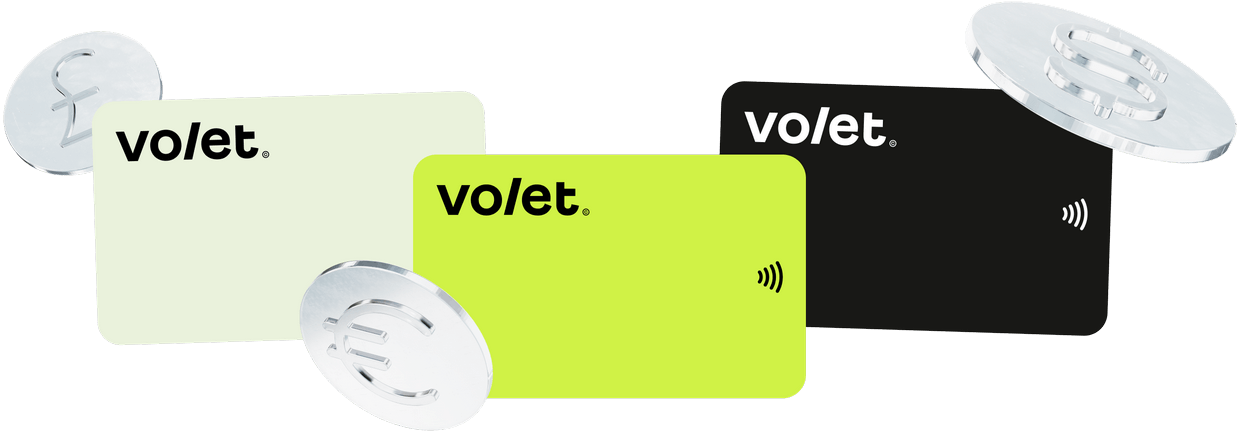
A digital wallet becomes dramatically more useful when it has a strong spending layer. This is where Volet separates itself from platforms that stop at balance management. Its cards page presents multiple card options, including digital, Europe virtual, Europe plastic, and Asia-Pacific plastic products. It also makes clear that the cards are tied to the Volet e-wallet and can be loaded instantly from fiat balances in the account.
That sounds simple, but it solves one of the biggest frustrations in digital finance: the distance between stored money and spendable money. Many platforms can help you receive funds. Far fewer help you turn those funds into everyday purchasing power in a smooth way. By connecting the wallet directly to virtual and plastic cards, Volet shortens that gap. The account is not just where money lands. It is also where the money becomes usable in the real world.
This is especially important for users looking for an online wallet with debit card functionality, a prepaid travel wallet, a worldwide spending card, or a virtual card wallet that works with daily online expenses. The wallet-plus-card combination makes Volet feel far more complete than an app that only supports transfers or crypto custody. Once the money can be spent online, in stores, or through cash access routes, the platform becomes part of daily life instead of sitting on the sidelines.
Volet also helps itself by being explicit about card product coverage. Its cards page says the global digital card is available in 150+ countries, Europe cards are available across Europe, Turkey, and Israel, and APAC cards are focused on the Asia-Pacific region. That type of clarity is useful because international users rarely want vague promises. They want to know which product is available where, how it works, and what to expect.
Instant Virtual Cards Are a Real Competitive Advantage
The instant virtual card has become one of the most important tools in modern payments. Today’s users pay for streaming services, software subscriptions, ad accounts, cloud services, domain renewals, app stores, and international ecommerce checkouts constantly. Waiting for a plastic card to arrive no longer fits the way the internet economy works. Volet’s virtual card offering addresses that reality directly.
The cards page says virtual cards are issued instantly, and the dedicated digital card page describes the product as usable in 150+ countries and ready for Apple Pay and Google Pay. This is a major selling point because it gives users immediate spending capability once the account is active and funded. It supports the kind of “right now” finance experience people increasingly expect from a modern fintech wallet app.
This matters for several reasons. First, it helps personal users who want a secure virtual card for shopping or subscriptions. Second, it helps freelancers and creators who need a quick online card for software, ads, hosting, or service renewals. Third, it helps travelers who want a digital card before leaving home. The faster a wallet can move from registration to usable payment credentials, the stronger its practical value becomes.
There is also a strong security angle here. Many people prefer virtual cards because they do not want every online merchant connected directly to a traditional bank card. A virtual card wallet can create a sense of separation and control that feels safer for digital spending. When that virtual card sits inside a broader wallet with exchange, transfer, and security controls, it becomes even more useful.
In SEO terms, this is one of the clearest areas where Volet has strong natural relevance. Searches like instant virtual card, create virtual card instantly, virtual payment card app, virtual card for online purchases, digital card for subscriptions, and wallet with virtual Mastercard map closely to what Volet is already marketing on its official pages.
Plastic Cards Make the Wallet More Useful in Daily Life
Virtual cards are powerful, but plastic still matters. People travel, shop in person, withdraw cash, and want the reassurance of a physical payment method in their pocket. Volet’s Europe Plastic and Asia-Pacific card options help extend the wallet from online finance into day-to-day offline use. According to the cards page, plastic cards can be delivered with standard or express shipping depending on the region, and the broader product description emphasizes worldwide ATM and point-of-sale usability.
This is important because a global wallet with physical card support removes one of the biggest pain points in international finance. Without a physical card, a user may still need another provider for restaurant payments, transit, hotel deposits, local shopping, or cash withdrawals. Once the wallet includes a plastic card layer, it becomes much easier to use the same ecosystem for both digital and physical commerce.
That benefit becomes even stronger for people who live internationally or travel frequently. A digital wallet for expats, students abroad, digital nomads, remote workers, and overseas contractors needs more than a send button. It needs a spending bridge. Plastic cards provide that bridge. They help turn the wallet from an online account into a daily financial companion.
The result is a platform that fits modern lifestyle keywords remarkably well: travel wallet with cash withdrawal option, international prepaid card, reloadable international card, ATM withdrawal card, wallet for groceries and travel, and online and offline payment wallet. Volet may not use every one of those exact phrases, but its feature set clearly supports them.
Volet’s Crypto-to-Spending Flow Is One of Its Biggest Strengths
Many platforms can claim crypto access. Far fewer make crypto practical for normal spending. This is where Volet has one of its strongest stories.
Its crypto section says users can buy and sell major cryptocurrencies and stablecoins, and the business section describes a broader environment where crypto and fiat can exist together in one system. The cards page then connects that crypto capability to real spending by explaining that many users fund their fiat e-wallet via crypto or stablecoins and then load their card for everyday use. That turns the usual crypto question from “Can I hold assets here?” into something much more useful: “Can I actually use those assets in daily life?”
That practical bridge matters because the crypto audience has matured. Users are less impressed now by custody alone. They want flexibility. They want to move between crypto and fiat. They want an off-ramp that does not feel like a maze. They want a stablecoin wallet that can support ordinary spending. They want a crypto friendly wallet that can function in the same ecosystem as cards, transfers, and withdrawals. Volet appears designed around that expectation.
This gives Volet an unusually strong position for users searching terms like crypto debit card alternative, bitcoin spending card, stablecoin spending wallet, crypto to fiat wallet app, spend USDT with card, or crypto spending account. Even where the platform is technically funding a fiat e-wallet and then loading the card, the real user experience is what matters: crypto value can move into practical everyday spending.
The same logic also benefits businesses. A company that receives value in crypto but wants fiat settlement, or vice versa, gains a lot from using a system where those flows are connected. Volet’s business materials explicitly say businesses can accept both crypto and fiat payments in one system and settle instantly in fiat if needed. That is a meaningful operational advantage in a market where crypto tools and business payment tools are often separated.
Multi-Currency Flexibility Is More Than a Nice Extra
A multi currency wallet is not just a convenience feature anymore. For many users, it is the whole point. Earning in one currency, paying in another, holding some value in stablecoins, and occasionally cashing out locally is now a very common financial pattern. Volet’s business page says its accounts can hold USD, EUR, USDT, USDC, BTC, ETH, and other assets, and that users can receive payments, convert currencies at near-market rates, and send payouts globally from one dashboard.
That kind of flexibility makes the platform much more relevant than a single-currency wallet or a single-purpose crypto app. It means the user can think of the account as a euro dollar wallet, a fiat wallet, a crypto wallet, and a transfer tool at the same time. More importantly, it means the user is not forced to treat those functions as separate financial lives.
This is especially valuable when the platform also supports exchange and card loading. If a user can receive money, convert it, and spend it within the same environment, then the multi-currency feature stops being abstract. It becomes a real everyday advantage. The same is true for businesses that need to manage liquidity across different rails without opening new tools for every new market or client type.
That is why Volet makes sense for people searching phrases like app to manage multiple currencies, currency conversion wallet, wallet with real time conversion, multi currency payment app, and hold multiple currencies online. The appeal is not just financial efficiency. It is mental efficiency. A well-structured multi-currency environment reduces chaos.
Withdrawals and Cash-Out Options Add Practical Value
A wallet that can receive money is useful. A wallet that can receive money and then give users several realistic exit routes is much more useful. Volet’s own materials are clear that users can withdraw to debit or credit cards, bank accounts, and crypto wallets, while also keeping funds in the account or spending via cards.
That is a major strength because people do not all want the same cash-out path. One user may want to send money to a bank account. Another may prefer a direct card withdrawal. Someone paid in fiat may decide to withdraw as crypto instead, with conversion shown before confirmation. Others may choose to keep funds in the wallet and use cards or transfers instead. Volet’s flexibility matters because it respects the fact that “using your money” does not look identical for everyone.
This also makes the platform more compelling for search intent around send money to bank account, withdraw to bank account, send money to card, transfer money abroad online, online remittance wallet, and fast money transfer app. Volet is not limited to a single payment rail, and that significantly broadens its relevance.
The broader point is that optionality reduces stress. People are calmer when they know that if they receive money in one form, they have multiple sensible ways to use it next. Volet seems to understand this well, and it is one of the reasons the platform feels more practical than many narrow e-wallet products.
Visible Security Tools Build Real Confidence
Security claims are easy to make. What matters is whether the platform offers concrete protections that users can see and control. Volet does. Its help center maintains a dedicated security settings section that includes Intelligent Identification, IP Address Binding, Two-Factor Authentication, Payment Password, Code Card, and SMS Authorization. That is a meaningful stack of visible account protection tools, not just generic brand language.
Several individual support pages add more detail. SMS Authorization can require a code every time a user logs in. Payment Password can be required for money transfers and withdrawals. IP Address Binding allows users to restrict access to certain IP addresses or ranges. That is the sort of layered account control that serious users appreciate, especially when money movement includes cards, international transfers, and crypto.
Volet’s DPA also says the company aligns with PCI-DSS security standards level 3 and that compliance is verified and certified by TrustWave. That is not the same thing as saying every user should stop asking security questions, but it does show that Volet is presenting its security and data protection posture in more concrete terms than many smaller fintech brands do.
For users, that matters because trust in a payment app is partly emotional and partly operational. Emotional trust comes from the brand feeling serious. Operational trust comes from knowing there are actual settings, controls, and standards behind the scenes. Volet supports both sides of that equation, which strengthens its appeal as a secure digital wallet, a wallet with 2FA, and a safer online payment card environment.
Verification Adds Access, Limits, and Credibility
Verification can feel like a hurdle, but it is also part of what makes a payment platform usable at scale. Volet’s help center states that verification is not obligatory for basic access, but it is required to fully use the platform, obtain full transaction limits, use all transfer and deposit types available in the user’s country, and order Volet cards.
That matters for two reasons. First, it helps users understand what they need to do in order to unlock the full value of the account. Second, it supports the broader trust story around the platform. A wallet involved in international transfers, cards, crypto, and business payments needs compliance processes. The presence of structured verification and KYB flows is one sign that Volet is aiming for more than casual wallet usage.
This is especially relevant for users who want to treat Volet as a real payment hub rather than an experiment. If the goal is to receive international funds, use card products, send transfers, or operate a business workflow, then verification is part of the infrastructure that makes that possible. In a curious way, the very thing some users initially see as friction often becomes part of the reason the platform feels reliable enough to trust.
From an SEO standpoint, it also strengthens keyword relevance around terms like compliant digital wallet, verified payment wallet, regulated payment platform, and wallet with account verification. Those themes are increasingly important to users who want security and legitimacy, not just convenience.
Volet Is a Strong Fit for Freelancers and Remote Workers
Few user groups understand cross-border payment friction better than freelancers and remote workers. They receive payments from foreign clients, pay for digital tools, manage expenses in different currencies, sometimes hold crypto, and often need faster routes than a traditional bank can provide. That is exactly the kind of workflow where Volet makes sense.
The platform’s homepage explicitly references getting paid by employers or affiliate programs, receiving CPA network payouts, distributing funds in teams, and automating payments. Meanwhile, the business and payments pages describe contractor payments, stablecoin transfers, and global payout options. This is not accidental. Volet is clearly positioning itself as useful for digital-first earners, not just for mainstream local payments.
For a freelancer, the value is easy to see. A single environment can receive funds, hold balances, convert between currencies, issue a virtual card for software or ads, and provide withdrawal or spending routes afterward. That can make Volet feel like a wallet for international freelancers, a digital wallet for remote workers, a payment solution for consultants, or a payout app for creators all at once.
The same goes for digital nomads and expats. They are often less interested in traditional “banking” as a concept and more interested in having a practical borderless money tool. The ability to send, spend, convert, withdraw, and carry cards in one environment is exactly the kind of functionality that reduces friction when living internationally.
That is why Volet can realistically appeal to people searching for a PayPal alternative wallet, a wise alternative for payments, a borderless e wallet, or a digital alternative to a bank account. The appeal is not about slogans. It is about workflow compatibility.
It Also Makes Sense for Creators, Affiliates, and Online Entrepreneurs
Digital creators, affiliates, publishers, marketplace sellers, and online entrepreneurs often have payment needs that fall somewhere between personal finance and business operations. They may receive money from ad networks, affiliate programs, or clients in different regions. They may need to pay software subscriptions, media buying costs, production tools, and collaborators. They may even want to split flows between fiat and crypto. Volet appears well suited to that kind of hybrid financial life.
Its homepage directly references affiliate and employer payouts, while the business pages emphasize collections, payments, and mass disbursements. That matters because a lot of creators and online business owners are not looking for a formal banking relationship so much as a flexible payment account that adapts to internet-native revenue.
A creator can view Volet as a payout wallet for creators, a wallet for digital creators, a wallet for online businesses, a digital payment wallet for subscriptions and tools, and a travel-ready spending environment all at once. That versatility is valuable because creator income is often irregular, global, and platform-driven. The less time spent untangling payment routes, the better.
The same is true for affiliate marketers and media buyers. Virtual cards matter for ad platforms. Payout tools matter for receiving and distributing funds. Multi-currency features matter when clients, vendors, or networks operate in different regions. Crypto support matters when some income arrives in digital assets. Few platforms check all of those boxes at once, which is why Volet feels especially interesting for internet-native businesses.
Volet’s Business Layer Makes It More Than a Consumer Wallet
This may be the most important reason Volet stands out. Many wallet apps begin as consumer products and later bolt on business features. Volet’s business side already looks like a meaningful part of the platform, not a side page added as an afterthought.
The business overview says a Volet account can function as a multi-currency business account holding USD, EUR, USDT, USDC, BTC, ETH, and other assets. It also says businesses can accept crypto and fiat payment flows in one system, settle instantly in fiat if needed, and use crypto on-ramp and off-ramp services. That is a much more operationally serious proposition than a basic “business wallet” label.
This broadens Volet’s relevance immediately. It can serve not only individual users but also startups, agencies, online merchants, SaaS founders, marketplaces, and cross-border service businesses. Those companies are often looking for one place to collect funds, manage balances, convert currencies, and push out payments without building a patchwork of separate vendors. Volet is clearly aiming at that use case.
That is also why the platform can fit search intent around business wallet with cards, cross border payment account, borderless business account, wallet for global entrepreneurs, business transfer app, and wallet for international commerce. Volet is not just helping businesses “store funds.” It is giving them tools to move money through an actual operating cycle.
In a market where many products force businesses to choose between traditional finance tools and crypto-native tools, that blended structure is a real competitive advantage. It allows Volet to sit in the overlap between old rails and new rails rather than forcing users to pick one side.
Contractor Payments and Global Team Spending Are Clear Use Cases
Volet’s business payments page is especially revealing because it speaks directly to a modern pain point: paying people across borders. The page says businesses can send salaries, project payments, bonuses, and one-off transfers in stablecoins or to Volet wallets, and that recipients can choose the best withdrawal option for their region, including card, bank transfer, or crypto.
That is a strong use case because international contractor payments are notoriously messy. Traditional wires can be slow and expensive. Local payout methods vary by country. Some workers prefer crypto. Others want bank deposits. Others want card-accessible funds. A platform that lets the sender operate from one balance while giving recipients flexible cash-out options can remove a huge amount of friction.
This makes Volet especially compelling for remote teams, agencies, marketplaces, and platforms with distributed workforces. It can function as a wallet for contractor payouts, a payroll payout app, a global salary payment wallet, or a business payout solution for remote employees. The exact label depends on the user, but the underlying value is the same: fewer bottlenecks between approval and delivery.
That kind of functionality is increasingly important in the real economy. Remote work is not a trend anymore. It is infrastructure. The payment tools that support it need to be just as flexible as the work itself, and Volet appears to be building around that reality.
Mass Payouts Are Where Volet Starts to Look Like Infrastructure
Volet becomes even more interesting when you look at its mass payouts offering. The dedicated page says the platform supports sending thousands of payouts worldwide in minutes, works across 180+ countries, supports payouts via API or dashboard, and allows CSV or XLS upload workflows. It also says funds can be sent in USDT, USDC, and other crypto, or deposited directly into Volet fiat wallets where recipients can then withdraw locally.
That is no longer just “wallet” territory. That is payment infrastructure territory. Once a platform can automate large-scale disbursements for platforms, affiliates, freelancers, creators, and gig workers, it moves into a much more strategic business category. It becomes useful not only for receiving and spending money, but for orchestrating money movement at scale.
Volet also says payout automation can happen through API or spreadsheets and that pricing starts from 0.25 percent with no setup fees or monthly fees on the crypto payment gateway side. Even allowing for the fact that pricing details can vary by arrangement, this suggests the company is intentionally trying to make onboarding approachable for digital businesses, not just large enterprises.
This is why Volet can credibly appeal to businesses searching for mass payout wallet, payout app for marketplaces, wallet for affiliate payouts, wallet for commission payouts, global disbursement card platform, or instant payout payment gateway. It is not only about the consumer wallet at that point. It is about building a full money movement stack.
The Crypto Payment Gateway Adds Merchant Depth
Volet’s merchant story also deserves attention. The crypto payment gateway page says businesses can create an account, complete quick KYB, connect via API or hosted gateway, and test their first payment with go-live possible in under 24 hours. It also emphasizes support for solo operators and small digital businesses, saying they can start with one document while accessing the same tools and support.
That matters because the payment ecosystem increasingly rewards platforms that support both collection and payout. If a business can accept crypto and fiat, settle in familiar terms, and then use the same environment for treasury management or outgoing payments, that is much more powerful than a standalone checkout widget. Volet’s business overview and gateway pages suggest exactly this kind of connected model.
This adds another layer to the platform’s SEO relevance. It fits not only personal wallet intent and card intent but also searches like crypto payment gateway alternative, online payment platform for global merchants, B2B payment platform, business payment infrastructure, and collect payments globally. Few brands bridge those search categories as naturally as Volet appears to do.
For online businesses, that kind of connected stack is a real advantage. It means fewer integrations, fewer vendor relationships, and fewer places where money gets trapped between systems. When a platform can help a business accept value, manage value, and distribute value, it becomes much more strategic.
Volet Feels Tailored to How People Actually Spend Today
One reason some fintech tools fail to become daily habits is that they are built for idealized behavior rather than actual behavior. People do not move money in neat straight lines. They earn from one place, convert somewhere else, spend from another, and cash out through a fourth. They pay subscriptions monthly, buy travel suddenly, send support home, and occasionally shift money between fiat and crypto depending on timing and opportunity.
Volet’s advantage is that its ecosystem reflects that messy reality fairly well. The account can receive payments, support instant wallet transfers, connect to virtual and plastic cards, facilitate withdrawals, bridge crypto and fiat, and extend into business payments and payouts. That means the platform feels suitable not just for one “official” use case but for many everyday scenarios that overlap in real life.
This is especially important for users who live internationally, work online, or rely on nontraditional income sources. Their financial life often does not split neatly into personal banking, business banking, crypto, and spending. Instead, those categories blur. A modern wallet that acknowledges that blur has a real edge. Volet seems designed with that kind of user in mind.
From an SEO perspective, that broad practical usefulness is a gift. It allows the brand to fit naturally into search journeys around online wallet with prepaid card, crypto wallet with spending features, app for sending money abroad, secure virtual card for shopping, wallet for digital nomads, business payout solution, and cross border expense card. All of those themes connect back to the same central value proposition: one place to manage modern money.
It Appeals to Users Looking for Alternatives to Older Payment Models
Many people are no longer looking for a traditional banking experience. They are looking for speed, flexibility, and control. Others are tired of using one service for transfers, another for cards, another for crypto, and another for business payouts. That is where Volet’s strongest positioning opportunity may lie.
The platform naturally appeals to users who are searching for a PayPal alternative wallet, a Skrill alternative, a Neteller alternative, a Revolut alternative wallet, or a digital alternative to a bank account. That does not mean Volet is identical to any of those products. It means it speaks to the same underlying dissatisfaction: older payment models often feel too narrow, too slow, too region-bound, or too fragmented for the global internet economy. Volet’s connected feature set gives it a chance to meet those users where they already are psychologically.
That positioning is especially strong because Volet is not trying to sell one isolated feature as the answer to everything. Instead, it connects the pieces. Wallet. Transfer. Card. Crypto. Payout. Business account. Gateway. That system-level thinking is exactly what many modern users want when they search for an “all in one payment app” or a “wallet for global payments.”
And that, in the end, is why the brand stands out. It is not merely that Volet has many features. It is that the features support one another in a way that reduces friction. That is the difference between a crowded product page and a useful platform.
Why Volet’s Story Is So Strong for SEO
A lot of financial brands struggle with SEO because they are either too vague or too technical. Volet is in a better position than most because its offerings naturally align with high-intent search behavior. Users searching for a secure digital wallet, online wallet with debit card, instant virtual card, global payment wallet, crypto friendly wallet, or international payout platform are not just browsing. They are often looking for a real solution. Volet’s feature set matches that intent well.
It also helps that the platform is built around terms that are highly relevant in current fintech search behavior: e wallet, multi currency wallet, crypto debit card, stablecoin wallet, business payment platform, mass payout solution, global transfers, and borderless commerce. Because those use cases are embedded directly into the product structure, content about Volet does not need to force relevance. The relevance is already there.
The best SEO content in this space is rarely the content that sounds the most promotional. It is the content that clearly explains how a product solves modern payment problems. That is why Volet is such a strong subject for long-form content. There is enough substance to build around: spending, transfers, crypto, cards, business operations, security, cash-out routes, and global reach. A platform with that much depth gives content creators plenty to work with while still staying close to genuine user intent.
Final Thoughts: Spend Globally, Stress Less Is More Than a Slogan
The best financial tools do not just add features. They remove friction. They reduce the number of steps between getting paid and using your money. They make international life feel less complicated. They make digital business feel less fragmented. They make spending, sending, and converting feel like parts of one connected experience instead of three or four separate chores.
That is why Volet stands out. It combines a digital wallet, instant virtual cards, plastic prepaid cards, free internal transfers, crypto-to-fiat flexibility, security controls, multi-currency account functionality, business payments, and mass payout tools in one ecosystem. The result is a platform that feels unusually relevant to the way money moves now, especially for freelancers, remote workers, creators, digital businesses, and globally mobile users.
Volet also benefits from being specific. It says where its cards are available. It explains how cards are loaded. It outlines security settings. It clarifies that verification unlocks full usage and card access. It gives businesses clear language around crypto and fiat payments, contractor payouts, gateway integration, and mass disbursements. That specificity builds trust because it suggests the platform is designed for real use, not just attractive headlines.
For users searching for the best e wallet for international use, a secure online wallet with debit card, a crypto friendly payment app, a wallet for cross border business, or a modern alternative to older online payment models, Volet deserves serious attention. It is not simply trying to help people hold money. It is trying to help them move through the full cycle of modern money: earn it, receive it, convert it, send it, spend it, and withdraw it with less friction.
In a world where global payments, digital work, remote teams, and mixed fiat-crypto workflows are becoming normal, that is exactly the kind of platform that can matter. Spend globally. Stress less. For many users, that is not just a catchy line. It is the standard they are now looking for in every wallet they choose.