
A Stronger Kind of Digital Wallet for a More Demanding World
The modern money app has to do far more than hold a balance and process the occasional payment. People now expect one platform to handle everyday purchases, online shopping, international transfers, subscription payments, virtual cards, physical cards, travel spending, freelance income, remote work payouts, and, increasingly, crypto-to-fiat movement as well. That is the environment Volet is operating in. Publicly, Volet presents itself as a long-running payment platform with roots going back to 2014, a broad international footprint, support for both fiat and crypto balances, instant internal transfers, and a card ecosystem designed to turn stored value into everyday spending power. Its card and business pages also frame the platform as global in scope, with card availability across multiple regions and payment infrastructure meant for both individuals and companies.
That bigger picture matters because most people are no longer asking whether they need a digital wallet at all. They are asking which kind of digital wallet can actually replace the scattered mix of tools they already use. One app for transfers, another for cards, another for currency exchange, another for crypto, another for cross border business payments, and another for affiliate or freelance payouts creates friction at every step. The promise behind Volet is that it tries to pull those actions into one environment. On its public pages, that shows up as a multi currency wallet, a payment app, a card issuing wallet, a crypto friendly wallet, a business payment platform, and a payout infrastructure layer all under the same brand umbrella.
For SEO terms, that makes Volet relevant to a wide range of real search intent. Someone may arrive looking for the best e wallet alternative, a PayPal alternative wallet, a global digital wallet, a multi currency wallet, an international e wallet, a virtual card wallet, or a crypto payment wallet. Another person may be looking for a secure digital wallet for travel, a wallet for online shopping, a wallet for freelancers, or a wallet for international payments. Volet’s public product structure suggests that the company wants to compete across all of those categories, not by narrowing the use case, but by making the same account useful in more situations.
That is why the title “Tap, Send, Spend” fits so well. It sounds simple, but it describes the full rhythm of digital money today. First, people want to receive or hold funds. Then they want to send or move them. Then they want to spend them quickly, safely, and globally. A strong online wallet is the one that keeps those steps connected. Volet’s public materials suggest that this is exactly the role it wants to play: not just a place to store value, but a borderless payment wallet designed for modern day-to-day finance.
Why Volet Feels Built for the New Everyday
The phrase “everyday spending” used to mean groceries, coffee, gas, and the occasional retail purchase. In 2026, everyday spending includes app subscriptions, software tools, online marketplaces, streaming services, global ecommerce checkouts, digital advertising, cloud services, travel reservations, remote team expenses, and international transfers between people who may never meet in person. That change has reshaped what users expect from an e wallet. The everyday wallet is no longer just a convenience product. It is a central financial control panel. Volet’s public messaging leans into that reality by describing an environment where users can send, receive, exchange, and spend both fiat and crypto in one place.
This is where Volet starts to stand out from a narrower prepaid card app or a simpler online wallet. Its public-facing product set includes personal balances, virtual and plastic cards, crypto support, business payments, merchant tools, and mass payouts. That is a much broader ecosystem than what users get from many single-purpose payment apps. It is also why the platform fits naturally into searches like all in one payment app, payment super app, wallet to send and spend, one app for cards and transfers, and global wallet for modern payments. The appeal is not just convenience for convenience’s sake. It is the reduction of financial handoffs.
In practical terms, a reduced-handoff wallet is more valuable because money rarely stands still. A person might receive freelance income, exchange part of it, load a card, pay for software, send a transfer to a family member, and withdraw some of the balance later. A business might collect customer funds, keep part in stablecoins, settle part in fiat, pay contractors, and distribute commissions. Publicly, Volet presents itself as a platform where those flows can happen inside one account structure. That is the difference between a wallet that is occasionally useful and one that becomes an everyday habit.
The Meaning of “Tap” in a Digital Wallet Era
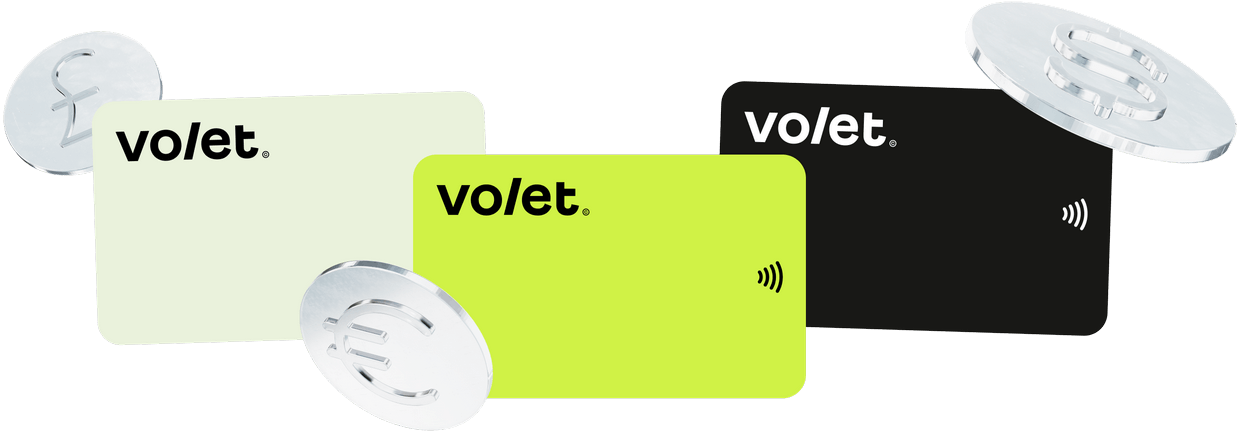
A wallet does not truly feel like part of daily life until it can move beyond the screen. That is where the “tap” part of the story becomes important. Volet’s cards page says the platform offers both virtual and plastic card options, and that its card lineup includes a global digital Mastercard available in 150+ countries, APAC plastic cards, and Europe virtual and plastic cards for Europe, Turkey, and Israel. The same page says some cards support Apple Pay and Google Pay, while virtual cards are issued instantly and plastic cards can be delivered with standard or express shipping depending on the region.
This is a meaningful piece of the product because it takes the wallet from being a balance container to being a spending tool. For many users, the value of a digital wallet with card access is not theoretical. It is immediate. It means a digital card for subscriptions, a virtual card for online purchases, a travel payment card, a wallet with contactless payments, a worldwide spending card, or a wallet for online and offline purchases. It also matters that Volet publicly says its cards are loaded instantly from fiat wallet balances inside the account, because speed is part of usefulness. Nobody wants a global debit card app that still feels slow when it is time to pay.
The idea of “tap to pay wallet” is also broader than a phone at a checkout terminal. It includes the ease of adding a card to a mobile wallet, the confidence of having a virtual card for fast issuance, and the flexibility of choosing the card type that fits the purchase. A plastic prepaid card can make sense for travel, cash withdrawals, or everyday offline spending. An instant virtual card makes more sense for immediate online use, subscriptions, or secure shopping. Volet’s public materials clearly present both as part of the same ecosystem, which makes it easier to see the platform as an online wallet with debit card functionality rather than a wallet that stops just before the point of spending.
There is another detail here that strengthens the everyday-use case: the cards page states 0% FX markup for the global digital Mastercard. For users who think in terms of a multi currency card app, a travel wallet with real spending utility, or an international spending wallet, that is not a trivial claim. It positions the card as something designed for real transaction life, not just symbolic access to a digital balance.
How “Send” Turns a Wallet Into a Real Financial Tool
A card makes a wallet visible, but transfers make it useful. Volet’s public pages repeatedly emphasize movement. Its personal wallet content says users can send money to other Volet users without fee, withdraw to bank accounts or debit and credit cards, and move funds to crypto wallets. Its business payments page says payments to stablecoin addresses or Volet wallets are processed instantly, while bank transfers follow regional systems like SEPA, SWIFT, and CIPS. Together, those pages tell a clear story: Volet is trying to be more than a place where money waits. It is trying to be a money movement app.
That is especially important because transfer speed is part of how users judge a wallet. A secure online wallet that takes too long to move funds starts to feel like a backup tool instead of a primary one. By contrast, instant internal transfers change the user experience dramatically. They make the wallet more suitable for shared expenses, remote work payments, creator payouts, family remittances, affiliate income distribution, and quick personal transfers between users on the same platform. In SEO language, that maps naturally to phrases like p2p payment app, instant p2p transfers, fast money transfer app, instant money transfer wallet, and app for sending money abroad.
This is also where Volet becomes interesting as a PayPal alternative for international payments or a wallet for cross border living. Many users are not only asking how to send money online. They are asking how to send money online in a way that remains usable after the transfer arrives. Publicly, Volet’s answer seems to be that the same account can receive, hold, convert, and spend. That is stronger than a service that only executes the transfer itself. It keeps the user from having to move immediately into another app just to finish the workflow.
The “Spend” Layer: Why Everyday Wallets Must Be Friction-Light
If sending is about movement, spending is about confidence. A digital wallet becomes an everyday product when users stop asking whether it can handle a purchase and simply assume it can. Volet’s public card materials are designed to create exactly that confidence. They frame the card lineup as global, available in multiple regions, instantly loadable from the wallet, and suitable for online and offline spending. The support and help materials around cards also reinforce that the product is meant to be used directly rather than held in reserve.
That matters because spending today is fragmented across environments. Some purchases happen in browser tabs. Some happen in apps. Some happen in digital advertising dashboards. Some happen at physical terminals. Some are one-off. Some are recurring. A good spending wallet has to survive all of these contexts. This is where Volet fits search phrases like wallet for everyday purchases, wallet for software subscriptions, virtual card for business expenses, wallet for online service payments, and virtual card for streaming services. It is not just about access to funds. It is about whether those funds can be shaped into the right payment instrument quickly enough.
Spending also becomes more practical when the wallet reduces the delay between receiving money and using it. Volet’s published flow around cards makes that logic simple: create an account, order a virtual or plastic card, transfer USD or EUR from the wallet, and start spending. That is a notably direct sequence, especially for users looking for a payment app with instant access, an instantly issued virtual card, or a wallet to send and spend from one balance.
Multi-Currency Utility Is the Core, Not an Extra
For a platform to call itself a true global digital wallet, it needs more than one-currency functionality. Volet’s business overview describes the service as a unified business payment platform combining crypto and fiat tools in one account, while its business payments page explicitly lists balances including USD, EUR, USDT, USDC, BTC, ETH, and more. That multi-asset and multi-currency positioning is one of the most important parts of the product story because it changes how users can plan their money rather than just react to it.
A multi currency wallet is useful because it gives the user timing control. Instead of converting or withdrawing only when forced to, the user can hold multiple balances, move between rails, and decide later how to settle or spend. For a freelancer receiving an international client payment, a creator cashing out, or a small business managing overseas expenses, that flexibility matters. It turns the wallet into something more than an online balance app. It becomes a digital finance app with planning room built in.
This also helps explain why Volet can be viewed as a smart payment wallet or a borderless e wallet. The wallet is not only for holding one currency and passing it through. It is for holding multiple forms of value online, converting between them, and then choosing whether the next step is a bank transfer, card load, payout, crypto transfer, or card purchase. In other words, the multi currency layer is not a feature tab. It is the operational center of the platform.
Fiat and Crypto in One Environment Changes the User Experience
One of the clearest ways Volet differs from more traditional wallet competitors is in how openly it blends fiat and crypto workflows. Its business pages promote crypto and fiat in one place, while its card FAQ says many users top up their fiat e-wallet through crypto or stablecoins and then instantly load USD or EUR to their cards. The business payments and mass payouts pages likewise emphasize stablecoins, crypto assets, fiat settlement, and multiple withdrawal options. Publicly, Volet is not treating crypto as a disconnected niche product. It is treating it as one part of an everyday wallet system.
That distinction matters because many users want a crypto friendly wallet without wanting a fully crypto-native lifestyle. They do not want seed phrases, smart-contract complexity, or the burden of moving in and out of separate ecosystems every time they need to spend or settle funds. Volet’s business payout and gateway pages explicitly lean into that simplicity angle, using language such as no seed phrases, no Web3 complexity, and unified fiat-wallet delivery options. That makes the platform relevant for people searching terms such as fiat and crypto wallet, crypto payment wallet, stablecoin wallet, crypto cashout wallet, crypto to fiat wallet app, or wallet for moving crypto to fiat.
It also means Volet can appeal to a very modern user profile: the person who might receive crypto income, hold some of it, convert some of it, and then spend through a normal-looking card workflow. The cards page makes that path explicit by saying users can deposit via BTC and instantly load USD or EUR to the card, giving the same experience as using a bitcoin debit card but with balance-based flexibility. That is a strong bridge between digital assets and ordinary shopping behavior.
Why Virtual Cards Matter So Much in 2026
If there is one feature category that best captures modern online spending, it is the virtual card. Volet’s card page says virtual cards are issued instantly, and that some support Apple Pay and Google Pay. That is important because digital commerce increasingly rewards speed. Users want to create a card instantly, add it to a mobile wallet where available, and begin spending without waiting for physical fulfillment. In practical terms, that makes Volet relevant to searches like instant virtual card, create virtual card instantly, temporary card for online shopping, virtual card for recurring payments, and secure virtual card for shopping.
Virtual cards are not just fast. They are organizational tools. They let users separate spending by purpose, control where money goes, and reduce exposure when buying from merchants they do not fully trust. A virtual card wallet is often better suited than a conventional bank card for app purchases, digital services, ad spend, subscriptions, cloud tools, ecommerce checkouts, or one-off online purchases. This is exactly the kind of spending environment where a wallet with instant issuance and easy balance loading becomes more compelling than a slower, more static bank product.
For business users, that logic becomes even stronger. A virtual card for ads spending, media buying, software subscriptions, or business tools is not just convenient. It is operationally cleaner. It helps separate expense streams and shortens the time between decision and payment. Volet’s public product positioning does not spell out every card control feature in detail, but the structure of its offering clearly supports the broader idea of a wallet designed for modern screen-first spending.
Travel, Global Living, and the Borderless Wallet Story
One of the easiest ways to test whether a wallet is genuinely global is to imagine using it while moving between countries. Travel exposes weak financial tools quickly. A wallet may feel adequate at home and suddenly become clumsy abroad. Volet’s public materials speak directly to that challenge. Its cards are regionally structured but designed for wide use, its withdrawal and funding options span multiple methods, and its product language consistently points to international utility. The personal fee page lists loads and withdrawals in a broad range of currencies, while the card page emphasizes worldwide availability depending on the card type.
That makes Volet relevant as a digital wallet for travel, a prepaid travel wallet, a wallet for foreign transactions, a payment account for travelers, a wallet for international online shopping, or a global wallet for nomads. The key point is not just that the wallet is available internationally. It is that the user can fund it in multiple ways, use a card, withdraw funds, and move money onward without rebuilding the workflow from scratch at every stage. A travel wallet that only solves one moment of the trip is not enough anymore. People want one that can handle setup before departure, spending while abroad, and cash-out or transfer needs after the fact.
There is also a lifestyle dimension here. Increasingly, “travel” blends into remote work, study abroad, expat life, and digital nomad routines. Those users need more than a tourist card. They need an international spending wallet, a money app for international lifestyle needs, and sometimes a bank alternative for online payments that can move across regions more gracefully than a local checking account. Volet’s public positioning aligns well with that search behavior because it frames the same account as useful for spending, transfers, and cross-border money handling rather than a one-purpose travel card.
Funding In and Cashing Out: The Hidden Measure of Wallet Quality
Many payment apps feel smooth only when money stays inside their own ecosystem. The real test is how easily money gets in and out. Volet’s personal fees page is particularly useful here because it shows a broad mix of account load and withdrawal routes. It lists free transfers from personal accounts in USD and EUR, local bank transfer loads with no fee in many local currencies, card loads at 3.5% for USD and EUR, no-fee crypto loads, and fixed-fee stablecoin loads. On the way out, it lists free transfers to personal accounts in USD and EUR, local bank transfers from 1%, SWIFT withdrawals in USD at 1% plus a fixed fee, card withdrawals with percentage-plus-fixed pricing, and crypto and stablecoin withdrawals with their own fee logic.
This is a major part of what makes Volet feel like a practical online wallet rather than a closed loop. A wallet with bank transfer support, crypto rails, stablecoin options, and card-linked exit paths gives users much more control over how they move money. That is important for people searching for a wallet for USD transfers, a wallet for EUR transfers, a send-money-to-bank-account wallet, a withdraw-to-bank-account wallet, or a crypto off-ramp wallet. Choice of rail is not just a technical detail. It determines whether the wallet remains useful when circumstances change.
It also helps explain why Volet can reasonably be discussed as a digital alternative to a bank account for some workflows. Not because it literally replaces every function of a bank, but because it offers multiple funding and withdrawal behaviors users associate with modern money management: receive funds, hold balances, convert value, move it out by bank, move it out by card, or move it out by crypto. That flexibility is a big part of what users actually mean when they search for an online banking alternative or a fintech wallet app.
Why Volet Appeals to Freelancers, Creators, and Remote Workers
One of Volet’s clearest market fits is the online earner. On its public pages, the company explicitly connects itself with getting paid by employers, affiliate programs, and other digital income sources. Its business and mass payout materials further extend that by speaking directly to creators, freelancers, affiliates, partners, agencies, remote teams, and global businesses. That is important because online income often arrives in awkward ways: internationally, irregularly, in mixed currencies, or through payout systems that do not naturally connect to everyday spending.
A wallet for freelancers or digital creators needs to do more than receive funds. It needs to shorten the distance between payment arrival and useful spending. Volet’s public product structure suggests exactly that workflow. Money can arrive via wallet, bank, stablecoin, or crypto routes depending on the use case; balances can be held in multiple forms; cards can be loaded; and payouts or withdrawals can be made onward. That makes the platform relevant to search terms like wallet for international freelancers, payment solution for remote workers, wallet for digital creators, payout wallet for creators, affiliate payout wallet, and wallet for global entrepreneurs.
Remote work and creator economies are built around fragmentation. One client pays in one currency, another pays in another. One platform pays to a wallet, another to crypto, another to a card-compatible route. In that kind of environment, the most valuable wallet is often the one that reduces translation between systems. Publicly, that is the role Volet seems to want: a wallet for receiving, sending, and spending across online income streams rather than a platform that only handles one stage of the process.
Business Scale: From Everyday Wallet to Payment Infrastructure
What makes Volet especially interesting is that its personal and business stories are connected. The same core strengths that matter to an individual user — balance flexibility, transfer speed, multi-currency support, card-based spending, and crypto-fiat movement — are expanded into business tools for acceptance, settlement, payouts, and treasury. The business overview page describes Volet as a unified business payment platform combining crypto and fiat tools in one account, with payment acceptance, multi-currency balances, payout automation, API integration, and global operations support.
That matters because many digital businesses no longer want separate vendors for every part of the financial stack. They want to accept payments, manage balances, pay teams, distribute commissions, and handle cross-border settlements without gluing together too many independent services. Volet’s public business pages suggest that it is trying to answer that need with a single account structure. In SEO terms, that makes it relevant as a business wallet for international payments, a borderless business account, a wallet for contractor payouts, a business transfer app, a merchant payout wallet, and a payment infrastructure wallet.
The platform’s published business fees reinforce that positioning. The business fees page says payments from Volet wallets start from 0.5%, while crypto and stablecoin payments start from 0.25%. The crypto payment gateway page also emphasizes flat, transparent pricing from 0.25%, with no setup fees or monthly fees, plus support for API or hosted gateway connections and go-live claims of under 24 hours in some cases. That is exactly the kind of messaging that resonates with founders, small businesses, agencies, and platform operators looking for a payment gateway alternative wallet or a business wallet with cards and payout tools.
Merchant Acceptance and the Push Beyond Simple Wallet Use
Volet’s business presence is not limited to sending money out. It also includes taking money in. The business acceptance and crypto payment gateway pages describe tools for accepting e-wallet and crypto payments globally, with API integration, hosted gateway options, and merchant onboarding flows. The site’s more recent business content also positions crypto acquiring as a way for companies to accept crypto payments while still settling into fiat if needed. That makes Volet relevant not only as a wallet for end users, but as a platform for merchants and digital businesses trying to broaden checkout acceptance.
That shift matters from an SEO perspective because the audience for Volet is not limited to wallet users. It also includes business readers searching for a crypto payment gateway, an online payment platform, a business payout solution, or a cross border payment account. Publicly, Volet is clearly trying to meet both sides of the market. On one side, people want to store, move, and spend value. On the other, businesses want to receive, settle, and distribute it. The brand becomes more compelling because the same infrastructure story sits underneath both.
For readers, this expands the meaning of “everyday power.” It is not just about a consumer tapping a card at a terminal. It is also about a founder collecting revenue, an agency paying contractors, a marketplace sending withdrawals, or a creator platform automating disbursements. Volet’s public pages consistently connect the wallet layer to that broader payment infrastructure story.
Mass Payouts and Why They Matter Even to Small Businesses
Mass payouts may sound like an enterprise feature, but Volet’s public materials frame them as useful well beyond huge corporations. The mass payouts page says the platform supports platform-initiated payouts, user-initiated withdrawals, and manual payouts to freelancers and creators. It also says payout automation is available through API or CSV/XLS uploads, that thousands of payouts can complete in minutes through parallelized blockchain transactions, and that the service is designed for everyone from agencies and startups to larger digital platforms.
This matters because the global business world has changed. Small teams now manage distributed contractors, creators, marketers, publishers, and affiliates across multiple countries. A wallet for cross border business is no longer just about paying suppliers. It is increasingly about handling repeated micro-payouts, commissions, rewards, salaries, and platform withdrawals. Volet’s public positioning speaks directly to that use case by emphasizing low-friction payout routes, support for stablecoins and fiat-wallet delivery, and recipient cash-out options via card, bank transfer, or crypto.
For SEO purposes, that makes Volet relevant to terms such as mass payout wallet, global payroll wallet, payout card platform, contractor payout solution, wallet for campaign payouts, payout app for marketplaces, and partner payout solution. More importantly, it shows that Volet is not trying to be only a consumer finance brand. It is building a bridge between personal wallet utility and high-volume payment operations.
Security: The Difference Between Useful and Trusted
No wallet becomes part of daily financial life unless users trust it enough to leave money there, move money through it, and spend from it without hesitation. Volet’s public help center shows a layered approach to account protection. The security settings section lists features such as two-factor authentication, intelligent identification, IP address binding, payment password, code card, and SMS authorization. The 2FA article says both account access and transactions can be secured with one-time passwords refreshed every 60 seconds, and that users can choose hardware tokens, mobile apps, or messaging-based token delivery.
Other help materials add more depth. Intelligent Identification checks login parameters such as IP address or location and can send a confirmation email if a login appears unfamiliar. IP Address Binding allows account access to be restricted to specific IP addresses or ranges. Payment Password adds an extra control layer for transfers and withdrawals. Code Card offers reusable authorization codes for withdrawal transactions. These are not flashy features, but they are exactly the sort of tools that help a secure digital wallet feel suitable for real balances and real spending.
From an SEO perspective, this matters because many searches around payment apps are really trust searches in disguise. People want a wallet with 2FA, a secure prepaid wallet, a safe multicurrency wallet, a fraud-protected virtual card environment, or a secure app for overseas payments. Volet’s public documentation gives it a credible basis for those discussions because the security controls are described as configurable account settings rather than vague marketing claims.
Verification, Compliance, and the Practical Reality of Full Access
Every serious payment platform has a trade-off between speed and compliance, and Volet is no exception. Its support pages say verification is not obligatory in every case, but it is required to fully use the platform, unlock all transfer and deposit types available in a user’s country, reach full transaction limits, and order cards. Other articles explain that card ordering involves additional cardholder verification, and that card funding may require one-time verification of a debit or credit card before further deposits become instant.
This is an important point to include in any SEO-focused article because users searching for easy signup digital wallet, instant account opening wallet, or online wallet with quick verification often care as much about the onboarding experience as the eventual features. Volet’s public documentation suggests a familiar fintech pattern: some access is available earlier, but full capability and card products require stronger identity and cardholder checks. That is not unusual. In fact, it is often part of what makes a wallet feel credible once users start treating it as a primary payment environment.
For businesses, the same logic appears in the crypto payment gateway content, which refers to quick KYB before going live. Again, the core message is not “no compliance.” It is “streamlined compliance.” For modern users and founders, that is usually the balance they actually want: fewer obstacles than old banking systems, but enough structure to trust the product with meaningful money movement.
Where Volet Fits Among Wallet Alternatives
A great deal of traffic around payment platforms comes through comparison intent. People search for the best international wallet, the best wallet with virtual card, the best digital wallet for travel, the best crypto friendly payment app, or an alternative to PayPal for international payments. The deeper question behind those searches is usually not “which brand is most famous?” It is “which tool best matches the way I actually use money?”
Volet’s public product design suggests that its strongest comparative advantage is breadth of workflow. It is not only a transfer service. It is not only a card program. It is not only a crypto wallet. It is not only a payout system. It is trying to be the place where those workflows meet. That makes it especially attractive to people whose money life crosses categories: freelancers, creators, remote workers, small businesses, travelers, online shoppers, and people who move between fiat and crypto more often than legacy payment apps comfortably allow.
This does not automatically make Volet the right choice for every user. Card availability varies by region. Specific fees depend on the load or withdrawal method. Verification affects what users can do. Some Apple Pay or Google Pay support depends on the card. But as a brand proposition, Volet is clearly stronger when the question is not “Can it do one thing?” but “Can it handle the full flow of my money better than a stack of separate services?” That is the heart of why it shows up so naturally in alternative-wallet conversations.
The SEO Verdict: Why Volet Works as a Story of Everyday Financial Power
From an SEO standpoint, Volet has something many payment brands struggle to achieve: a product story broad enough to rank across multiple intent clusters without feeling forced. It can plausibly be discussed as a digital wallet, an e wallet, an online wallet with debit card access, a multi currency wallet, a crypto friendly wallet, a global digital wallet, a borderless business account, a wallet for freelancers, a travel payment wallet, a virtual card app, and a mass payout platform. That is not because the brand is trying to keyword-stuff. It is because the publicly described product really does stretch across those use cases.
That breadth also makes the platform more interesting editorially. A thin wallet product can only support thin content. Volet, by contrast, supports discussions around global spending, international money transfer, travel cards, virtual card issuance, crypto-to-fiat conversion, payment acceptance, global payroll, account security, and cash-out flexibility. In content terms, that gives the brand a wider moat. In user terms, it makes the platform feel like a realistic answer to everyday financial complexity rather than a narrowly optimized tool for a single task.
Final Thoughts: Why “Tap, Send, Spend” Captures What Volet Is Really Selling
The strongest digital wallets do not win by adding random features. They win by making the flow between features feel natural. That is the real promise behind Volet. Publicly, it presents a system in which users can receive money, hold it across fiat and crypto balances, move it through internal or external rails, convert it when needed, load it to a card, and spend it in daily life. Businesses can extend that same logic into acceptance, payouts, contractor payments, treasury management, and global operations. The value is not in any single product tab. It is in the continuity between them.
For consumers, that continuity means less friction between being paid and being able to use the funds. For travelers, it means a stronger borderless wallet story. For freelancers and creators, it means a better bridge between online income and real-world spending. For businesses, it means fewer vendor gaps between receiving money and distributing it. For crypto users, it means a more usable route from digital assets to ordinary payments. That is the “everyday power” in the title: the ability to keep money moving through one connected system instead of constantly rebuilding the path from scratch.
In the end, Volet’s appeal is not just that it is a modern wallet. It is that it is trying to be a useful one in the fullest sense of the word. A useful wallet does not stop at storage. It lets you tap, send, and spend without making every stage feel like a separate product decision. That is why Volet fits so naturally into searches for the best e wallet for international use, an online wallet with virtual card support, a wallet for everyday spending, a crypto-friendly payment app, or a digital alternative to traditional banking tools. It is selling connection: between balances and cards, between crypto and fiat, between personal use and business scale, and between money received and money actually used. For a world that increasingly lives across borders, platforms, and payment types, that is a compelling promise.