
Money no longer lives in one place, moves in one direction, or serves one purpose. A modern user might earn through a remote contract in one currency, get paid by a platform based in another country, convert part of that income into digital assets, pay for subscriptions with a virtual card, book travel from a mobile phone, and still need access to cash or card spending in the physical world. That is the real shape of global finance today. It is fluid, cross-border, mobile, and increasingly disconnected from the old idea that one domestic bank account should be enough for everything. At the same time, international transfers remain costly on average, and digital channels continue to outperform traditional ones on price, reinforcing why users keep looking for faster, smarter alternatives to old financial rails. In Q1 2025, the World Bank reported an average global remittance cost of 6.49% for sending $200, while the digital remittance average was lower at 4.85%, underlining the ongoing appeal of digital-first payment models.
That shift has created demand for a different kind of product: not just a bank card, not just a crypto wallet, not just an online payment account, but a global wallet that can send, receive, exchange, store, and spend value across more than one format. Users want a digital wallet that works in daily life, not just in theory. They want an e wallet that can handle cross border payments, a multi currency wallet that feels practical instead of complicated, a secure digital wallet that supports online shopping and real-world spending, and a payment app that reduces the number of separate services they need to juggle. In this environment, the appeal of an all in one payment app becomes obvious. It is not only about convenience. It is about removing friction from the moments where money changes form, destination, or purpose.
Volet is built around that new reality. On its official pages, Volet presents itself as a payment hub that has operated since 2014 and combines e-wallet services, crypto functionality, payment cards, free instant P2P transfers for personal accounts, and a broader business platform for accepting payments and sending global payouts. Rather than positioning itself as only a crypto wallet app or only an online wallet with debit card access, Volet frames itself as a flexible bridge between different forms of money and different ways of using it. That matters because the strongest modern payment products are not the ones that do one thing in isolation. They are the ones that make several everyday financial tasks feel connected, fast, and manageable inside one account.
Why the global wallet model matters more than ever
The old financial model assumed that people would mostly live, work, spend, and get paid in one national system. For many users, that assumption no longer fits. Remote workers may invoice clients abroad. Freelancers may receive payments from global platforms. Affiliate marketers and publishers may be paid by networks in one region while spending in another. Students, migrants, expats, and digital nomads often need a wallet for international use that supports more than one currency and more than one transfer method. Even ordinary consumers are now more likely to subscribe to international software, buy from foreign merchants, and expect mobile wallet app convenience wherever they go. A borderless e wallet is no longer a niche need. It is becoming a mainstream response to the way digital life actually works.
What makes this even more important is that friction still has a cost. Traditional bank wires, platform withdrawal bottlenecks, slow settlements, regional restrictions, and mismatched payment tools can create delays, confusion, and extra fees. That is why users increasingly search for a global digital wallet, a fast money transfer app, a low fee e wallet, or an alternative to paypal for international payments. The exact phrase may change, but the need behind it stays the same: people want a wallet that moves at internet speed and works across personal finance, international transfers, and everyday spending. Volet’s relevance comes from trying to satisfy that need in a single product environment instead of forcing users to stitch together cards, wallets, exchanges, and payout tools from separate providers.
This is where the idea of a global wallet advantage becomes powerful. It is not simply that a wallet is available internationally. It is that the wallet can play several roles at once. It can act as an online wallet, a digital payment wallet, a currency exchange wallet, a crypto friendly wallet, and a spending tool. The advantage comes from continuity. Users can move from receiving funds to converting them, from holding balances to using a virtual card, and from sending money online to spending globally, all without leaving the same broader ecosystem. That is the sort of continuity traditional banking products often struggle to deliver, especially for users whose work and spending patterns are already international by default.
What Volet is actually offering to modern users
Volet’s product structure shows that it is not designed as a one-purpose app. Its public pages bring together several categories that are often sold separately elsewhere: personal e-wallet functionality, crypto wallets, virtual and plastic cards, internal P2P transfers, payment acceptance, developer integrations, and business payouts. The company’s messaging consistently returns to the idea that users can pay or get paid, move money and crypto between wallets, load cards instantly from the wallet, and use one account for both personal and business-style payment flows. That is a meaningful product choice because it recognizes that modern users rarely separate financial behavior into neat categories. Someone who starts by using a payment app for freelance income may later want to use the same account for travel spending, online shopping, subscriptions, or even team distributions.
Volet also makes a clear distinction between its personal, crypto, business, and developer offerings without isolating them from one another. The personal side emphasizes easy receiving, sending, and spending. The crypto side focuses on buying, selling, storing, and moving major digital assets and stablecoins, as well as switching between crypto and fiat. The business side expands that into accepting payments, managing balances, automating payouts, and operating across 180+ countries. The developer side adds API access, hosted checkout, and plugins for no-code or low-code integration. Put together, that creates a platform that is less like a single payment feature and more like a layered payment infrastructure for different types of users at different stages of need.
For the modern user, that breadth matters because financial tools do not stand still. A beginner might start with a simple online wallet and virtual card. A creator might want payout convenience. A growing startup might later need hosted checkout or mass payouts. A remote team might need business spending and supplier payments. Volet’s architecture suggests that the same ecosystem can support those shifts without forcing a complete platform change. That is one reason the wallet feels relevant not only as a personal finance app, but as a broader digital account for global spending, transfers, and payment operations.
A true bridge between fiat and crypto
One of Volet’s strongest points is that it does not force users into an either-or choice between traditional balances and digital assets. Its official crypto pages describe the ability to buy and sell crypto and stablecoins, switch between crypto and fiat, send and receive assets through wallet addresses, and make instant deposits and withdrawals at major exchanges. The list of supported assets publicly includes major names such as BTC, ETH, LTC, USDT, USDC, XRP, TON, TRX, SOL, POL, AVAX, and BNB. That means Volet is not merely borrowing crypto language for marketing. It is explicitly built as a fiat and crypto wallet with actual asset utility inside the account.
That matters because many users do not want crypto to remain trapped inside a speculative environment. They want a crypto wallet with spending features. They want a stablecoin wallet that can connect to real-world payment behavior. They want a crypto off ramp wallet that helps them convert digital value into everyday purchases, subscriptions, travel bookings, and business expenses. Volet’s structure makes that possible by keeping fiat and crypto inside the same operational system rather than separating them into disconnected services. Users can store crypto, exchange into fiat, and then use the fiat balance to fund spending tools like cards. That kind of integrated flow is exactly what modern users mean when they search for a crypto friendly wallet or a crypto to fiat wallet app.
There is an important practical detail here as well. Volet’s card pages explain that many users treat the cards as cards for crypto, but the cards themselves are loaded from the fiat e-wallet. In other words, crypto can be part of the funding journey, but card spending happens through the fiat side of the account. That setup is useful because it turns crypto into a practical source of value without forcing every point-of-sale transaction to behave like a blockchain-native event. For users who want safe crypto spending, spend crypto worldwide functionality, or a bitcoin wallet with card utility, that bridge between digital assets and fiat-based card use is central to the product’s everyday appeal.
Volet’s business pages extend the same hybrid philosophy to companies. The business platform is described as combining crypto and fiat tools in one account, while its mass payout and payment pages make clear that businesses can work with stablecoins, crypto, and fiat wallets in one flow. For online platforms, marketplaces, ad networks, or service businesses, that is valuable because income, treasury, and payouts may not all happen on the same rails. A business payment platform that can accept crypto payments, manage multi-currency balances, and send payouts across regions can remove a lot of operational drag from global growth. Volet is clearly trying to make that hybrid model feel normal rather than niche.
Cards that turn balance into real-world buying power
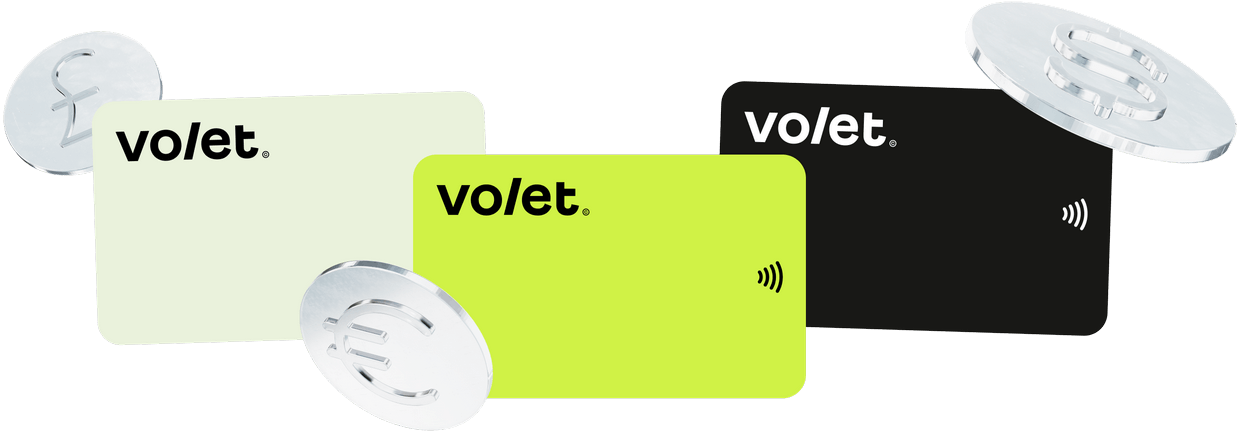
A wallet becomes far more useful when it can translate stored value into real purchasing power. This is where Volet’s card offering becomes especially important. On its official card pages, Volet presents both virtual and plastic card options across different regions, including a global digital Mastercard USD product and region-specific plastic or virtual programs. The card overview says cards can be used worldwide, topped up instantly from the Volet e-wallet, and used for online and offline spending. Availability depends on the specific card, with the global digital Mastercard listed for 150+ countries, APAC plastic cards for the APAC region, and Europe cards across Europe, Turkey, and Israel. That shows the product is designed for international flexibility while still being transparent that specific programs vary by geography.
The digital card is particularly relevant for the way people spend now. It is issued instantly, has 0% FX markup according to Volet’s public page, and is described as Apple Pay and Google Pay ready. That makes it highly attractive as an instant virtual card, a virtual payment card app, a digital card for subscriptions, a virtual card for online purchases, and a wallet with virtual Mastercard functionality. Many modern users care less about waiting for a plastic card in the mail and more about being able to create a virtual card instantly, add it to a device, and start paying for apps, software, streaming, travel, or online shopping within minutes. Volet’s digital card model clearly aligns with that expectation.
At the same time, physical cards still matter. A wallet with physical card support is valuable for in-store purchases, travel expenses, ATM withdrawals, and countries where cash access still matters from time to time. Volet’s broader card pages describe virtual or plastic Visa and Mastercard options and a usage flow that includes activating the card, transferring USD or EUR from the wallet, and spending online or offline. For users searching for an online wallet with debit card features, a reloadable prepaid card, an atm withdrawal card, or a prepaid travel wallet, that is not a minor add-on. It is what turns a digital finance app into something that can actually replace part of a traditional bank setup in daily life.
The deeper advantage is psychological as much as practical. People trust a wallet more when it is not a dead-end balance. A balance feels more real when it can be spent in stores, used for subscriptions, or accessed while traveling. That is why cards are not just another feature. They are the part of the product that makes digital money ordinary again. Volet understands that. Its cards are positioned not as a bonus, but as a core bridge between online balances and real-world commerce. That is one of the biggest reasons the platform works as a global wallet with prepaid Mastercard or international wallet with virtual card functionality rather than just as another stored-value account.
Mobile wallet behavior and modern spending habits
Mobile payments have changed what users expect from any wallet with cards. People increasingly assume they can tap to pay, manage cards from a phone, receive alerts, and move fluidly between online and offline purchases. Google Wallet’s official messaging emphasizes fast, secure access to everyday essentials and tap-to-pay convenience, while Apple says Apple Pay is designed with security and privacy in mind and uses device-level protections such as passcode and biometric authentication. When Volet says some of its card products support Apple Pay and Google Pay, it is aligning itself with spending habits that are already deeply embedded in modern consumer behavior.
That matters because convenience is now part of trust. A secure online payment system no longer feels fully modern if it forces users back into older behaviors every time they want to spend. A payment app that can issue a virtual card instantly but cannot participate in the mobile wallet ecosystems people already use can feel incomplete. Volet avoids that problem by making at least some cards compatible with Apple Pay and Google Pay. That increases the practical value of the wallet for retail purchases, travel, dining, transport, and other everyday spending moments that happen away from a desktop browser.
This is especially relevant for travelers and digital nomads. Someone carrying a mobile wallet app and a virtual card does not want to manage separate spending logic depending on where they are. They want a travel card with app control, a wallet for foreign transactions, and a digital card for travel that can be used in the same natural way they use other tap-to-pay products. The fact that Volet ties card issuance, card loading, and mobile wallet readiness into the same broader account is one reason the platform feels genuinely current rather than halfway modernized. It is not only digitizing the balance. It is digitizing the spending experience itself.
Multi-currency usefulness without traditional banking friction
Modern users do not necessarily want a full traditional bank relationship every time they need to hold or move value in another currency. They often want something lighter and more flexible: a multi currency payment app, a wallet for USD transfers, a wallet for EUR transfers, a digital wallet with currency conversion, or a travel money card app that keeps money usable across contexts. Volet addresses that by making multi-currency balances part of the product logic rather than a specialist feature. Its business platform explicitly references multi-currency balances, while its consumer card flow allows users to transfer USD or EUR from the wallet to the card, creating a smoother path from stored value to practical spending.
Volet’s crypto pages reinforce this flexibility by describing easy switching between crypto and fiat, while its support center shows that the wallet can also be funded through multiple methods including cards, cryptocurrency, and selected local bank transfer routes to the USD wallet. The support documentation specifically notes that local bank transfer to the USD wallet is available in certain European Union countries and selected markets across Asia, Latin America, Africa, and beyond. That matters because the best global wallet is not just about what you can do once funds are inside. It is also about how naturally you can get funds in from the financial tools you already use.
This funding optionality makes Volet more relevant to a broad user base. Some users will prefer to fund with crypto because that is where their value already sits. Others will rely on debit or credit card deposits. Some will want local transfer options where supported. The product becomes more compelling when it does not demand one fixed route into the system. That is what makes it feel like a borderless payment wallet rather than a narrow niche service. It supports multiple kinds of financial entry, which is exactly what global users need when their income, geography, and preferred rails do not all match.
The broader implication is that Volet can function as a digital alternative to bank account dependency for many payment scenarios. It is not trying to replicate every banking service. Instead, it offers enough balance, exchange, funding, and spending flexibility to cover a large share of what many users actually need from everyday international finance. For people searching for a bank alternative for online payments, an online banking alternative, or a digital account for global spending, that is often a more relevant value proposition than trying to imitate a legacy bank line by line.
Faster transfers and a smoother cross-border experience
One of the biggest reasons people move toward modern wallet platforms is speed. Waiting days for simple transfers feels increasingly out of step with how digital life works. Volet’s consumer messaging places special emphasis on instant movement between wallets, noting free instant P2P transfers for personal accounts and fast movement of money and crypto between Volet wallets or crypto wallets. Its crypto page similarly says users can send and receive assets within Volet instantly and for free. That makes the wallet attractive not only as a spending tool, but as a p2p payment app and instant money transfer wallet for everyday movement between people, platforms, or owned accounts.
The value of speed becomes even clearer in international contexts. Slow transfers create uncertainty, especially when users are paying family, moving funds for travel, or managing freelance and business cash flow. Volet’s business pages repeatedly frame the platform around faster global movement, whether that means paying international contractors, sending and receiving business payments across countries, or automating mass payouts to large groups of recipients. The platform’s public pages describe payout delivery through crypto, stablecoins, or fiat wallets inside Volet, which recipients can then use for local withdrawal, bank transfer, or further movement. That kind of design is exactly what users want from a cross border wallet app or international payout solution: fewer blind spots and more immediate access.
Volet’s relevance here also connects back to the broader market problem. The World Bank’s remittance data shows that international movement of money is still not cheap enough on average, and traditional non-digital methods remain more expensive than digital ones. When a platform like Volet combines digital wallet balances, crypto rails, internal wallet transfers, and localized withdrawal options, it is participating in the larger trend toward digital-first money movement that users increasingly see as the default. The platform does not solve every global payment challenge on its own, but it clearly aligns itself with the parts of the market that are trying to make cross border payments feel less like a special event and more like a normal part of digital life.
Why Volet fits freelancers, creators, and remote workers so well
Volet’s own messaging repeatedly references getting paid by employers, affiliate programs, and CPA networks. That is a revealing detail because it points directly to the kind of user profiles the platform is designed to serve. Freelancers, publishers, affiliate marketers, creators, online consultants, and remote workers often sit between consumer finance and business finance. They may not need a full corporate treasury stack, but they do need more than a simple consumer card. They need to receive client payments online, hold balances, send money abroad, pay for software, separate spending streams, and sometimes move between crypto and fiat. Volet fits that middle ground unusually well.
A freelancer, for example, may need a payment solution for remote workers that starts with inbound funds but does not end there. Once income lands, that person may need a virtual card for subscriptions, a prepaid card for online shopping, a wallet for invoice settlements, a digital wallet for daily spending, and a low-friction way to transfer money to collaborators or family. A creator may need a payout wallet for creators that can move ad revenue or partner payouts into a spendable format quickly. A media buyer or affiliate marketer may value instant virtual cards and the ability to manage card-based spending without relying entirely on traditional banking infrastructure. Volet’s mix of internal transfers, card access, and hybrid fiat/crypto support maps naturally to those needs.
This is also where the “global wallet advantage” becomes practical rather than abstract. Users in these categories do not just need a place to store money. They need a wallet to send and spend, a wallet for global entrepreneurs, a digital wallet for freelancers, and an online wallet with payment cards that keeps up with how digital work actually gets done. Volet’s ecosystem is compelling because it connects the entire chain: receipt, balance management, exchange, card funding, and onward transfers. That continuity saves time, but it also reduces mental overhead, which matters more than many finance products admit. People want fewer moving parts, not more.
A strong companion for travelers, expats, and digital nomads
Travel and cross-border living are among the clearest use cases for a global wallet. Someone spending time abroad does not only need a travel payment card. They often need a mix of functions: fast top-ups, virtual card access, online shopping support, contactless spending, a way to hold value outside one local bank, and sometimes the ability to exchange or cash out without major friction. Volet’s card products, mobile wallet compatibility on some cards, and wallet-to-card loading model make it well suited to people looking for a digital wallet for expats, a wallet for vacation spending, or a global wallet for nomads.
The digital card’s 0% FX markup claim is especially relevant in this context, because foreign transaction costs are one of the quiet ways travel spending becomes more expensive than expected. A wallet with exchange rates that support more transparent overseas use is naturally appealing to users who want to spend abroad without traditional bank friction. Add instant issuance, mobile wallet readiness, and worldwide use, and the product begins to feel more like a travel wallet with virtual card convenience than a generic prepaid instrument. It supports the behavior travelers already want: quick access, less waiting, broad acceptance, and fewer surprises.
For digital nomads and long-stay international users, the value goes deeper. Living across borders often means income and spending happen in different places, sometimes through different rails. A modern wallet for cross border living needs to support not only card spending, but also inbound funds, quick movement, and flexible funding. Volet’s combination of internal transfers, crypto support, wallet funding routes, and region-based card products creates a stronger fit for that lifestyle than a single-country bank account alone. It is easier to imagine using Volet as part of an international lifestyle stack because the product seems designed around mobility from the start rather than adapted to it later.
Business tools that widen Volet’s usefulness
Volet becomes even more interesting when you look at its business functionality. The official business pages describe a unified platform that combines crypto and fiat tools, lets companies accept payments, manage multi-currency balances, automate payouts, and operate globally without relying on fragmented providers. That framing positions Volet as more than an e wallet. It becomes a business payment platform, a cross border payment account, and an international payout solution. For startups, agencies, marketplaces, SaaS founders, and digital-first companies, that kind of unification can be valuable because payment stacks are often messier than they look from the outside.
Its mass payout product is especially relevant to platforms that pay many people at once. Volet says businesses can send thousands of payouts through the dashboard or API, in USDT, USDC, crypto, or directly to fiat wallets inside Volet. The public materials also note that payout automation is available via API or CSV/XLS uploads and that global mass payouts can reach 180+ countries. That is highly relevant for affiliate networks, creator platforms, marketplaces, cashback systems, contractor-heavy businesses, and international service platforms. When a wallet evolves into a payout engine, it stops being merely a convenience layer and becomes part of operational infrastructure.
Volet also makes a business case for payment acceptance. Its hosted checkout page says merchants can use a secure hosted checkout with no setup fees and no subscription charges, while its API page says the payment gateway API has no setup or monthly fees and that API calls themselves are free. The plugin page adds that CMS users can connect hosted checkout to websites, blogs, and stores without coding, and specifically references platforms such as WordPress, WooCommerce, and OpenCart. For businesses that want a payment gateway alternative wallet, a no-code checkout option, or a modern way to accept crypto and fiat without building everything from scratch, those features make Volet more than just a wallet provider. They make it a payment infrastructure option.
This expands the meaning of Volet for modern users. A founder might begin with a personal wallet and later create a business account. A small team might need supplier payments, contractor payouts, and online checkout in the same environment. A marketplace might need a payout app for marketplaces that connects recipient wallets with optional withdrawals and cards. Because Volet spans personal and business use cases, it can grow with a user’s operational needs rather than staying locked inside a single consumer finance role. That makes the platform feel more strategic over time.
Security as a system of controls, not just a login step
Security is one of the areas where Volet appears to put serious emphasis on configuration and layered controls. Its official security page describes customizable protection that includes intelligent environment monitoring, physical and software OTP tokens, payment passwords, IP restrictions, Strong Customer Authentication, OATH-compliant 2FA powered by Protectimus, PCI DSS certification, HSM encryption, WAF protection, and background analysis of hundreds of user and environment factors. That is a notably broad security posture for a wallet product because it suggests security is treated as an operational system rather than a one-time box to tick.
The support center reinforces this by documenting specific account settings such as two-factor authentication, intelligent identification, IP address binding, payment passwords, code cards, and SMS authorization. Two-factor authentication uses one-time passwords refreshed every 60 seconds and supports several token types, including hardware tokens, apps, and chat-bot delivery on platforms such as Telegram, Viber, and Facebook Messenger. Intelligent identification checks logins against parameters like IP address or location and requests confirmation for unfamiliar activity. IP address binding lets users restrict access to specific addresses or ranges, and payment passwords add extra protection for transfers and withdrawals. That level of documented control is especially useful for users who treat their wallet as a serious payment environment rather than a casual spending app.
This matters because global payment behavior inherently expands the risk surface. People log in from different devices, use public networks while traveling, interact with more merchants, and move money across more contexts. A secure app for overseas payments must account for that. Volet’s own security content also warns users to access the platform directly and avoid relying on potentially misleading search paths, which fits broader industry concerns about phishing and account compromise. In a world where convenience often outpaces caution, security features that remain configurable and visible inside the product can be a competitive strength, especially for users searching specifically for a wallet with 2FA, secure online payments, or a fraud protected virtual card environment.
Why Volet can feel better than stitching together multiple apps
One of the quiet frustrations of modern finance is that many people end up building their own unofficial “stack” from disconnected tools. One service receives payouts. Another converts currency. Another stores crypto. Another issues cards. Another handles business payouts. Another is used for online checkout. The more global or digital a user’s life becomes, the more fragmented that stack can get. What makes Volet stand out is that it tries to collapse several of those functions into one environment. That is useful not because every user needs every feature on day one, but because financial needs tend to expand over time. A product that starts useful and becomes more useful is often better than one that starts specialized and stays isolated.
There is also a practical efficiency benefit. Every handoff between separate tools introduces more setup, more reconciliation, more timing risk, and more user confusion. Moving from an online wallet to an exchange, then to a prepaid card, then to a payout platform is manageable, but it is not elegant. Volet’s model reduces those handoffs by letting the same account move across multiple functions: receiving, storing, converting, card loading, sending, and business operations. That makes it feel more like a payment super app or modern wallet for global payments than a narrow utility. For users who value clarity as much as cost, that unified design can be just as important as any specific fee or feature.
This does not mean Volet is pretending to be universal in a simplistic sense. Its card programs differ by region. Some mobile wallet support depends on the specific card. Funding and withdrawal options vary by geography and verification status. Business features are distinct from personal ones. But those boundaries actually make the product more credible. Global payment services always operate with real constraints. The better question is whether the service remains flexible and useful inside those constraints. Based on its current official pages, Volet does. It supports enough real-world movement between fiat, crypto, cards, and payments to make the account genuinely useful for modern international life.
The bigger reason Volet matters now
The strongest argument for Volet is not that it does something entirely unprecedented. It is that it combines several increasingly necessary functions in one place at a moment when users need that combination more than ever. Global work, international spending, digital income, remote teams, creator economies, and crypto-enabled payment flows are no longer fringe behaviors. They are normal features of how millions of people and businesses operate. A wallet that can keep up with that reality is more valuable than one that excels only in a single category. Volet’s architecture reflects that. It joins digital wallet functionality, cross border utility, crypto support, prepaid card access, and business payment tooling into one ecosystem that feels designed for movement instead of waiting.
That is what makes Volet appealing as a modern alternative to older payment habits. It can act as an online wallet for debit-like spending, a wallet with virtual card access for immediate digital purchases, a secure digital wallet for international transfers, a crypto friendly wallet for users who move between digital assets and fiat, and a business payment platform for companies that need checkout and payouts in one place. It does not ask modern users to shrink their financial lives to fit a traditional box. Instead, it adapts to the fact that people now live across devices, currencies, regions, and payment types. That flexibility is the real meaning of the global wallet advantage.
In the end, the appeal of Volet comes down to something simple: modern users want fewer barriers between earning, holding, moving, and spending money. They want a wallet for everyday spending that also works for international transfers. They want a multi currency wallet that can handle digital assets without becoming hard to use. They want a payment app for remote work, travel, online shopping, subscriptions, and business operations without having to rebuild their system every time their needs grow. Volet’s product pages suggest that this is exactly the role it wants to play. For users looking for a global digital wallet, a borderless payment wallet, a wallet with virtual and physical card options, or a broader alternative to rigid banking workflows, Volet offers a compelling answer: one account, many rails, and a much better fit for how money moves now.