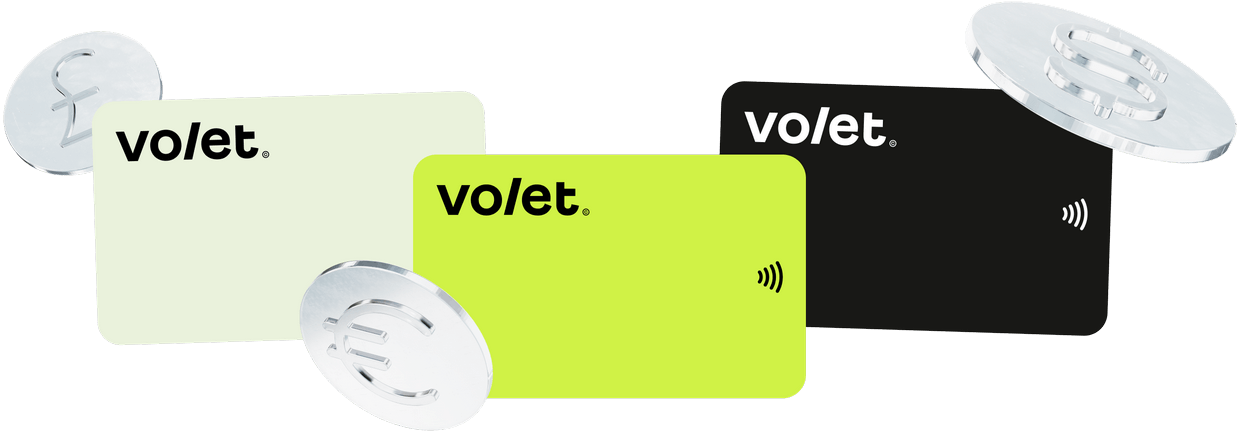

The Old Idea of a Wallet No Longer Fits the Way People Live
There was a time when a wallet only had to do one thing well: help you pay. If it could hold money, send money, or cover a purchase at the right moment, that was enough. But the way people earn, spend, and move money has changed so dramatically that the old definition no longer works. Today, people get paid from platforms on the other side of the world, pay software bills in multiple currencies, hold both fiat and crypto, send money to relatives abroad, withdraw cash while traveling, and manage everything from a phone. In that environment, a wallet cannot just be a payment tool. It has to be a money management environment. Volet positions itself exactly in that space, combining e-wallet functions, cards, crypto features, and business payment tools in one broader system.
That is what makes the idea behind Volet worth exploring in detail. It is not simply trying to help people complete a transaction. It is trying to support the entire life cycle of money. The official Volet materials describe a platform with free instant peer-to-peer transfers for personal accounts, support for cards, crypto buying and selling, global payment capabilities, and mass payout tools for businesses. That kind of structure reflects a larger truth about modern finance: people no longer need one feature at a time. They need a connected set of tools that work together without forcing them to jump between disconnected apps and services.
The strongest digital wallet experiences are no longer built around a single moment of payment. They are built around what happens before and after the payment. How do you receive the funds? In what currency do you keep them? Can you move them easily? Can you convert them when necessary? Can you issue a virtual card immediately? Can you spend online and offline? Can you protect the account with meaningful security controls? Can a business accept incoming payments and then distribute payouts from the same environment? A wallet that answers those questions well is a very different product from a basic online wallet.
This is why Volet stands out as more than a simple e wallet. It has been operating since 2014, says it serves users in 150+ countries, reports more than 1 million monthly transactions, and highlights more than 10,000 merchants using its broader payment ecosystem. Those numbers matter not just as proof of scale, but as a signal of the type of problem the platform is solving. It is not trying to serve only one narrow use case. It is designed for personal users, online earners, travelers, crypto users, merchants, and digital businesses that need payments and payouts to work across borders and asset types.
That broader ambition is exactly what makes “The Wallet That Thinks Beyond Payments” such a fitting title. Volet is not built around a single financial action. It is built around financial flow. And in a world where people expect one app to help them receive, hold, convert, protect, and spend value in a flexible way, that shift from payment tool to payment environment becomes the real difference-maker.
A Modern Wallet Has to Do More Than Move Money
The biggest weakness in older payment products is fragmentation. One service receives money. Another converts currencies. Another handles crypto. Another issues cards. Another manages business payouts. Another sits on top just to make everything look organized. The user ends up maintaining multiple balances, multiple security systems, multiple logins, and multiple points of failure. What feels like financial flexibility from the outside often turns into operational clutter on the inside. A modern digital wallet should reduce that clutter rather than add to it.
Volet’s structure suggests that it understands this problem well. Its official pages present the wallet not as a small utility attached to a single service, but as a central financial hub. On the consumer side, the platform emphasizes e-wallet balances, instant P2P transfers, crypto functionality, and virtual or plastic cards. On the business side, it emphasizes accepting payments, integrating through API or hosted checkout, and sending automated mass payouts. That combination matters because it moves the product away from isolated payment moments and toward end-to-end money movement.
The difference may sound subtle, but in practice it changes everything. If you are a freelancer, you do not merely need to receive money online. You need to decide where to keep it, how to spend it, and how to move it onward without wasting time or money. If you are a merchant, you do not just need customers to pay. You need funds to arrive, settle in useful form, and become easy to distribute to partners, vendors, contractors, or team members. In both cases, the smartest wallet is the one that reduces the number of separate decisions and separate systems needed to stay functional.
That is why the phrase smart payment wallet feels more relevant now than ever before. Smart does not mean flashy. It means adaptable. It means a wallet can handle more than one kind of asset, more than one route in or out, more than one spending method, and more than one kind of user journey. Volet’s current feature set points in that exact direction.
The Multi-Currency Foundation Is What Makes It Practical
A global digital wallet becomes truly useful when it treats currency as a feature rather than a limitation. People increasingly live in more than one currency even if they never relocate. A remote worker might invoice in dollars, save in euros, pay for software in another currency, and travel with a spending card linked to a digital balance. A merchant might collect from one region and distribute to another. A family supporting relatives abroad might repeatedly move funds between local and foreign rails. In each case, the friction is not just about sending money. It is about what happens when the currencies do not line up neatly.
Volet’s fee materials show clear evidence of a multi-currency design. Its personal fee page lists local bank transfer options across a wide range of currencies and countries, including AED, AUD, CAD, CNY, EUR, HKD, INR, JPY, KRW, NZD, PHP, SGD, THB, TRY, VND, and many others, while also offering other withdrawal methods such as SWIFT and card withdrawals. That breadth matters because a multi currency wallet is only as useful as its real deposit and withdrawal routes. It is one thing to say a wallet supports several currencies. It is another to show actual movement paths for those currencies.
Volet has also published examples of expanding that multicurrency logic in practical ways. In one company blog post, it announced the ability for users in 35 countries to load a USD wallet by local bank transfer using 17 currencies through a partner integration, with no fee charged on Volet’s side for those deposits. Whether someone is topping up from EUR, BRL, INR, IDR, PHP, TRY, AED, or another supported currency, that kind of feature reduces the need to bounce through multiple conversion layers before reaching a usable balance.
This is where a wallet starts to feel intelligent instead of merely functional. Instead of forcing the user to conform to one narrow currency structure, it adapts to the real complexity of international earning and spending. That is why phrases like multi currency wallet, global wallet, international payment account, and borderless e wallet resonate so strongly today. They are not trends in wording. They reflect a real change in how people now manage money. Volet’s multicurrency framework makes it much easier to understand why the service appeals to globally active users.
Cards Turn the Wallet Into Something You Can Actually Live With
An online wallet becomes far more useful when it stops being trapped inside the screen. Cards are what make that transition possible. According to Volet’s cards pages, the platform offers both virtual and plastic cards, supports instant loading from the Volet e-wallet, allows online and offline spending, and enables cash withdrawal at ATMs for supported plastic cards. The cards page also notes 0% FX markup for the digital card offering, which is especially meaningful for users who spend internationally.
That matters because many users no longer distinguish sharply between “wallet money” and “spending money.” They expect their balance to be spendable when needed, not just transferable. A digital wallet for travel, online shopping, subscriptions, local point-of-sale purchases, and cash withdrawal needs a credible card layer. Volet’s design clearly recognizes that expectation. Rather than treating cards as a side product, it positions them as a core bridge between stored balance and everyday spending.
The availability details are also more specific than what many platforms provide. Volet says its global digital Mastercard is available in 150+ countries, that APAC plastic cards are targeted at the Asia-Pacific region, and that Europe cards are available across Europe, Turkey, and Israel. Those distinctions are useful because they suggest the platform is thinking in terms of actual product fit by region rather than relying on one generic promise of worldwide access. For a global wallet with prepaid Mastercard or an international wallet with virtual card functionality, those operational details matter more than broad marketing language.
Volet also states that some cards support Apple Pay and Google Pay, which is important for users who expect contactless and mobile wallet behavior from a modern payment app. That makes the service more relevant not only to international travelers and digital nomads, but also to ordinary users who want a wallet with physical card access and tap-to-pay convenience. If a digital wallet is meant to be part of daily financial life, it needs to be present in all the places where daily financial life now happens.
Why Instant Virtual Cards Matter More Than Ever
Virtual cards have become one of the defining features of a modern online wallet because so much spending now happens invisibly. Subscriptions renew in the background. Apps bill automatically. Advertising platforms charge stored credentials. Streaming services, hosting providers, domain registrars, SaaS tools, marketplaces, and cloud platforms all depend on recurring digital payments. That means the most important card in your financial life is often not the one in your pocket, but the one saved somewhere online.
Volet’s instant virtual card issuance makes it especially relevant for that kind of spending behavior. A user can create an account, order a virtual card, transfer USD or EUR from the wallet, and start spending online almost immediately. For people who need a virtual card for online purchases, software subscriptions, ecommerce tools, media buying, or remote business expenses, that speed is not a luxury. It is part of the core value proposition. A wallet with virtual card support becomes more than a place to park money. It becomes a live working tool.
This is one reason Volet can attract users searching for an instant virtual card, a wallet with virtual Mastercard, a digital card for subscriptions, or an online wallet with payment cards. Many people do not necessarily want another traditional bank card. They want controlled, immediate, and globally usable digital spending access. A virtual card wallet answers that need better than a legacy bank relationship built around slower issuance and narrower use cases.
There is also something psychologically important about virtual card access. It gives the user a stronger sense that funds inside the wallet are active, not dormant. Money can come in and be used quickly. A balance can turn into buying power without extra handoffs. That is one of the quiet but meaningful traits of a wallet that thinks beyond payments: it reduces the gap between holding money and doing something useful with it.
Crypto Support Becomes Far More Valuable When It Connects to Real Spending
Crypto features by themselves are no longer enough to impress anyone. The more interesting question is what a wallet helps users do with crypto once it is inside the system. Volet’s crypto pages say users can buy and sell popular crypto assets and stablecoins, switch between crypto and fiat, make instant deposits and withdrawals at major exchanges, and store, send, and receive supported coins. The page highlights assets including BTC, ETH, LTC, XRP, BCH, BNB, TON, TRX, USDC, USDT, EURC, DASH, SOL, POL, and AVAX.
That already gives Volet broader appeal than a simple fiat wallet, but the real difference is the bridge it creates between crypto and everyday use. The cards page explicitly explains that many users top up their fiat wallet from crypto or stablecoins and then load funds to a card for spending. It also says the product can deliver the same user experience people expect from a bitcoin debit card, while letting them manage the conversion and card funding through the account balance. In practical terms, that means the platform is trying to make crypto useful without expecting merchants, subscription platforms, or physical stores to do anything different on their end.
That bridge is what separates a crypto-friendly wallet from a crypto-only environment. Plenty of services can store assets. Fewer can help users convert them smoothly into ordinary spending power, international transfers, or card-funded purchases. Volet’s integration of crypto and cards is therefore one of its most compelling features. It turns digital assets into something closer to everyday liquidity.
For users who search for phrases like crypto payment wallet, crypto card for travel, crypto wallet with spending features, stablecoin wallet, or crypto to fiat wallet app, this is the real point of interest. They are not just looking for a place to hold tokens. They want a practical way to move from digital asset balances to daily life. Volet’s architecture makes that transition feel much more central than incidental.
Stablecoins Help the Wallet Work Across Borders
Stablecoins have become one of the most important tools in cross-border finance because they combine digital speed with relatively stable denomination. For many global users and digital businesses, they are less about speculation and more about utility. They can make payroll, settlements, contractor payments, affiliate distributions, and business transfers faster and easier to route than older international systems in some contexts. A wallet that understands modern payments therefore needs to understand stablecoins.
Volet’s current business pages make that focus very clear. Its crypto payment gateway emphasizes stablecoin processing, especially USDT and USDC across major networks, alongside top assets like BTC, ETH, XRP, and TON. The page says merchants can accept USDT TRC-20 and ERC-20 as well as USDC on supported chains, and it highlights fees starting from 0.25%. The broader business page also says companies can accept crypto and fiat flows in one system and settle instantly in fiat if needed.
The business fees page reinforces that positioning. It lists payout options to crypto and stablecoins starting from 0.25%, alongside payouts to Volet wallets from 0.5% and to Visa or Mastercard cards from 2.5%. The implication is powerful: a merchant or platform using Volet is not locked into a single outbound route. It can distribute value through whichever mix of methods best suits its audience. That flexibility is one reason the platform is relevant to global payroll, affiliate payouts, merchant settlements, and digital business infrastructure.
For personal users, stablecoins matter for another reason. They make a crypto-friendly wallet more usable day to day. Instead of thinking only in terms of volatile asset exposure, a user can think in terms of digital-dollar-like or digital-euro-like convenience, then connect that value to transfers, withdrawals, or card spending through the rest of the wallet environment. In that sense, stablecoins do not sit at the edge of Volet’s value proposition. They sit very near the center of it.
Security Is Part of the Experience, Not Just a Compliance Box
A wallet that can receive money, hold balances, support cards, enable withdrawals, and move between fiat and crypto cannot treat security as an afterthought. The more capable the wallet becomes, the more essential layered protection becomes. Volet’s support center shows a surprisingly wide range of security controls, including two-factor authentication, intelligent identification, IP address binding, payment password, code card, and SMS authorization. That already suggests a more configurable security model than many casual payment apps offer.
Its 2FA documentation says both account access and transactions can be secured using one-time passwords refreshed every 60 seconds. Users can choose among hardware token devices, mobile apps, or chat bots on Telegram, Viber, and Facebook Messenger. That is an unusually practical set of options because it accommodates different user preferences rather than insisting on a single method.
Volet also offers intelligent identification, which checks login parameters and sends an email confirmation when something unfamiliar appears, such as an IP address or location the system does not recognize. On top of that, IP address binding can restrict account access to up to five specific addresses or five address ranges, which can be especially useful for users with more controlled working environments. These are not just cosmetic protections. They are operational safeguards that can materially reduce risk when used properly.
Then there are the transaction-focused controls. Payment password can be required for transfers and withdrawals, while code card provides reusable codes for withdrawal authorization. SMS authorization adds another option for account logins, albeit with a per-message cost noted in the help center. Together, these settings make it clear that Volet expects users to take an active role in account protection rather than simply trusting a default configuration.
The guidance on account security goes beyond settings. Volet explicitly recommends using multiple security tools together, warns users not to save passwords in browsers, and strongly advises logging in directly rather than through search engine results because of phishing risk. That advice is both practical and revealing. It shows the company understands that a secure online wallet depends on both system design and user behavior. A wallet can only think beyond payments if it also thinks seriously about the risks that surround digital money movement.
Verification Turns Access Into Full Utility
One of the balancing acts every serious payment platform faces is how to remain accessible while still meeting compliance and operational requirements. Volet’s help materials describe that balance in fairly direct terms. Verification is not mandatory just to have an account, but it is required to fully use the platform. According to the company’s support center, verification unlocks all transfer and deposit types available in the user’s country, enables full transaction limits, and is required to order Volet cards.
That model makes sense for a wallet that serves international users and supports both personal and business functions. It allows a new user to get started without turning initial registration into a wall of paperwork, while still linking more advanced capability to completed verification. For users comparing digital alternatives to bank accounts or exploring an online wallet with quick signup, that structure can feel more approachable than services that front-load every document request at the first interaction.
Volet’s support pages also outline how verification works in practice. Personal identity verification involves choosing a country, accepting the relevant terms, completing a selfie step, uploading an identity document, and waiting while the data is checked. Phone verification is handled separately, and address verification is required for some transfer types, including SEPA. The address guidance says acceptable documents may include utility bills, bank statements, bank account confirmation, or a passport with permanent residential address information, subject to the platform’s requirements.
Card ordering introduces its own verification layer as well. Volet explains that card issuers set their own compliance requirements, so users ordering a card may need to verify identity again and sometimes confirm their address again using issuer-accepted documents. This is an important detail because it helps explain why a wallet with physical card access sometimes requires more than basic account approval. It is not necessarily duplication for its own sake. It is a separate compliance process tied to the card issuer.
Business verification is broader. Volet says business accounts require company documents, account-holder identification, and documentation connecting the company to the account holder, while the onboarding requirements also mention information about beneficiaries and company leadership. That reflects the larger responsibilities that come with business payment infrastructure. A business payment platform handling acceptance, mass payouts, and custom integrations cannot function on light-touch onboarding alone.
Why Volet Fits the Lives of Freelancers, Remote Workers, and Digital Nomads
There is a reason so many modern financial searches revolve around freelancers, remote work, and borderless lifestyles. These groups often feel the limits of traditional financial systems first. They get paid irregularly, across different geographies, through different platforms, and in different formats. They may need to receive payments from clients, transfer money to other people, pay for software, convert between currencies, use a virtual card for online tools, and then spend abroad from the same overall balance. The typical banking setup was not designed with that kind of fluid workflow in mind.
Volet looks particularly well suited to this kind of user because its feature mix lines up closely with how internet-based work actually happens. The platform combines digital wallet balances, instant peer-to-peer transfers, crypto and stablecoin functionality, and online or physical card spending. It can therefore act as an online wallet with debit card behavior, a multicurrency payment app, a crypto-friendly spending environment, and a tool for fast access to funds after payment arrives.
For remote workers and digital nomads, that can translate into everyday convenience. Money comes in. It can be held, converted, or moved. A virtual card can be used for subscriptions and online purchases. A plastic card can be used for travel and cash withdrawal in supported regions. And because some cards support Apple Pay and Google Pay, the step from account balance to real-world payment can feel almost seamless. This is exactly the kind of all-in-one payment app experience people increasingly expect.
It is also why Volet works well as a wallet for international freelancers, a wallet for remote workers, and a payment solution for online entrepreneurs. Those terms may sound like market segments, but they all describe the same underlying need: financial tools that reflect a borderless working reality. A wallet that thinks beyond payments recognizes that modern work no longer happens neatly inside one employer, one currency, or one country.
Everyday Spending Is Where the Product Becomes Real
Financial products can sound impressive until you try to use them on an ordinary Tuesday. That is when the real test begins. Can you pay for groceries? Cover a software renewal? Book travel? Withdraw cash abroad? Handle recurring digital services? Fund a business tool? Pay a team expense? Purchase something online without exposing your primary banking relationship? If the wallet cannot meaningfully step into daily life, its broader feature set begins to feel abstract.
Volet’s strength is that many of its features point directly toward routine usability rather than purely financial spectacle. Virtual cards are issued instantly. Plastic cards are available depending on region and can be used online and offline. The wallet can be topped up, card balances can be loaded from the e-wallet, and cash withdrawal is possible with supported cards. For many users, that is what turns a digital finance app into something dependable. It is not about what the platform could theoretically do. It is about how naturally it fits into familiar financial behavior.
That everyday fit matters especially in international contexts. A wallet for foreign transactions, worldwide spending, online shopping, and travel needs to help users shift between contexts without having to reinvent their money habits every time. Volet’s combination of multicurrency infrastructure, card support, and mobile wallet compatibility makes it feel built for that kind of continuity. Instead of acting like a niche service for one scenario, it can travel with the user across multiple scenarios.
This is one reason the platform resonates as a digital wallet for travel and a wallet for everyday spending at the same time. Too many services are optimized for one moment only. Volet’s better idea is that the same wallet should work when you are getting paid, moving funds, buying online, tapping to pay, funding a subscription, or managing life in another country. That is the kind of coherence people increasingly value.
Business Accounts Expand the Wallet From Tool to Infrastructure
If the personal side of Volet is about flexibility, the business side is about operational depth. Volet’s support center says a business account is designed for companies and business owners who want to accept payments from customers worldwide, send automated mass payments in fiat and cryptocurrencies, use higher deposit and withdrawal limits, and build custom crypto solutions. That description alone tells you the platform is not positioning business accounts as simple upgraded personal accounts. It is positioning them as payment infrastructure.
That distinction matters. Many businesses no longer need only a way to collect money. They need a system that helps them receive it, hold it, convert it, route it, and distribute it without forcing the finance team to bolt together five separate vendors. Volet’s current business ecosystem includes crypto and fiat acceptance, stablecoin processing, hosted checkout, API integration, CMS plugins, and mass payouts. In other words, it tries to solve both sides of the money equation: inbound and outbound.
For online businesses, that matters more than ever. A merchant might sell digital products globally, accept payments from international customers, settle part of its balance in fiat, and then send payouts to partners or affiliates. A marketplace might need to collect one way and disburse another. A software company might want hosted checkout now but API-driven financial flows later. A wallet that thinks beyond payments does not force these models into separate tools. It tries to let them happen within one coordinated environment. Volet’s business pages make clear that this is exactly the direction the company is pursuing.
Accepting Payments Is Only Half the Story
Volet’s accept-payments and crypto payment gateway pages reveal an important insight about digital commerce: businesses do not just want to accept money. They want a payment flow that matches how their customers actually prefer to pay. Volet says it supports crypto and fiat acceptance in one system, with emphasis on USDT, USDC, BTC, ETH, XRP, TON, and other assets, plus the ability to settle into fiat when needed. It also highlights hosted payment pages for businesses that want a simpler launch path without building the full flow from scratch.
That flexibility is important because not every business is at the same stage. Some need a no-code or low-code starting point. Others need direct API control. Volet’s developers pages say the platform offers a payment gateway API with no setup or monthly fees, enabling payment acceptance, payouts, balance management, and custom financial flows. Meanwhile, its plugin page says businesses can connect hosted checkout to sites and ecommerce systems through CMS plugins, making crypto and fiat checkout easier to deploy without heavy development work.
This mix of hosted checkout, plugins, and API access is part of what makes Volet a true business payment platform rather than just a merchant add-on. It acknowledges that businesses need multiple paths into the same ecosystem. A founder launching quickly might start with hosted checkout. A growth-stage company might add plugins. A platform building proprietary flows might move deeper into API usage. The smartest financial infrastructure lets users grow without forcing a complete platform switch every time their complexity increases.
Mass Payouts Are Where the Business Value Really Shows
If receiving payments is the visible side of online business, payouts are often the more painful side. This is especially true for affiliate programs, marketplaces, media companies, CPA networks, exchanges, SaaS platforms, and remote-work businesses. Once money arrives, it has to move onward accurately, quickly, and at scale. If that process is manual or fragmented, operations become expensive and error-prone very fast.
Volet’s mass payouts offering appears built precisely for that problem. The company says businesses can send thousands of payouts through API or dashboard in USDT, USDC, and other cryptocurrencies, as well as directly to fiat wallets inside Volet. Its fees page further lists payouts to Volet wallets from 0.5%, payouts to cards from 2.5%, and payouts to crypto and stablecoins from 0.25%. Those fee structures, combined with multiple destination types, reinforce the idea that Volet is built not just for accepting value but for distributing it intelligently.
The company’s business materials also mention case-study style results, including a CPA network automating thousands of partner payouts and reducing payout time sharply through the API. Even without overemphasizing a single example, the point is clear: Volet is targeting the operational realities of businesses that live in digital ecosystems. Those businesses often do not need just a payment gateway. They need a payout engine.
That is why Volet feels especially relevant for affiliate marketers, publishers, merchants, online platforms, and global entrepreneurs. These are all groups that sit between incoming and outgoing money. They do not simply collect payments and stop there. They receive, settle, distribute, and reconcile. A wallet that thinks beyond payments must therefore think beyond collections. Volet’s business tools show a strong awareness of that fact.
What Makes This Kind of Wallet More Relevant Now Than Five Years Ago
The deeper reason Volet feels timely is not just that it offers many features. It is that the shape of financial life has changed to make those features more relevant. More people now earn online. More businesses operate internationally from day one. More workers live in mixed-currency realities. More users want alternatives to traditional banking flows for specific tasks. More merchants are willing to accept crypto or stablecoins if settlement is practical. More spending happens through stored digital credentials rather than in-person swipes. More teams are distributed across borders.
In that environment, the most compelling financial products are not the ones that do one thing perfectly in isolation. They are the ones that link related financial actions together in a way that feels coherent. Volet’s value lies less in any single individual feature than in the way those features connect. The wallet balance connects to cards. The crypto layer connects to fiat spending. The business account connects acceptance and payouts. The security tools connect access control and transaction protection. The verification process connects ease of entry with fuller capability later.
That coherence is what many users are really looking for, even if they do not describe it that way. They might search for a better online wallet, a global debit card app, a multicurrency payment solution, a digital wallet for freelancers, a crypto-friendly payment app, or a business payout platform. Underneath all of those searches is the same desire: reduce friction and make money more usable. Volet’s platform speaks directly to that desire.
The Wallet That Thinks Beyond Payments
The most interesting financial tools today are the ones that understand a simple truth: paying is only one chapter in the life of money. Before a payment happens, money has to be earned, received, stored, organized, protected, and often converted. After a payment happens, money may need to be tracked, withdrawn, distributed, or used again in another form. A wallet that focuses only on the moment of payment misses the bigger picture. A wallet that understands the full journey becomes much more valuable.
That is the central strength of Volet. It is built around the idea that modern users do not live in one currency, one payment method, or one financial routine. They live across borders, across platforms, across asset types, and across different kinds of work. They need a secure digital wallet, a multi currency wallet, a virtual card wallet, a crypto-friendly wallet, a global spending card, and sometimes even a business payment platform and payout engine in the same broader environment. Volet’s current product ecosystem shows a clear effort to meet that reality rather than simplify it away.
For individuals, that means easier movement from receiving money to using it. For freelancers and remote workers, it means a wallet that fits online income and borderless work. For travelers and expats, it means spending and access that can follow them more naturally. For crypto users, it means a better bridge between digital assets and daily life. For businesses, it means accepting payments is only the starting point, not the finish line. The real value comes from what happens next, and Volet has clearly been built with that next step in mind.
In the end, that is what makes this kind of wallet feel smarter. It does not ask the user to think in fragments. It does not say, receive money here, convert it there, spend it elsewhere, and protect it somewhere else again. It tries to make those steps feel like one connected experience. And in a financial world that has become faster, more digital, more global, and more layered than ever before, that kind of connected experience is no longer a nice extra. It is what a truly modern wallet should be.